
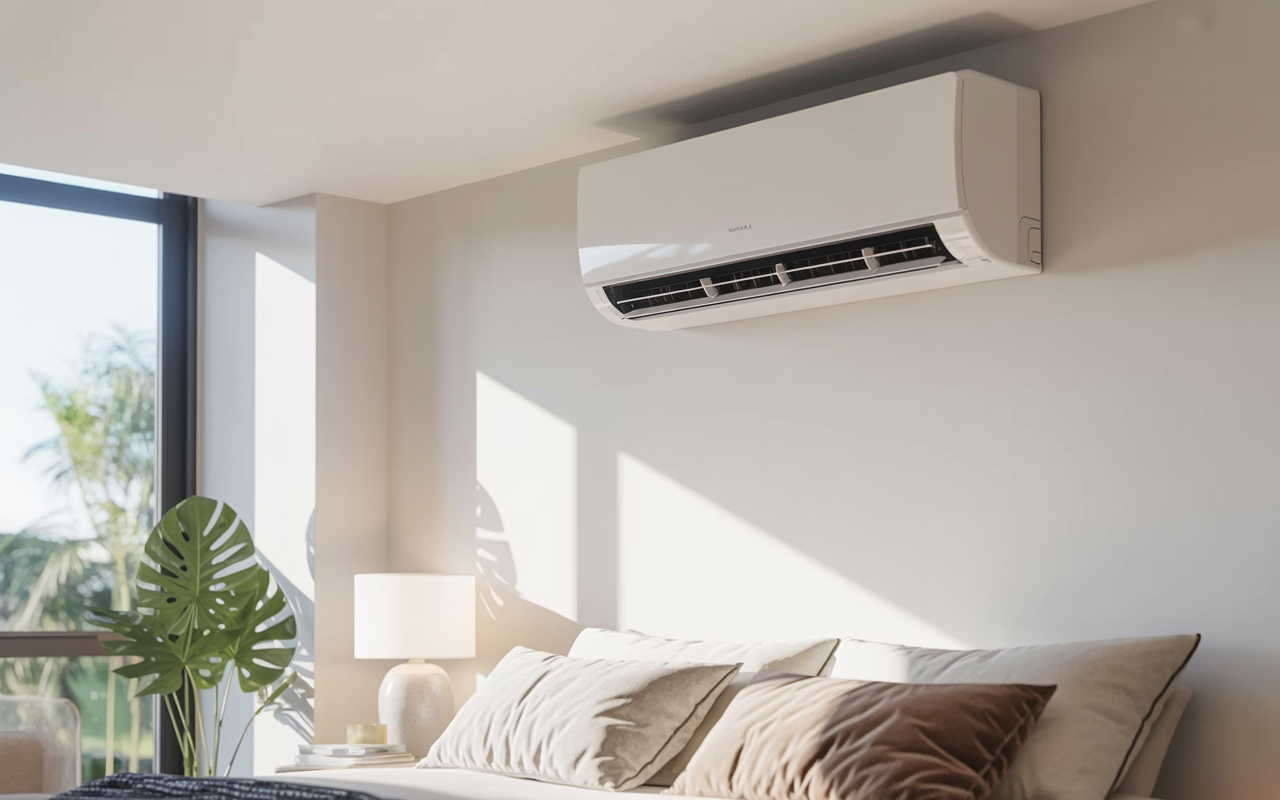
Split System Airflow Problems Caused by Misaligned Mesh Screens
Split system wall units rely on a clear, even path for air to move through the return grille, across the filter, and back into the room. When a mesh screen is not seated properly, the airflow path changes, and that can lead to noticeable noise, poor circulation, and avoidable wear on the unit.
For homeowners, these issues can be easy to miss because the filter still looks “in place” at a glance. For HVAC technicians, bent frames, loose clips, and distorted edges are familiar call-backs that often trace back to a simple installation problem rather than a mechanical fault.
Why a misaligned filter affects airflow
A split system filter is designed to sit flat so air passes through the full surface area as intended. If the filter is tilted, bowed, or sitting out of its channel, air will usually take the path of least resistance around the edges instead of through the media.
That can create a few practical problems:
- •The unit may move air unevenly across the coil face
- •Airflow can become more restricted than expected
- •Dust may bypass the filter at the edges and collect inside the unit
- •The fan can sound louder as it works against a less consistent air path
Even a small gap can matter on a wall-mounted unit because the intake opening is relatively compact. If the filter frame is not square or the retaining clips are not holding it firmly, the screen can shift during operation and make the issue worse over time.
Common signs of a seating problem
A misaligned mesh screen does not always present as an obvious installation error. Often, the first sign is a change in how the unit sounds or performs.
Look for these symptoms:
- •Rattling, buzzing, or light tapping from the front cover area
- •A whistle or whooshing sound near the filter frame
- •Reduced airflow from the supply grille despite the unit running normally
- •A filter that does not sit flush when the cover is closed
- •Bent corners, warped edges, or clips that do not engage cleanly
In some cases, the filter is the wrong size for the frame, which can mimic a seating problem. If the screen is too narrow, too wide, or the wrong depth, it may flex when the cover is shut. If you need a replacement, it is worth checking the dimensions carefully first. Our guide on how to measure an air filter can help.
How bent edges and loose clips create noise
Noise is one of the most common complaints with a poorly seated split system filter. The sound usually comes from vibration rather than the filter “failing” in a dramatic way.
A bent frame or uneven edge can stop the filter from sitting squarely in the intake track. When the fan starts, small movements in the frame can cause the screen to vibrate against the plastic housing or the grille. Loose clips can have a similar effect, allowing the filter to chatter slightly with each fan cycle.
Things that often contribute to noise include:
- •Filter frames that have been pushed too hard during removal
- •Clips that have lost tension or no longer hold the frame tightly
- •A cover that presses on one side of the filter more than the other
- •Mesh that has been cleaned or handled roughly and is no longer flat
If the sound only starts after filter cleaning or replacement, the seating should be checked before looking deeper into the unit.
What technicians should check first
A quick inspection can often identify whether the problem is with the filter or the unit itself.
Check that:
- •The filter is the correct size and orientation for the model
- •The frame sits evenly in the guide rails
- •The retaining tabs or clips are engaging properly
- •The cover closes without forcing the filter out of alignment
- •There is no damage to the plastic channel or support points
If the frame is damaged, replacing the filter is usually the better option than trying to force it to fit. For non-standard units or older wall-mounted systems, custom air filters may be the right solution.
Installation habits that help avoid airflow issues
Many airflow complaints come from how the filter is reinstalled, not from the filter itself. A careful reset can prevent repeated problems.
Good practice includes:
- •Removing the filter gently rather than flexing it out of the frame
- •Checking for dust build-up on the rails before refitting the screen
- •Making sure the frame is fully seated on both sides before closing the cover
- •Confirming the filter is facing the correct direction if the product has a marked airflow side
- •Replacing damaged clips instead of bending them back repeatedly
If a filter is washable, only do so if the product instructions say it is designed for washing. Let it dry fully before reinstalling it, because a damp screen can sag slightly and sit unevenly in the frame.
For building managers and technicians, it can also be useful to include filter seating checks in routine filter servicing or commercial filter servicing visits, especially on sites with high dust load.
When airflow problems point to something larger
A misaligned filter is often the whole issue, but not always. If the screen is seated correctly and the unit still sounds strained or airflow remains poor, there may be a deeper cause such as a blocked coil, damaged fan component, or a return path issue in the room.
This is where proper inspection matters. If the system has pressure gauges fitted, monitor pressure drop and compare findings with the equipment manufacturer’s instructions. For commercial and larger residential systems, site requirements should also be confirmed with the mechanical services engineer or building owner, particularly where AS 1668.2:2024 is relevant to the ventilation design.
It is also worth remembering that MERV, EN 779, and ISO 16890 ratings do not convert directly. If you are replacing a filter in an existing unit, match the physical size, frame style, and performance specification for that specific system rather than relying on a rough equivalent.
Choosing the right filter for a wall-mounted unit
A split system filter has to fit properly before it can perform properly. That means checking the frame depth, edge profile, clip arrangement, and the way the filter sits inside the return opening.
If the original screen is damaged or the unit has been modified, a standard replacement may not seat correctly. In those cases, a made-to-fit filter can be a better option than forcing a near-match into place.
Total Air Filtration is a family-owned air filter manufacturer and supplier in Hillcrest, Brisbane QLD, established 2009. We can help supply the right filter or make one to suit your unit, including options through our products and custom air filters.
If you are unsure whether the problem is the screen, the frame, or the unit itself, our team can help you talk through the options and arrange the right replacement.
Talk to Total Air Filtration
If your split system is noisy, airflow has dropped, or the filter will not sit flush, it is worth checking the fit before the issue becomes harder to fix. Total Air Filtration can supply or make the right filter for your unit, and we are happy to help with sizing and replacement options.
Call 07 3800 3448 or request a quote. You can also contact us if you want to discuss a replacement filter or a custom-made solution.
Written by
The Total Air Filtration Team
General information only — always follow the instructions for your filter and system. Have questions about this article? We're here to help.