
What to Use When a Home Is Downwind of Bushland Burn Piles
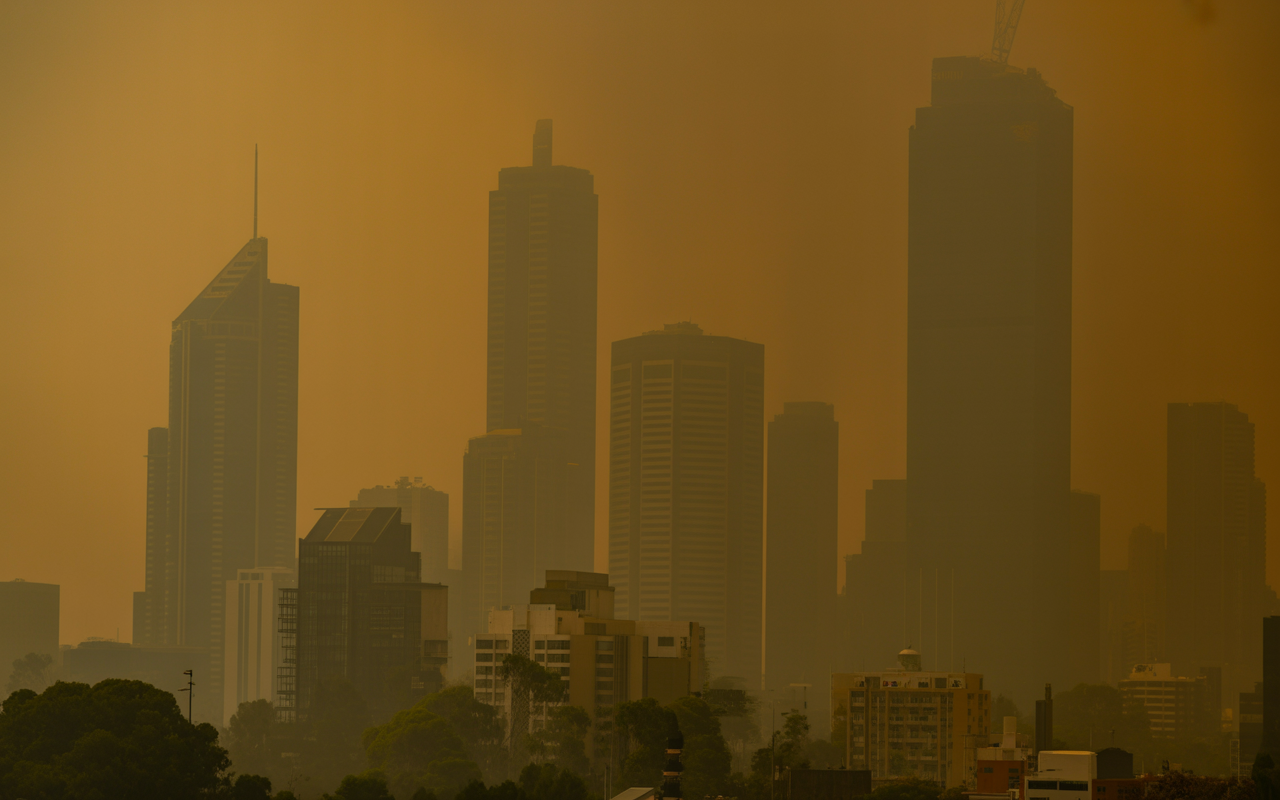
When local burn-offs are underway, homes downwind can take in more smoke, fine ash and odour through open gaps, windows, and mechanical ventilation systems. The right filter media won’t stop smoke from entering every part of the house, but it can help reduce the particle load that circulates indoors when your heating, cooling or ventilation system is running.
For homeowners and strata managers, the practical question is not whether to run the system, but what filter type, fit and maintenance approach makes sense when the air outside is carrying more dust and combustion particles than usual.
Why burn-off smoke behaves differently from everyday dust
Smoke from bushland burn piles is usually made up of very fine particles mixed with larger ash and char. That matters because not every filter media performs the same way across that range.
A coarse filter may catch visible dust and larger debris, but it will allow more of the finer smoke particles to pass through. A denser or higher-efficiency filter can capture more small airborne particles, but it also creates more resistance to airflow, so it needs to suit the fan, cabinet and system design.
In practice, the best choice depends on:
- •the type of system installed
- •the available filter frame depth and size
- •whether the equipment can handle higher resistance
- •how much outdoor smoke and ash is entering the building
- •whether the system is part of a single home or a shared strata installation
If you are not sure what is already fitted, start by checking the current filter size and arrangement. If needed, how to measure an air filter is a useful place to begin.
Filter media that can help with smoke and ash
Pleated synthetic and glass-fibre options
For many homes and small systems, pleated filters are often a practical step up from basic panel filters. They give more media area in the same frame, which can help capture more fine particles without changing the whole system.
Commonly used options include:
- •pleated synthetic media for general dust and moderate particle loads
- •fine-fibre or microfibre media where a higher particle capture level is needed
- •deeper filter formats where the system cabinet allows more media area
These filters can be a good fit when burn piles are causing a short-term increase in ash and smoke, particularly if the system already relies on filtered recirculation rather than fresh-air intake alone.
Finer filters for higher particle capture
Where the fan, ductwork and cabinet are designed for it, a finer filter can help capture a greater share of smoke particles. In Australia, you may still see older EN 779 class references such as G3, G4 or F5-F9, even though ISO 16890 is now widely used. These ratings do not convert directly, so it is better to select the filter based on the system requirements rather than trying to compare labels on a simple one-to-one basis.
If you are dealing with particularly smoky conditions, a mechanical services engineer or the building owner should confirm what the system can handle under site conditions and local requirements, including consideration of AS 1668.2:2024 where relevant.
HEPA for specialised applications
HEPA filters are usually only suitable where the equipment has been designed for them. If a system does call for HEPA, the relevant classes are H13, which is at least 99.95% efficiency at the most penetrating particle size under EN 1822, and H14, which is at least 99.995%.
For most standard residential systems, HEPA is not a straightforward swap-in option. Trying to force a HEPA filter into a system that was not designed for it can reduce airflow and affect performance. If a HEPA arrangement is being considered, it should be treated as an engineered solution rather than a simple filter upgrade.
Fit, sealing and bypass matter as much as media
Even a good filter will not perform properly if air can bypass it. Smoke and ash can slip around the frame if the filter is the wrong size, the seals are worn, or the holding frame is damaged.
That is why strata managers and homeowners should pay attention to the whole filter assembly, not just the media grade.
Check for:
- •gaps around the filter frame
- •bent clips or distorted housings
- •damaged gaskets or poor sealing surfaces
- •loose access panels
- •dust trails that suggest bypass around the edges
If the filter slot is a non-standard size, custom air filters can be made to suit many applications. A well-fitted filter often performs better than a higher-grade filter that leaves bypass gaps.
Maintenance during burn-off periods
Smoke and ash load can increase quickly, so inspection becomes more important than relying on a fixed calendar.
The right approach is to:
- •check filters more often when burn-offs are active nearby
- •follow the filter and equipment manufacturer instructions
- •monitor pressure drop where gauges are fitted
- •replace or service filters when loading, odour retention or pressure rise indicates it is time
- •inspect the fan and return-air areas for ash build-up
Some filters are designed to be washable - check the product instructions before cleaning anything in place. If a filter is not intended to be washed, cleaning it can damage the media or release trapped dust back into the space.
For shared buildings, strata managers should also confirm whether the system is part of a common mechanical arrangement and arrange filter servicing or commercial filter servicing where appropriate.
Don’t forget odour and fresh air paths
Smoke particles and smoke odour are related, but they are not the same thing. A filter that captures particles may still allow some odour to be noticeable indoors, especially when outside air is heavy with combustion fumes.
To reduce the amount entering the building, it can help to:
- •keep windows closed during the heaviest smoke periods
- •reduce unnecessary outdoor air intake if the system allows controlled adjustment
- •make sure return-air filters are correctly seated
- •inspect bathroom, laundry and plantroom vents for unwanted leakage paths
- •check that shared-entry areas are not pulling smoky air through gaps or unsealed penetrations
If odour is a recurring issue, a mechanical services engineer may suggest changes to the ventilation setup rather than only changing the filter media.
Choosing the right replacement for your site
The best filter for a home downwind of burn piles is the one that matches the system, the frame, and the expected particle load. That may be a pleated general-purpose filter, a finer particulate filter, or a custom-made replacement in a non-standard size.
When comparing options, focus on:
- •correct dimensions and frame type
- •compatible airflow resistance
- •media suited to fine particle capture
- •secure sealing in the housing
- •whether the building uses a single dwelling system or a shared strata installation
If you need help identifying what will fit, our products and industries we supply pages can point you in the right direction.
How Total Air Filtration can help
Total Air Filtration is a family-owned air filter manufacturer and supplier based in Hillcrest, Brisbane QLD, established 2009. We can help supply or make the right filter for the system you have, including custom sizes for homes, strata buildings and other sites affected by smoke and ash.
If you would like help choosing the right option, call 07 3800 3448 or request a quote. You can also contact us if you need guidance on fit, media choice or a replacement for a non-standard frame.
Written by
The Total Air Filtration Team
General information only — always follow the instructions for your filter and system. Have questions about this article? We're here to help.