
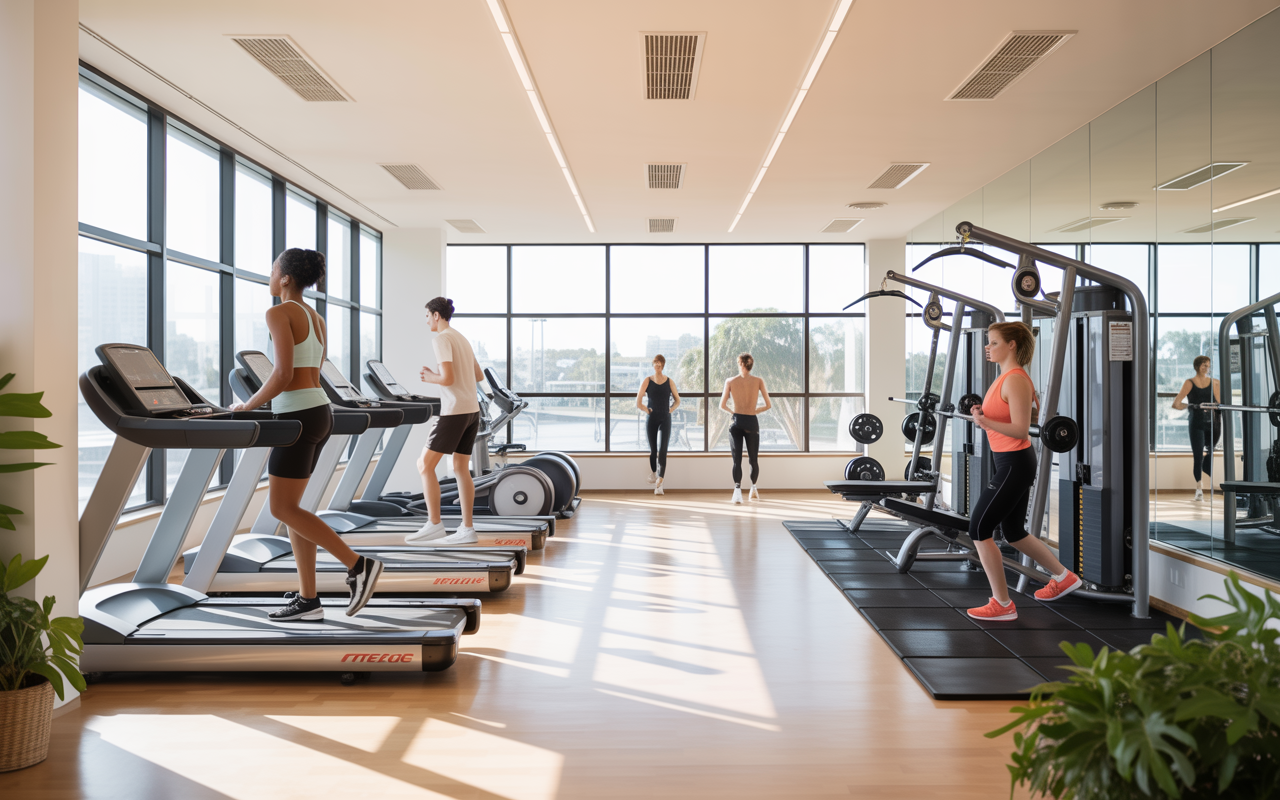
Managing Indoor Air in Brisbane Gymnasiums During Summer Heat and Humidity
Brisbane gymnasiums work hard in summer. High occupancy, warm outdoor air and persistent humidity combine to put extra pressure on HVAC systems, which means filter selection, airflow balance and maintenance planning all matter more than usual.
For gym operators, facility managers and contractors, the aim is not just to keep air moving. It is to choose filters that suit the system, support steady airflow under load, and help manage the extra dust, lint, sweat moisture and odour that build up in active spaces.
Why gymnasiums are challenging in summer
A gym is rarely a low-demand environment. People move in and out throughout the day, doors open often, and large volumes of air are shifted through the space to keep it comfortable. In Brisbane’s summer heat and humidity, that can create a difficult mix for air conditioning and filtration.
Several factors usually work together:
- •Higher occupancy means more particles are introduced into the air from clothing, shoes and outdoor traffic.
- •Frequent door use allows warm, moisture-laden air to enter the building.
- •Sweating and wet surfaces add to the moisture load inside the space.
- •Equipment rooms, change areas and amenities can create localised odour and dust build-up.
- •High air movement can push more debris toward filters and ducts.
This is why a filter that seems adequate in a quieter commercial tenancy may not perform as well in a busy gym. The system has to deal with both the load on the air and the pressure required to keep air moving through the building.
Choosing filters for a hot, humid fitness environment
Filter selection should begin with the system design, not with a wish for the highest possible rating. A tighter filter can capture finer particles, but if the fan and ductwork were not designed for that resistance, airflow can suffer.
For gymnasiums, the right approach is usually to match the filter to the equipment, the dust load and the way the building is used. In many commercial systems, pre-filters are used to catch larger debris before air reaches finer filters. That can be especially useful where there is high foot traffic, more lint, and frequent door opening.
When reviewing options, consider:
- •The filter class currently specified for the system.
- •Whether the unit is handling mixed loads from the gym floor, change rooms and surrounding spaces.
- •The available fan capacity and whether the system can cope with added resistance.
- •Whether the filter is intended for dry use only, or whether some filters are designed to be washable - check the product instructions.
- •Whether the application calls for standard panel filters, pleated filters or a custom size.
If you are unsure what will fit your equipment, how to measure an air filter is a good starting point, and custom air filters may be useful when standard sizes do not suit the frame or housing.
About filter ratings
In Australia, you may still hear older EN 779 references such as G3, G4 and F5-F9, even though ISO 16890 is now widely used. These rating systems do not convert directly, so it is best to work from the actual equipment specification rather than trying to force a neat cross-reference.
If a project involves higher-efficiency filtration, HEPA terms must also be used carefully. H13 filters are at least 99.95% efficient at the most penetrating particle size under EN 1822, and H14 filters are at least 99.995% efficient at the same point. Those products are only suitable where the system has been designed for them.
Airflow and moisture control go hand in hand
In humid weather, filtration and airflow cannot be treated as separate issues. If the filter is too restrictive, the system may struggle to deliver the airflow needed for comfort and ventilation. If airflow is poorly balanced, moisture can linger in occupied areas and around surfaces, putting more strain on the overall system.
For gym operators, the practical question is whether the system can maintain consistent circulation across the full space during peak times. That depends on duct layout, fan performance, return air paths and the resistance created by the filters in service.
A few practical points are worth checking:
- •Make sure return air paths are not blocked by equipment, mats or storage.
- •Confirm that supply air is reaching all used areas, not just the front of the room.
- •Watch for signs that humidity is lingering in amenities, studios or corners with limited movement.
- •Check whether the filter housing is properly sealed so air is not bypassing the media.
- •Review whether the current filter arrangement suits the real operating hours and crowding patterns.
If the HVAC system is being reviewed or upgraded, ask the mechanical services engineer or building owner to confirm site requirements against AS 1668.2:2024 and the specific building conditions.
Maintenance planning during busy summer periods
A gym filter can load up quickly when occupancy is high and outdoor conditions are dusty or humid. That is why inspection frequency should be based on the system, the site conditions and the dust load, rather than a fixed calendar schedule.
Where pressure gauges are fitted, monitor pressure drop and use that information alongside visual inspection. A filter may look serviceable at a glance but still be restricting airflow. On the other hand, some environments will load more slowly and may not require the same attention as a heavily used training facility.
Useful maintenance habits include:
- •Check filters more often during peak summer use or after nearby construction, smoke or dust events.
- •Keep a record of pressure drop readings where gauges are installed.
- •Inspect for moisture damage, distortion, torn media or frame movement.
- •Replace or service filters according to the filter and equipment manufacturer instructions.
- •Confirm that staff know who is responsible for inspection and who signs off the work.
For operators managing multiple sites, filter servicing and commercial filter servicing can help keep routines consistent across different air handling units and tenancy types.
Signs the current filtration setup may need review
A summer review is often worthwhile if the gym starts to feel harder to keep comfortable or the system seems to be working harder than usual. That does not always mean the filter is the only issue, but it is a good place to start.
Look for:
- •Reduced airflow from supply registers.
- •Dust settling more quickly than expected.
- •Persistent odour in training areas, changerooms or storage spaces.
- •Filters that appear to load unevenly.
- •Water staining, dampness or visible mould around surrounding building elements.
- •Frequent maintenance callouts related to blocked filters or restricted airflow.
Sometimes the answer is a better matched filter stage. Sometimes it is a housing seal issue, poor return air design, or a need for a custom-sized replacement. In other cases, the right solution is simply to review the whole system rather than treating the filter as an isolated item.
If you need a broader view of options, see our products or browse the industries we supply for related commercial applications.
Working with the right supplier
For Brisbane gymnasiums, the best filtration plan is one that fits the real building, the real occupancy and the real maintenance routine. Total Air Filtration is a family-owned air filter manufacturer and supplier based in Hillcrest, Brisbane QLD, and we work with operators and contractors who need practical advice, standard sizes or made-to-measure solutions.
If you are reviewing a gym HVAC system for summer, we can supply or make the right filters for the job. Call 07 3800 3448 or request a quote, and if you need to get in touch directly, you can also contact us.
Written by
The Total Air Filtration Team
General information only — always follow the instructions for your filter and system. Have questions about this article? We're here to help.