
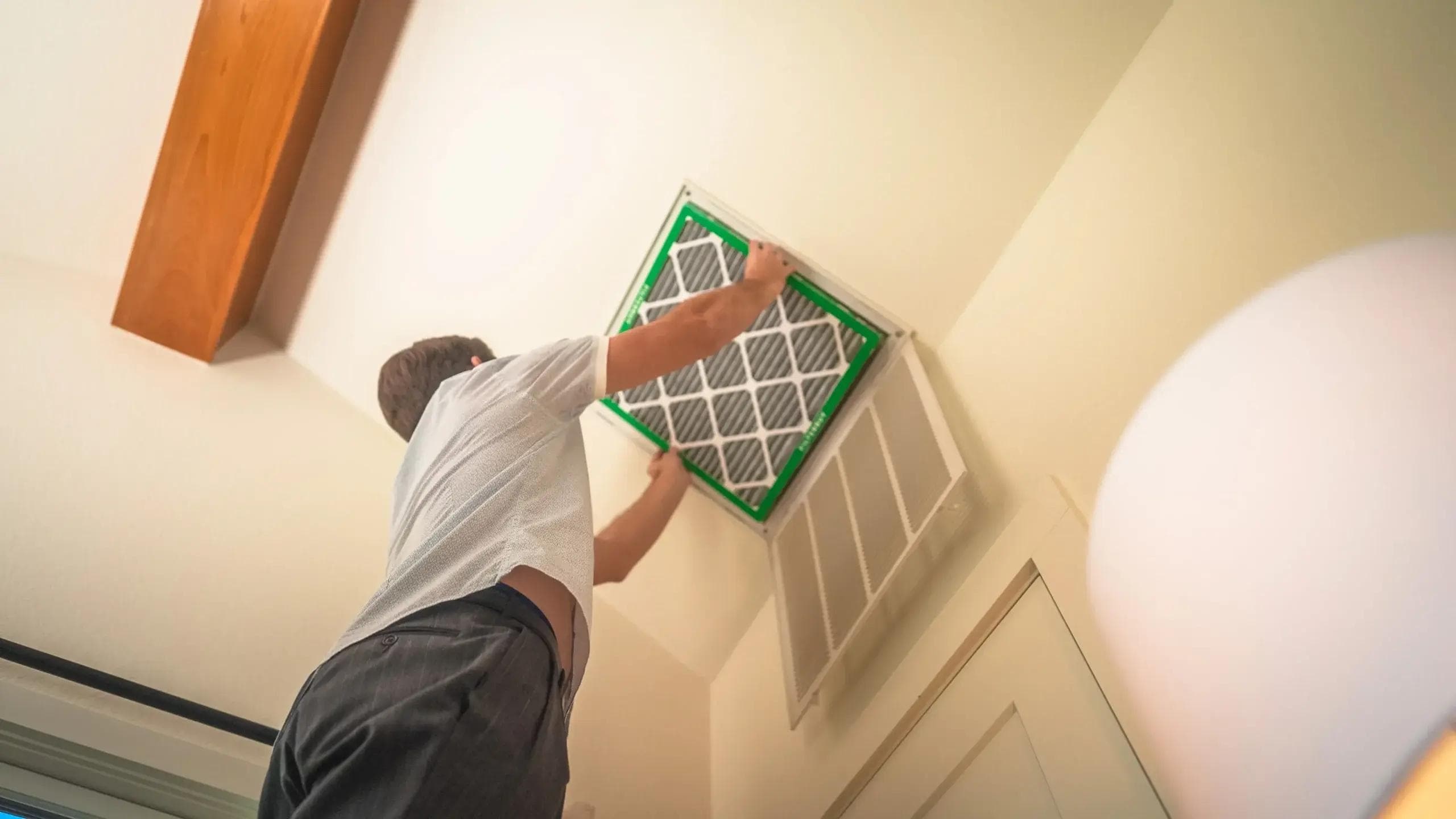
Custom Filters for Old Apartment Buildings with Legacy Return Air Grilles
Old apartment buildings often come with return air grilles that were never designed around today’s standard filter sizes. The opening may be awkward, the cavity may be shallow, and the original grille frame may have been modified over the years, which can make off-the-shelf replacements difficult to fit properly.
For property managers and homeowners, the challenge is not just finding a filter that “sort of fits”. A poor fit can let air bypass the filter, make maintenance awkward, and create ongoing frustration every time the grille needs to be opened. Custom filters are often the practical answer when the building’s original dimensions no longer match what is readily available.
Why legacy return air grilles are difficult to match
Many older residential buildings were built with return air grilles that vary from apartment to apartment. Over time, some grilles have been replaced, painted over, bent, or fitted with non-standard frames. Even when the grille looks similar from the outside, the internal dimensions may be very different.
Common issues include:
- •unusual grille widths or heights that do not match standard sizes
- •shallow cavities that leave little room for a deep media pack
- •irregular frames where the opening is not perfectly square
- •limited access behind the grille for removal and refitting
- •old clips, tabs, or retaining methods that no longer hold a standard filter securely
If a filter is forced into an unsuitable opening, it may bow, jam, or fail to seat correctly. That can make routine servicing difficult and may shorten the useful life of the filter and the grille hardware.
Why a custom filter is often the better approach
Custom-made filters can be built to suit the actual opening, not just the nearest size on a shelf. That matters in older apartments where the return air grille may be part of the original building fabric, a later renovation, or a mix of both.
A custom filter can help when you need:
- •a non-standard width, height, or depth
- •a shallow profile for tight cavities
- •a particular frame style to suit the grille type
- •a filter that sits securely without rattling or gaps
- •a practical solution for repeated servicing in a hard-to-reach location
If you are a property manager responsible for multiple units, consistency is also useful. Once the dimensions are confirmed, future replacements are easier to order and keep on hand.
What to measure before ordering
Accurate measurements are essential. In older buildings, measuring the visible grille alone is usually not enough, because the filter often sits behind the grille or within a recessed cavity.
When measuring, check:
- •the clear opening width and height
- •the depth available behind the grille
- •whether the filter sits in a channel, frame, or slide-in track
- •any obstructions such as screws, brackets, dampers, or cabling
- •whether the grille opening is square, rectangular, or slightly irregular
If you are unsure how to take the measurements, see how to measure an air filter. A few careful checks at the start can save time later and reduce the chance of ordering the wrong size.
For especially awkward openings, it is often useful to remove the grille and inspect the cavity directly before making assumptions about the dimensions.
Choosing the right filter for an older apartment building
The best filter for a legacy return air grille depends on the system, the available space, and the level of dust in the building. Older apartments can have different ventilation layouts, and the filter needs to suit both the grille and the equipment it serves.
Consider the frame and media depth
If the cavity is shallow, a bulky filter may not fit properly. In these situations, a lower-profile construction may be more suitable, provided it matches the equipment and airflow needs.
Consider the dust load
Buildings near busy roads, construction activity, or areas with lots of foot traffic may have more airborne dust entering the system. That can affect how quickly a filter loads up and how often it should be checked.
Consider the maintenance method
A filter that is difficult to remove is more likely to be handled roughly or refitted incorrectly. In a shared building, simple access can make a big difference to upkeep.
Some filters are designed to be washable - check the product instructions before cleaning or reusing them. For many older systems, disposable replacement filters are still the most practical option, especially where a consistent fit is important.
Grille fit, airflow and ongoing maintenance
A filter should sit neatly in the return air grille assembly so air passes through the filter media rather than around it. If the fit is loose, dust can bypass the filter and collect inside the cavity or ductwork.
It is also important not to make assumptions about airflow restrictions in older systems. A filter that is too restrictive for the equipment, or one that is badly fitted, can create unnecessary strain on the system.
For that reason, inspection frequency should depend on the system, site conditions and dust load. Follow the filter and equipment manufacturer instructions, and monitor pressure drop where gauges are fitted.
If the building has mechanical ventilation requirements, site needs should be confirmed with the mechanical services engineer or building owner. In some cases, AS 1668.2:2024 may be relevant to the overall ventilation design, but the correct solution still depends on the specific installation.
When to ask for a custom solution
A custom filter is worth considering if you are dealing with any of the following:
- •a grille opening that does not match standard retail sizes
- •a cavity that is too shallow for common replacement products
- •a legacy frame that needs a specific lip, edge, or insert style
- •a building with multiple different grille sizes across units
- •a situation where the existing filter keeps shifting, bowing, or falling out
For property managers, standardising a custom replacement can make future servicing simpler across the building. For homeowners, it can remove the hassle of repeatedly trying to make a standard filter work where it was never meant to fit.
If you are also sourcing filters for other areas of the property, browse our products or see the industries we supply for the kinds of spaces we support.
Talk to Total Air Filtration about the right fit
Total Air Filtration is a family-owned air filter manufacturer and supplier based in Hillcrest, Brisbane QLD, established 2009. We can help supply or make filters for awkward legacy return air grilles, unusual openings, and shallow cavities where standard sizes are not a good match.
To discuss your measurements or building requirements, call 07 3800 3448 or request a quote. If you need help with ongoing upkeep, you can also look at filter servicing or contact us.
Written by
The Total Air Filtration Team
General information only — always follow the instructions for your filter and system. Have questions about this article? We're here to help.