
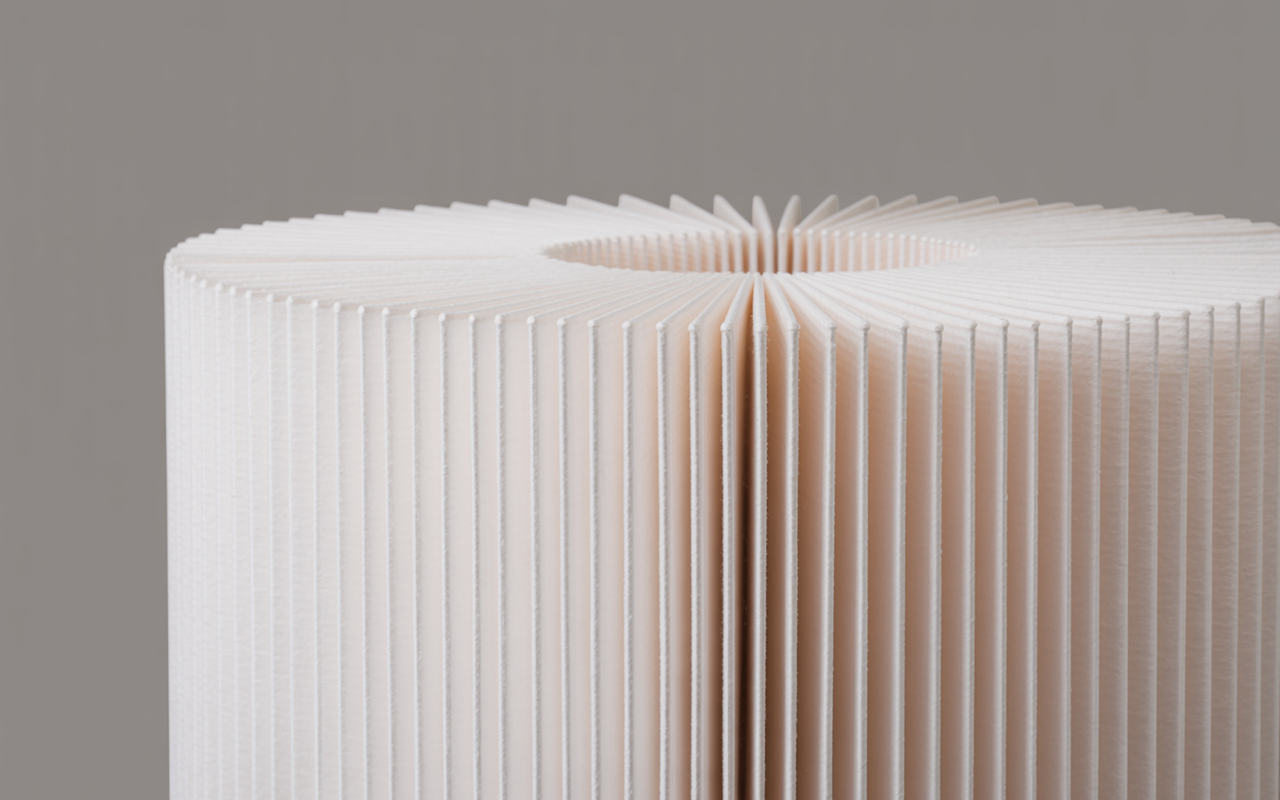
HEPA, Carbon and Pleated Filters: Choosing the Right Tool for the Problem
When people ask for the “best” air filter, the better question is usually: best for what problem? Fine dust, smoke, odours, and gaseous contaminants each call for a different approach, and the right choice depends on the system you have and the air quality outcome you are trying to achieve.
This guide keeps it simple. We’ll compare HEPA, carbon and pleated filters by what they are designed to capture, where they fit best, and what to check before ordering replacements or planning an upgrade.
Start with the contaminant, not the label
A filter can only do the job it is designed for, so the first step is identifying what is actually in the air.
- •Fine particles: dust, lint, pollen, mould spores, combustion particles and other airborne matter
- •Odours: smells from kitchens, waste areas, smoke, paints or nearby activities
- •Gases and vapours: certain chemical compounds and fumes that pass through standard particle filters
If the issue is mainly visible dust, a pleated particle filter may be enough. If the concern is very fine airborne particles, a HEPA filter may be the better tool. If the problem is odour or gas, activated carbon is usually the part of the solution, not the whole answer.
For buildings covered by ventilation requirements, AS 1668.2:2024 is often part of the conversation, but site requirements should always be confirmed with the mechanical services engineer or building owner.
Pleated filters: the everyday workhorse for dust and particles
Pleated filters are used widely in homes, commercial air handlers and many light industrial systems because they balance airflow and particle capture well for general applications.
They are typically chosen for:
- •General dust control
- •Reduced loading on downstream equipment
- •Pre-filtration before finer filters
- •Everyday HVAC systems where particle capture is the main goal
When a pleated filter makes sense
If your main issue is dust build-up on coils, grilles or internal duct surfaces, a pleated filter is often the practical starting point. They are common in return air systems, rooftop units and packaged plant where a robust, easy-to-source filter is needed.
Pleated filters come in different grades, and rating systems such as MERV, EN 779 and ISO 16890 do not convert directly. In Australia you may still see G3/G4/F5-F9 class references on older specifications or replacement filters, even though ISO 16890 is now widely used.
Some pleated filters are designed to be washable - check the product instructions. For many systems, though, a disposable pleated filter is the more straightforward choice.
HEPA filters: for very fine particles when higher capture is needed
HEPA filters are intended for applications where very fine particle capture matters. They are not the everyday choice for every system, because they create more resistance to airflow and must be matched to the equipment properly.
In EN 1822 terms:
- •H13 filters are rated at 99.95% or greater efficiency at the most penetrating particle size (MPPS)
- •H14 filters are rated at 99.995% or greater efficiency at the MPPS
Where HEPA is commonly used
- •Cleanrooms and controlled environments
- •Medical or laboratory settings where specified by the project
- •Sensitive manufacturing spaces
- •Local exhaust or terminal filtration applications designed for HEPA use
A HEPA filter is not usually the first choice for a standard office, warehouse or residence unless the system has been designed for it. If a project calls for HEPA, the fan, housing, seals and maintenance access all need to suit the application.
For replacement work, it helps to confirm the exact dimensions and frame style before ordering. If you are unsure how to check a size, see how to measure an air filter.
Carbon filters: for odours and some gases
Activated carbon filters work differently from particle filters. Rather than trapping dust in fibres, they use carbon media to adsorb certain odours and gaseous contaminants.
They are best suited to:
- •Odour control in kitchens, amenities and waste areas
- •Smoke-related odours in some applications
- •Chemical or solvent-related gases, depending on the carbon media used
- •Situations where a standard particle filter does nothing for the smell problem
What carbon can and cannot do
Carbon filters can be very useful, but they are often misunderstood. They do not replace particle filtration. If the air also contains dust or lint, a carbon stage is usually used alongside a pleated or fine filter stage.
Carbon performance also depends on contact time, media type, airflow and contaminant load. That is why two carbon filters can look similar but perform very differently in practice.
If odour is the complaint, a carbon stage may help, but the source of the smell still matters. A filter can address air passing through the system, but it cannot fix a leak, spill, poor housekeeping issue or process emission on its own.
How to choose without overcomplicating it
A simple decision path usually works well.
- •If the problem is general dust, start with a pleated particle filter.
- •If the problem is very fine particles, look at a HEPA option, but only if the system is designed for it.
- •If the problem is odour or gas, consider activated carbon.
- •If you have both particles and odour, a combined approach may be needed.
A few practical checks before you order
- •Confirm the filter size and frame style
- •Check the airflow direction if the filter is directional
- •Review the system’s available space and access
- •Look at the current filter loading and pressure drop where gauges are fitted
- •Follow the filter or equipment manufacturer instructions for replacement and inspection
Inspection frequency depends on the system, site conditions and dust load. A busy workshop, commercial kitchen or dusty plant room will usually need more attention than a clean office environment.
If you are dealing with a managed facility, commercial filter servicing can help keep the replacement process consistent. For broader support across air filters and related products, see our products.
Matching the filter to the application
The same filter type can behave very differently from one site to another.
Homeowners often want a straightforward answer for dust, odour or general comfort. Facility managers may be balancing airflow, maintenance access and consistency across multiple units. Mechanical contractors often need replacements that fit the existing housing, meet the project brief and can be sourced reliably.
That is why a good recommendation starts with the system details, not just the contaminant. In some cases, a standard pleated filter does most of the work. In others, a pre-filter plus finer particle filter, or a particle stage plus carbon stage, is a better fit.
If the application is unusual or the dimensions are non-standard, custom air filters may be the simplest path.
Choosing a supplier who can keep it practical
Total Air Filtration is a family-owned air filter manufacturer and supplier in Hillcrest, Brisbane QLD, established 2009. We work with homeowners, facility managers and mechanical contractors who need the right filter for the job, not unnecessary complexity.
If you need help selecting a pleated, carbon or HEPA option, or you want a replacement made to suit an existing frame, we can help supply or make the right filters for your application. Call 07 3800 3448 or request a quote.
For ongoing support, you can also filter servicing or get in touch via contact us.
Written by
The Total Air Filtration Team
General information only — always follow the instructions for your filter and system. Have questions about this article? We're here to help.