
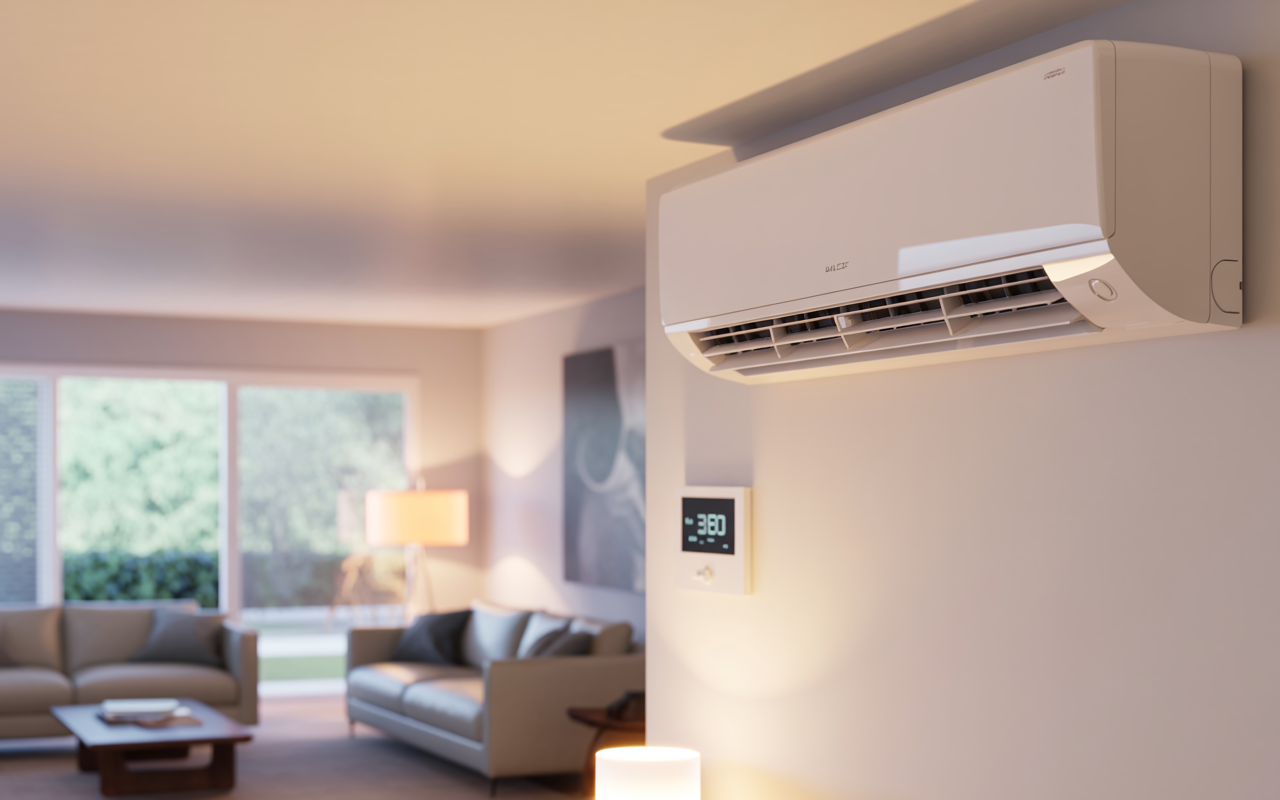
Why Split System Air Conditioners Lose Performance When Filters Are Clogged
Split system air conditioners are designed to move a steady volume of air through the indoor unit and across the coil. When the filter becomes clogged, that airflow is restricted, and the whole system has to work harder to deliver the same comfort level. For homeowners, the signs can be subtle at first; for mechanical contractors, a dirty filter is one of the first things worth checking when a unit is underperforming.
How a clogged filter changes the way the system runs
A split system depends on clear airflow across the return grille, through the filter, over the coil and back into the room. If the filter loads up with dust, lint and other airborne particles, the fan has to pull air through a tighter path.
That restriction can lead to several noticeable changes:
- •weaker air coming from the supply outlets
- •longer run times as the unit struggles to reach set temperature
- •uneven room temperatures, especially in larger or open-plan spaces
- •visible dust build-up around the return grille or filter frame
- •higher noise from the indoor fan as it works against resistance
When airflow drops, the indoor coil can also become less effective at heat transfer. In cooling mode, that means the room may feel less comfortable even though the system appears to be operating normally.
Why restricted airflow affects comfort
Comfort is not just about temperature on the thermostat. It also depends on how well the system circulates air through the room and removes heat from the indoor space.
A clogged filter can reduce comfort in a few practical ways:
Less air movement at the registers
If the fan cannot move enough air, occupants may notice weaker delivery from the outlets. Rooms can feel stuffier, and it may take longer for conditioned air to mix through the space.
Poorer temperature balance
Restricted airflow can create hot or cold spots, particularly in rooms that already have longer duct runs, higher solar gain or limited return air paths.
More frequent short cycling or extended operation
Depending on the system and controls, the unit may cycle differently than expected. Some systems run longer, while others may fail to satisfy the thermostat properly because the airflow issue is reducing overall performance.
Finer particles recirculating in the room
A filter is there to capture particles before they enter the indoor unit. When it is heavily loaded, air still passes through the system, but not as effectively, and the filter’s ability to do its job is reduced until it is cleaned or replaced.
The strain a clogged filter puts on the unit
A split system with a blocked filter does not just lose performance; it can also be placed under extra stress. The indoor fan must overcome greater resistance, which can affect how hard the motor is working. The coil may also operate under less-than-ideal conditions if airflow drops too far.
That extra strain may show up as:
- •louder fan operation
- •a fan that seems to run continuously
- •repeated service calls for poor cooling or airflow complaints
- •nuisance fault conditions on some systems
For contractors, it is worth checking the filter first before moving to more complex diagnostics. A blocked filter can look like a refrigeration issue, a control issue or a room-load issue when the real problem is simply restricted airflow.
Simple troubleshooting steps for homeowners
If a split system is not performing as expected, start with the basics.
- •Switch the system off before opening the indoor unit.
- •Remove the filter carefully and inspect it for dust build-up, lint or visible blockage.
- •If the product instructions allow it, clean the filter as directed and let it dry fully before reinstalling.
- •Check that the filter is seated correctly and that the frame is not warped or damaged.
- •Make sure the return grille, nearby furniture and curtains are not blocking airflow.
- •Confirm that supply outlets are open and not covered by furniture or stored items.
- •If the unit still performs poorly after the filter is cleaned or replaced, book a qualified technician to inspect the system.
Some filters are designed to be washable - check the product instructions before cleaning. If the filter is not washable, replace it with the correct product for the unit.
What contractors should look for on site
For mechanical contractors, clogged filters are often part of a wider airflow problem. It can help to check the whole air path, not just the filter itself.
Useful inspection points
- •return air grille condition and access
- •filter fit, frame condition and bypass around the edges
- •coil cleanliness
- •fan condition and unusual noise
- •duct restrictions, crushed flexible duct or blocked outlets where applicable
- •pressure drop where gauges are fitted
Inspection frequency depends on the system, site conditions and dust load. Follow the filter and equipment manufacturer instructions, and where differential pressure gauges are installed, use them to monitor when service is needed.
For sites with more formal ventilation requirements, AS 1668.2:2024 may be relevant, but site requirements should always be confirmed with the mechanical services engineer or building owner.
If the existing filter is repeatedly loading up too quickly, it may be worth reviewing whether the product specification suits the application. In some cases, a better fit or a different media type can make day-to-day servicing easier. If you need help matching a product to a specific unit or site, see our products or custom air filters.
When to replace the filter instead of cleaning it
A clogged filter is sometimes a sign that the filter has reached the end of its useful life. Replace it if you notice:
- •torn media or damaged pleats
- •a warped frame that does not seal properly
- •persistent odour after cleaning
- •heavy staining or embedded debris that will not shift
- •visible collapse or loss of shape
If the filter is no longer sealing well, air can bypass it and carry dust into the indoor unit. That can reduce performance and increase maintenance work later.
If you are unsure of the size, how to measure an air filter is a useful starting point. For commercial sites that need ongoing support, filter servicing and commercial filter servicing can help keep maintenance on track.
Getting the right filter back in the system
The best way to avoid performance loss is to use the correct filter for the unit and keep an eye on its condition. A good fit, proper sealing and the right media choice all matter because even a small gap can allow unfiltered air to pass around the edges.
If you are selecting a replacement, consider:
- •the exact dimensions and frame style
- •the airflow needs of the unit
- •the dust load at the site
- •whether the product is intended to be disposable or washable
- •the manufacturer’s installation instructions
Total Air Filtration is a family-owned air filter manufacturer and supplier in Hillcrest, Brisbane QLD, and we can help homeowners and contractors source the right replacement for the job. Browse our products or industries we supply if you are comparing options for a home, tenancy or commercial site.
Need a replacement or a better filter fit?
If your split system is losing performance because the filter keeps clogging, Total Air Filtration can supply or make the right filter for your application. Call 07 3800 3448 or request a quote and we’ll help you find a suitable option.
Written by
The Total Air Filtration Team
General information only — always follow the instructions for your filter and system. Have questions about this article? We're here to help.