
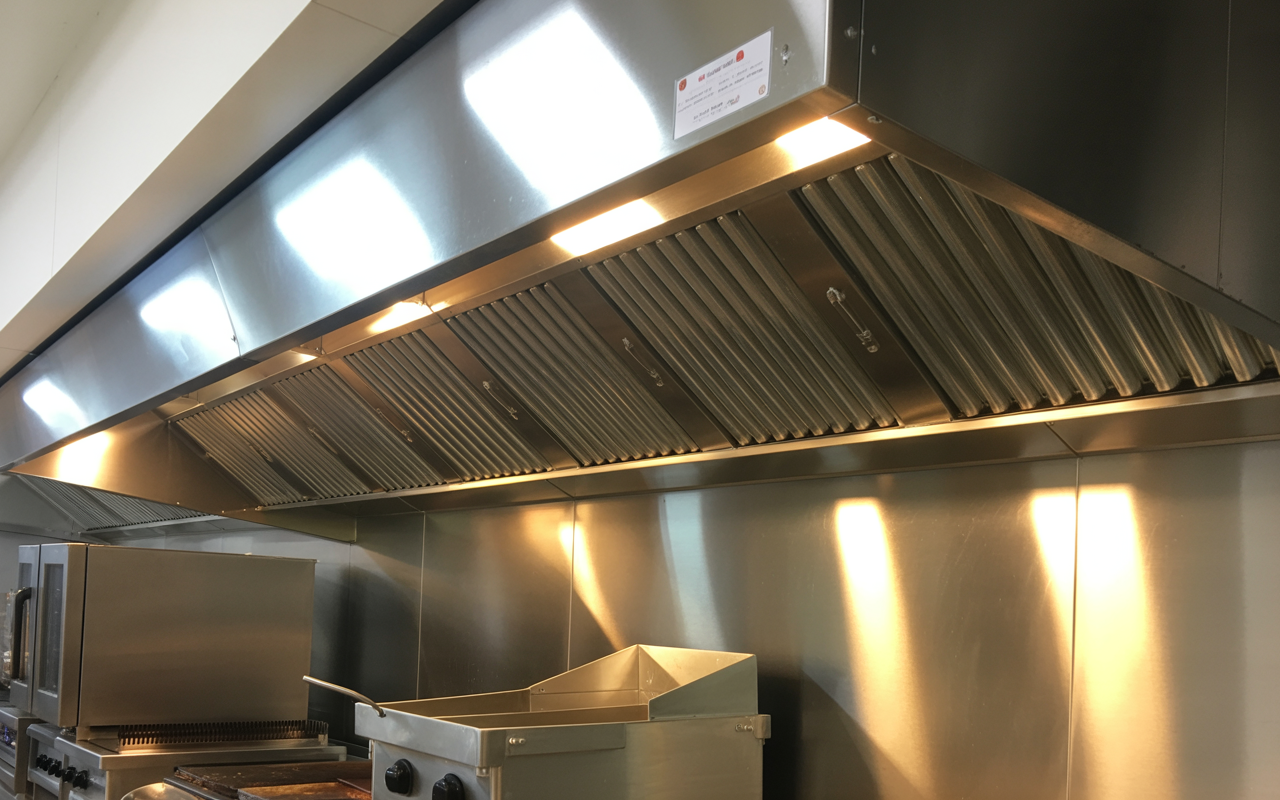
What Causes Grease Build-Up in Ductwork Above Commercial Kitchens
Grease build-up in commercial kitchen ductwork usually starts at the capture hood, but it does not end there. Once airborne grease escapes the cooking area, it can travel through filters, fans and ducting, settling on internal surfaces where it becomes harder to remove over time.
For mechanical contractors and kitchen managers, understanding this pathway is important because the source of the problem is not always the ductwork itself. More often, it is a combination of hood design, filter selection, airflow balance and day-to-day maintenance.
How grease moves from the hood into the duct system
A commercial kitchen exhaust system is designed to pull contaminated air into the hood, pass it through filtration, then move it into the ductwork and out of the building. If each stage works properly, a large portion of grease-laden air is captured before it reaches the duct.
The usual path is straightforward:
- •Cooking releases grease, vapour and odours into the room air
- •The capture hood draws that air upward and inward
- •Grease filters inside the hood remove larger droplets and particles
- •The fan pulls the remaining air through the ducting
- •Any grease that escapes filtration can settle on duct walls, bends and joints
When this process is disrupted, grease travels further downstream. Once it reaches ductwork, it often collects in elbows, transitions, low spots and other areas where airflow slows or changes direction.
Poor filtration: the first place grease gets through
Filtration is the first barrier between the cookline and the duct. If the filters are the wrong type, incorrectly installed or no longer performing well, more grease passes into the exhaust system.
Common filtration issues include:
- •Filters that are not suitable for the cooking load
- •Damaged or bent filter frames that leave gaps around the edges
- •Filters installed with poor sealing or incorrect orientation
- •Saturated filters that are not being cleaned or replaced when needed
- •Missing pre-filtration in systems that rely on staged capture
In many kitchen exhaust systems, the issue is not that filters are absent, but that they are not capturing as much grease as they should. Grease filters need to be matched to the kitchen environment and installed so air cannot bypass them.
Some filters are designed to be washable - check the product instructions. If a filter is meant to be reused, cleaning method and handling matter just as much as the cleaning frequency. A greasy filter can restrict airflow, allow bypass or both.
If you need replacement filters or a custom fit for an unusual hood or frame, see our products or custom air filters.
Airflow problems that increase grease deposition
Even with decent filtration, airflow issues can cause grease to accumulate in ductwork. The system has to move enough air to capture cooking plume at the hood, but not so little that grease hangs around and settles before it is carried away.
A few common airflow causes stand out.
Capture is weak at the hood face
If the hood does not capture the plume effectively, grease escapes into the room and may be pulled into the system in an uneven way. That can create pockets of heavy loading where the airflow is intermittent or turbulent.
This can happen when:
- •The hood is too small for the cookline
- •Side panels or front overhang are inadequate
- •Kitchen equipment is rearranged without checking the exhaust setup
- •Supply air is competing with the hood and breaking capture patterns
Air velocity is not balanced through the system
Where airflow is too low, grease can drop out inside the duct. Where airflow is overly turbulent, grease can impact on duct surfaces and build up faster in turns, branches and changes in section.
A system may also perform poorly if fan selection, duct size or transitions do not suit the actual kitchen load. The result is not always obvious at the hood, but it can become clear during inspection of the duct interior.
The hood is capturing the wrong things
If the hood draws in too much ambient air, the system may move a higher volume of air without improving grease capture. That can dilute extraction performance while still leaving enough grease in the exhaust stream to coat the ductwork.
Maintenance habits that affect buildup over time
Grease build-up often accelerates when maintenance is reactive rather than planned. A system that looks fine from the outside can still have heavy deposits deeper in the duct if filters, fans and access points are not being checked regularly.
Good maintenance focuses on the whole exhaust path, not just the visible hood face.
Filters and housings need regular attention
If filters are not removed and cleaned carefully, grease can build on the filter surface and then transfer back into the airstream. Damaged clips, warped frames and poor reinstallation can also create bypass paths.
Fan and duct inspections matter
If the fan blades, plenum or adjoining duct sections are coated with grease, airflow can change again, making future build-up more likely. Inspect access panels, seals and internal surfaces where practical and safe to do so.
Monitoring pressure drop can help
Where gauges are fitted, pressure drop is a useful indicator that filters are loading up or that the system is encountering resistance. It should be monitored alongside visual inspections and manufacturer instructions rather than used as a standalone judgement.
Inspection frequency depends on the system, site conditions and grease load. Follow the filter and equipment manufacturer instructions, and coordinate with the mechanical services engineer or building owner where site requirements are unclear.
For ongoing system care, see filter servicing or commercial filter servicing.
What mechanical contractors should look for during site checks
A practical inspection should follow the air path from the hood through to the fan discharge. That helps identify whether the problem is capture, filtration, airflow or housekeeping.
Key things to check include:
- •Hood face capture and whether cooking plume is escaping
- •Filter fit, condition and sealing inside the hood
- •Grease loading on visible duct entry points
- •Signs of bypass around filter frames or access panels
- •Airflow balance and evidence of dead zones or excessive turbulence
- •Internal grease accumulation at elbows, joins and low points
- •Fan cleanliness and the condition of associated components
If the kitchen layout has changed, or the cooking profile is different from when the system was first installed, the exhaust arrangement may need to be reviewed rather than simply cleaned. In Australia, AS 1668.2:2024 is often part of the conversation, but site requirements should always be confirmed with the mechanical services engineer or building owner.
Why grease build-up should be addressed early
Grease accumulation is easier to manage before it becomes widespread through the duct system. Once deposits spread beyond the hood filters, cleaning becomes more involved and the root cause is harder to isolate.
Looking upstream is usually the best approach. If the hood, filters and airflow are working properly, the ductwork is less likely to become a grease trap. If any one of those parts is underperforming, the ductwork often shows the result first.
That is why a targeted check of filtration, fitment and airflow is more useful than a visual inspection of the hood alone. It helps identify whether the issue is maintenance, product selection or system design.
Need the right filters for a commercial kitchen exhaust system?
Total Air Filtration is a family-owned air filter manufacturer and supplier based in Hillcrest, Brisbane QLD. We can help supply the right filters or make filters to suit your system, including non-standard sizes and applications.
For help with kitchen exhaust filtration, call 07 3800 3448 or request a quote. You can also contact us to discuss your requirements or browse our products.
Written by
The Total Air Filtration Team
General information only — always follow the instructions for your filter and system. Have questions about this article? We're here to help.