
Commercial Kitchen Exhaust vs General HVAC Filtration: What’s the Difference?
Commercial kitchens rely on more than one type of air filtration, but the systems do very different jobs. Exhaust filtration deals with grease, smoke and odour-laden air leaving the cooking area, while general HVAC filtration treats incoming air to help keep the indoor environment cleaner and the equipment protected.
Understanding the difference matters for restaurant owners, cafe managers, facility teams and mechanical contractors, because the wrong filter in the wrong place can create maintenance headaches and poor system performance.
Why these two filtration jobs are not the same
A commercial kitchen is one of the few places where air is being cleaned in both directions at once. Air is extracted from cooking appliances, then fresh or conditioned air is supplied back into the space through the HVAC system.
Those two air streams face different challenges.
- •Exhaust air often contains grease droplets, vapour, smoke and strong odours
- •Supply air can carry dust, lint, pollen and general airborne particles from outside or the building return air path
- •Exhaust filters must cope with greasy, warm, heavily loaded air
- •HVAC filters are selected to protect indoor air quality, equipment and airflow balance
That is why a grease filter above a cookline is not the same thing as a pleated panel filter in a rooftop unit or a return-air grille. They may both be called “filters”, but they are engineered for different conditions.
What commercial kitchen exhaust filtration does
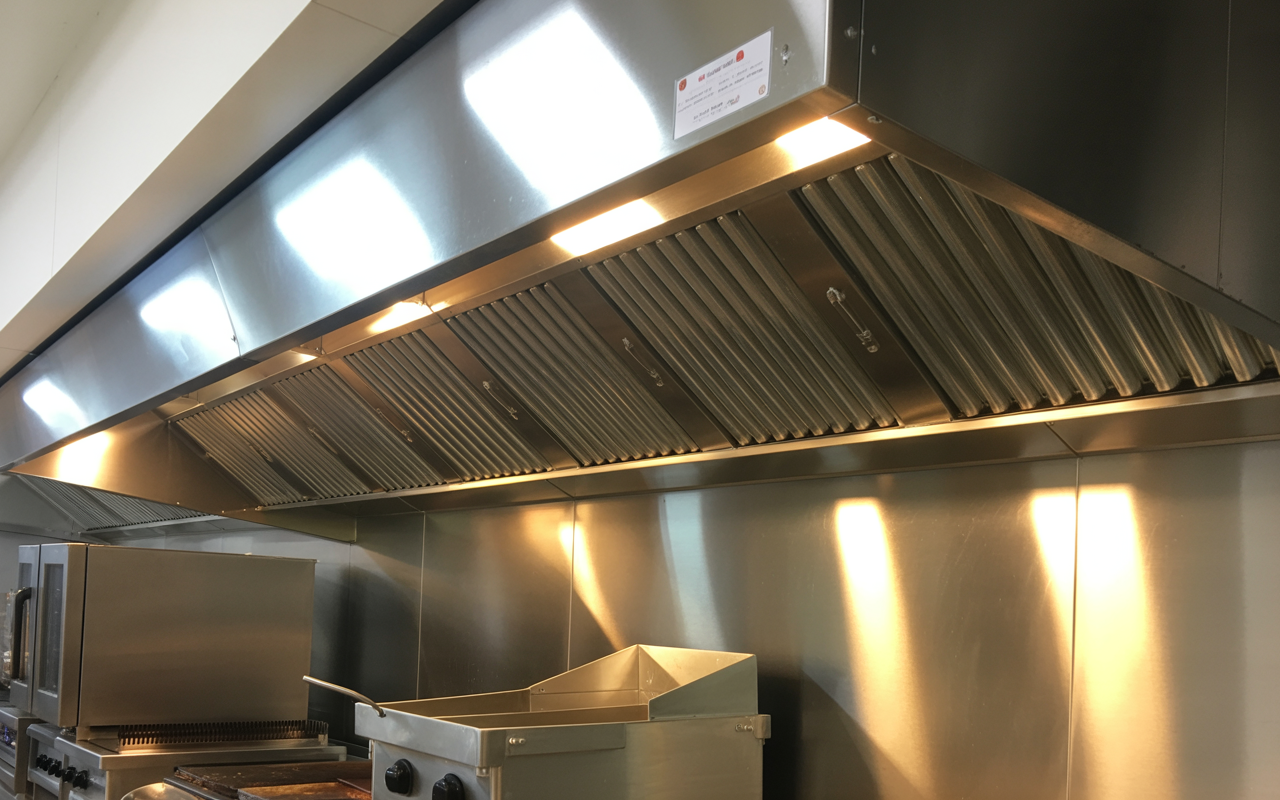
Kitchen exhaust filtration sits in the extraction path above or behind cooking equipment. Its main role is to capture grease and other airborne contaminants before air moves into ductwork, fans and discharge points.
Depending on the kitchen setup, exhaust filtration may include:
- •Baffle filters that help separate grease from moving air
- •Mesh-style filters in some canopy hoods
- •Secondary filtration or odour control media in specific applications
- •Grease collection components that support safe cleaning and maintenance
The main concern here is contamination build-up. Grease accumulation can restrict airflow, increase cleaning requirements and affect the condition of ductwork and associated components. That is why exhaust filtration should be selected to suit the cooking load, hood design and cleaning access.
Some filters are designed to be washable - check the product instructions. Cleaning method, handling and reinstallation should always follow the equipment manufacturer’s guidance.
If you need replacement kitchen filters, the right starting point is the existing filter size, frame type and hood arrangement. If you are unsure, how to measure an air filter can help with the basics, or you can speak with our team about custom air filters.
What general HVAC filtration does in food service venues
General HVAC filtration is usually found in the air-handling system, rooftop unit, return air path or supply-air system. Its purpose is different from kitchen exhaust: it filters the air that is brought into occupied spaces or recirculated through the building.
In restaurants, cafes and food courts, supply-air filtration can help manage:
- •Dust and debris entering from outside air intakes
- •Building dust from plant rooms, ceilings and service spaces
- •Particle build-up on coils, fans and ductwork
- •Odour transfer through the general ventilation system when filtration and air balance are not well managed
For HVAC systems, the filter choice affects airflow resistance, equipment maintenance and indoor cleanliness. A filter that is too coarse may not capture enough dust. A filter that is too restrictive may reduce airflow if the system is not designed for it.
Filter selection should suit the system design, the site’s dust load and the maintenance access available. If you are working to AS 1668.2:2024, confirm site requirements with the mechanical services engineer or building owner rather than assuming a single filter grade will suit every kitchen or tenancy.
Choosing the right filter type for each system
A practical way to think about it is this: exhaust filtration protects the extraction path, while HVAC filtration protects the supply or recirculated air path.
Exhaust side considerations
- •Confirm the hood or exhaust unit type
- •Match the filter dimensions and frame style exactly
- •Consider grease loading, cleaning access and fire safety requirements for the installation
- •Use the filter type intended for that hood or extraction arrangement
HVAC side considerations
- •Check whether the unit uses a disposable panel, pleated filter, bag filter or another format
- •Confirm the available filter depth and frame size before ordering
- •Review the pressure drop across the filter where gauges are fitted
- •Replace or service the filter based on inspection findings and manufacturer instructions, not guesswork
If your building uses known classifications, you may hear terms like G3, G4 or F5 to F9, which are EN 779 classes still commonly referred to in Australia even though ISO 16890 is now the current standard family. Those ratings do not convert directly, so it is best to specify the filter required for the actual system rather than trying to translate one system to another.
Common mistakes in restaurants and cafes
It is easy to mix up the two filtration jobs, especially in multi-use venues where a kitchen sits beside dining areas, preparation rooms and plant equipment.
Some common issues include:
- •Using a general HVAC filter in place of a grease filter
- •Installing the wrong size filter in a canopy or air handler
- •Overlooking odour control in the exhaust path when the real issue is grease loading or airflow imbalance
- •Forgetting that return-air filtration and kitchen exhaust filtration serve different parts of the building
- •Replacing filters without checking the condition of seals, frames and housings
Another point to watch is washability. Some filter products are washable, but not all of them are, and cleaning methods vary by design. Always follow the product instructions and the equipment maker’s advice before reusing a filter.
How to specify and maintain the right setup
For a food service venue, good filter management starts with clear identification of each system and its purpose.
A useful approach is:
- •Label whether the filter belongs to exhaust, supply air or return air
- •Keep the filter size, material and frame details on file
- •Inspect systems according to site conditions and dust or grease loading
- •Monitor pressure drop where gauges are fitted
- •Follow the filter and equipment manufacturer instructions for replacement and cleaning
For contractors and facilities teams, it also helps to confirm whether the venue has any special operating conditions, such as heavy frying, charcoal cooking, open-flame appliances or tightly controlled air balance. These factors can change the type of filter media or frame needed.
If you are managing multiple sites, filter servicing and commercial filter servicing can help keep records consistent and avoid missed maintenance.
Getting the right filters for kitchens and HVAC systems
Commercial kitchen exhaust filtration and general HVAC filtration are both important, but they should never be treated as interchangeable. One is built to handle grease and cooking by-products; the other is built to support clean, balanced supply air and protect mechanical equipment.
If you need help matching a replacement filter to a hood, air handler or rooftop unit, Total Air Filtration is a family-owned air filter manufacturer and supplier in Hillcrest, Brisbane QLD, established 2009. We can supply standard sizes or make the right filters for your application.
Call 07 3800 3448 or request a quote. You can also view our products or contact us if you need help identifying the filter type for your venue.
Written by
The Total Air Filtration Team
General information only — always follow the instructions for your filter and system. Have questions about this article? We're here to help.