
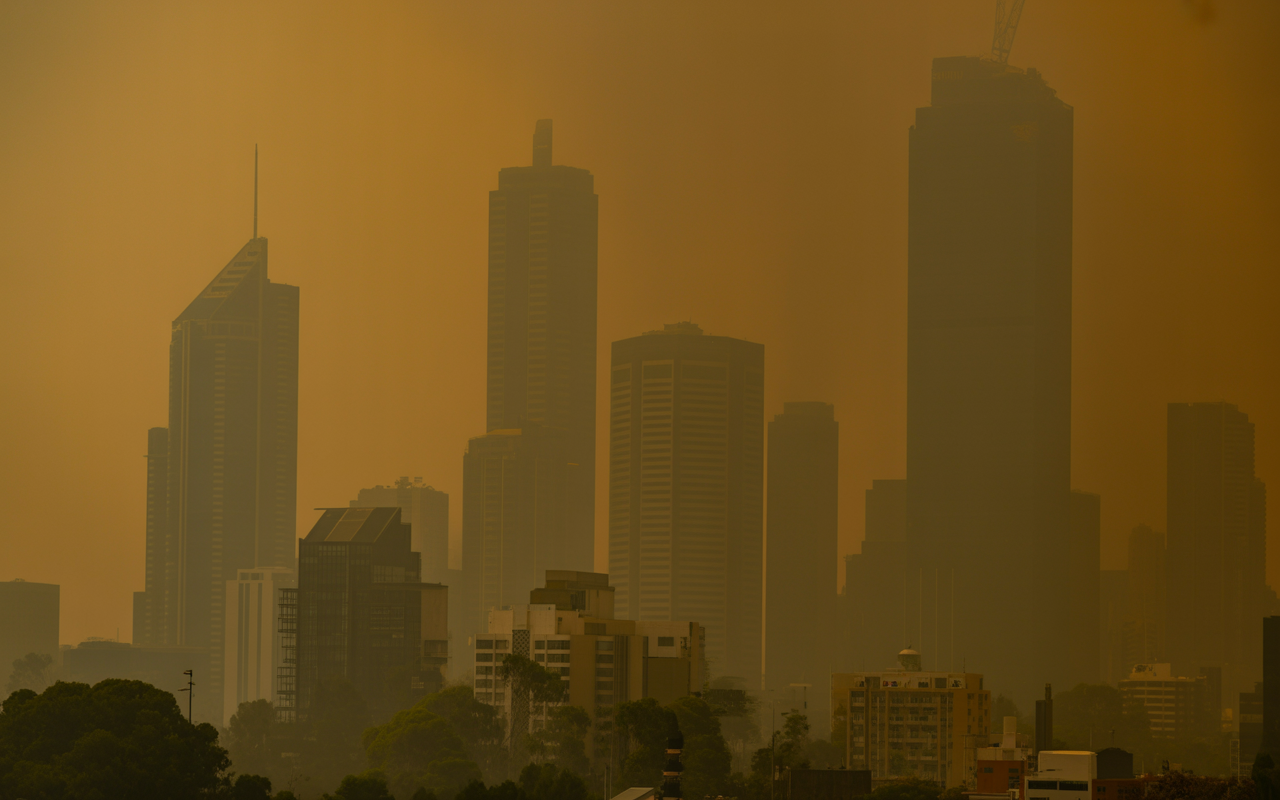
Managing Wood Heater Smoke Entering a Brisbane Home from the Neighbour’s Chimney
Wood heater smoke from a nearby chimney can find its way into a Brisbane home more easily than many people expect. Once those fine particles and odours are indoors, the goal is to understand how they move through the building and what filtration can do to improve the air inside.
How neighbour’s chimney smoke gets into a home
Smoke does not need a wide-open window to enter a house. It can travel on airflow paths created by wind, temperature differences, exhaust fans, open vents and gaps in the building fabric.
On cooler evenings, a wood heater plume can hang lower and drift across fences, rooflines and eaves before being drawn into nearby properties. If a home is slightly negative in pressure, it can pull outside air inside through small openings around doors, windows, roof penetrations and wall joints.
Common entry paths include:
- •open windows and sliding door tracks
- •exhaust fans running in kitchens, bathrooms and laundries
- •ceiling cavities and roof spaces
- •wall penetrations for services
- •gaps around old seals, frames and flues
In strata buildings, smoke can also move between lots through shared corridors, service risers, lift shafts and other connecting voids. That is why the source of the smoke is not always the same as the point where it is noticed.
What is actually in wood heater smoke?
Wood smoke is a mix of very fine particles and gases. The visible haze is only part of the story. Much of what affects indoor air quality is too small to be seen clearly, so a room may smell smoky even when there is little obvious haze.
Inside a home, smoke can leave a lingering odour on soft furnishings and can settle as fine dust on surfaces. The smaller particles are the main concern for air filtration because they stay suspended in the air longer and can be circulated around the home by fans and air conditioning.
Why the smell can linger
Odour can remain even after the visible smoke has cleared because smoke particles and vapours can be absorbed into:
- •curtains and upholstery
- •carpets and rugs
- •bedding and soft furnishings
- •porous wall and ceiling surfaces
That is one reason indoor filtration is useful alongside source control, sealing gaps and cleaning affected surfaces.
What air filters can and cannot do indoors
A well chosen filter in a ducted system or portable unit can capture smoke particles as air passes through it. This helps reduce the amount of particulate matter recirculating indoors when outside air is smoky.
Filters do not stop smoke from entering a building in the first place, and they do not remove every gas or odour component. If the main concern is the smell of smoke, a suitable filter may help when combined with other measures, but it is not the only answer.
Practical uses for filtration include:
- •improving recirculated air in a ducted system
- •helping a portable air cleaner capture fine smoke particles in a room
- •providing extra protection during smoky evenings when windows need to stay closed
For homeowners, the main question is whether the existing system can accept a higher efficiency filter without reducing airflow too much. For strata managers, the question is often how to manage the whole building consistently, especially where common areas or shared systems are involved.
Choosing a filter for smoke-prone conditions
The best filter depends on the equipment, the available airflow and the size of the particles you want to capture. Smoke particles are very fine, so a coarse filter alone is usually not enough if the aim is to improve indoor air quality during smoke intrusion.
Useful considerations include:
- •whether the system uses a standard panel filter, pleated filter or cartridge style filter
- •the amount of airflow the system needs to maintain
- •how much dust and smoke the site tends to load onto the filter
- •whether the filter housing has enough space for a deeper or higher efficiency option
If you are comparing filter ratings, it is important not to assume that one system’s rating translates directly to another. MERV, EN 779 and ISO 16890 ratings do not convert directly. In Australia, G3/G4 and F5-F9 are still widely used as EN 779 classes, even though ISO 16890 has superseded it.
If your building engineer is working to AS 1668.2:2024 for ventilation, confirm the site requirements with the mechanical services engineer or building owner before changing any filter specification.
Indoor steps that help alongside filtration
Filtration works best when the building is also limiting how smoke gets in. For a home affected by a neighbour’s wood heater, useful steps often include a mix of sealing, ventilation management and targeted cleaning.
Practical things to check
- •close windows on smoky nights if outside air quality is poor
- •run exhaust fans only when needed, and be aware they can pull outside air into the home
- •inspect seals around windows, doors and penetrations
- •check that rangehoods and bathroom fans are exhausting correctly
- •clean return air grilles and visible dust build-up regularly
- •consider a portable air cleaner in the most affected room if the system is not designed for smoke events
If a property is in a strata scheme, it can also help to document when smoke is noticed, where it is strongest and which areas seem affected. That information can assist with maintenance planning and conversations with the building owner or committee.
Filter servicing and inspection matters
Once a filter starts collecting smoke particles, it will gradually load with dust and soot. As loading increases, airflow can change, so regular inspection is important. The right inspection frequency depends on the system, the site conditions and the dust load.
Where gauges are fitted, pressure drop should be monitored to help decide when a filter needs attention. It is also important to follow the filter and equipment manufacturer instructions rather than relying on a fixed replacement schedule.
Some filters are designed to be washable - check the product instructions. Others are single-use and should be replaced when they reach their service limit or when airflow performance changes.
For properties with persistent smoke issues, planned filter servicing can be a practical part of ongoing maintenance. Where a whole building or commercial setup is involved, commercial filter servicing may be the more suitable approach.
When a custom filter solution makes sense
Smoke intrusion problems are not always solved with a standard off-the-shelf filter. Older homes, modified ductwork, compact plant rooms and strata equipment rooms may all need a different fit or format.
A custom solution may be appropriate when:
- •the filter frame size is unusual
- •the system has limited space but needs higher filtration
- •the existing filter arrangement is not sealing properly
- •the building manager wants a specific filter depth or media type
If you need to check a size before ordering, our guide on how to measure an air filter can help. You can also browse our products or explore custom air filters if the standard sizes are not suitable.
Getting help for a Brisbane home or strata property
If smoke from a nearby wood heater is affecting a home, the best outcome usually comes from understanding the airflow path, improving sealing where practical and choosing filtration that suits the system.
Total Air Filtration is a family-owned air filter manufacturer and supplier in Hillcrest, Brisbane QLD, established 2009. We can help supply or make the right filters for the job, including options suited to smoke-prone sites and unusual sizes.
Call 07 3800 3448 or request a quote. If you need to talk through a specific property, you can also contact us.
Written by
The Total Air Filtration Team
General information only — always follow the instructions for your filter and system. Have questions about this article? We're here to help.