
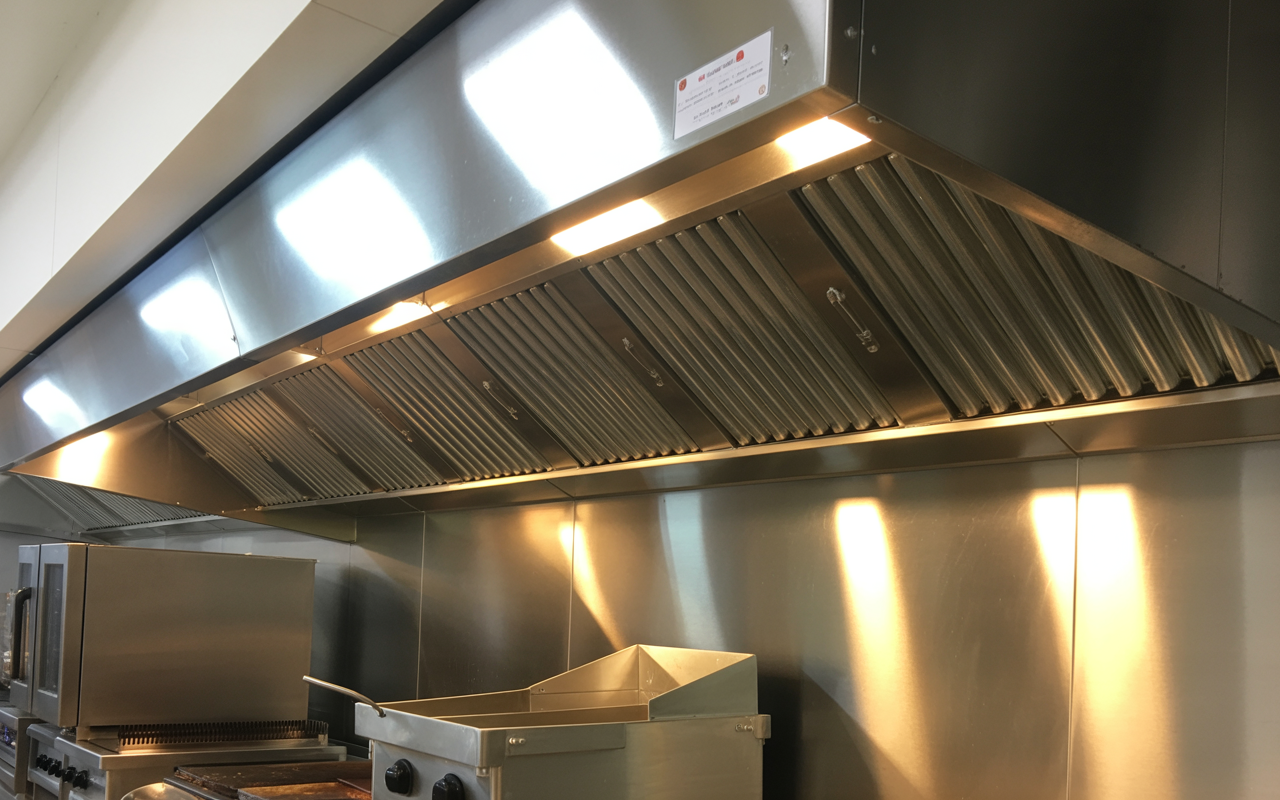
Managing Grease Mist in Home Kitchen Air Handling Near Open-Plan Dining Areas
Open-plan kitchens look and feel spacious, but they also move cooking vapour into places where it was never a problem in a closed kitchen. When a cooktop sits close to a dining area, the air-handling system has to deal with more than heat and steam: it also has to capture grease mist, airborne particles, and lingering odour without creating avoidable maintenance issues.
For homeowners and kitchen fit-out contractors, the key is not just removing the visible vapour. It is choosing the right filtration stages, airflow path, and access for cleaning so the system suits the way the space is actually used.
Why open-plan layouts are harder on filters
In a closed kitchen, exhaust and filtration can be concentrated around one room. In an open-plan layout, the kitchen is often part of a shared air zone with the dining and living area, so cooking aerosols can spread further before they are captured.
Grease mist behaves differently from dry dust. It can stick to duct surfaces, fan components, grilles, and filters, especially when airflow is uneven or the capture point is too far from the cooktop. Over time, that build-up can:
- •reduce airflow through the system
- •cause filters to load faster than expected
- •leave a sticky film that attracts more dust
- •increase odour carryover into the dining area
- •make cleaning more difficult for the homeowner or service contractor
If the system is also handling general room air, the kitchen filter choice needs to account for both fine airborne particles and the heavier load created by cooking vapour.
What cooking vapour and grease mist do to filters
Not every kitchen filter sees the same type of contamination. A system serving an open-plan home may be dealing with a mix of steam, aerosolised oil, fine dust, food particles, and general household dust. Grease mist is particularly challenging because it can bind particles together and form a tacky layer on the filter media.
That matters because a filter that looks suitable on paper may load up quickly in a real kitchen environment if it is not designed for oily air. In practical terms, that means the system can become noisier, airflow can drop, and maintenance may become more frequent.
When specifying filters, consider:
- •whether the filter is intended for kitchen exhaust, recirculation, or general ventilation
- •the expected cooking style, such as frequent frying, searing, or wok cooking
- •how close the return air intake is to the cooking area
- •whether the filter sits upstream of the fan or protects downstream components
- •how easy it is to inspect, remove, and replace the filter
Some filters are designed to be washable - check the product instructions. For other products, washing can damage the media or frame and may make the filter perform poorly.
What to specify for connected kitchen and dining areas
The right setup usually starts with a clear question: is the air being exhausted outside, recirculated, or both? That answer determines whether you need grease capture, particle filtration, odour control, or a combination of all three.
Filter stages worth considering
A single filter is rarely the whole answer in an open-plan kitchen. Depending on the equipment and layout, a staged approach may be better.
- •Grease capture stage: helps trap heavier cooking aerosols before they reach finer filters or ductwork
- •Pre-filter: catches larger airborne particles and protects finer media downstream
- •Fine particle filter: useful where the system also serves the dining zone and general indoor air quality is a priority
- •Activated carbon: may help with cooking odour in recirculating systems, but it is not a substitute for grease capture
If a project calls for higher-efficiency filtration, it is worth checking the specification carefully rather than relying on a generic label. MERV, EN 779 and ISO 16890 ratings do not convert directly, and product selection should be matched to the equipment and the application.
For homes using mechanical ventilation or hybrid systems, AS 1668.2:2024 may be relevant to the broader ventilation design. Site requirements should always be confirmed with the mechanical services engineer or building owner.
Materials and frame details matter
In a kitchen environment, the filter frame and sealing method can be just as important as the media. Grease mist can bypass poorly fitted filters and coat nearby surfaces. Look for:
- •sturdy frames that hold shape under load
- •sealing that reduces bypass around the edges
- •media suitable for the intended temperature and airflow conditions
- •filter sizes that match the housing properly
If you need help confirming dimensions, see how to measure an air filter. Incorrect sizing can leave gaps that reduce performance and allow grease-laden air around the filter instead of through it.
Installation and maintenance considerations
A good specification can still underperform if the system is hard to access or impossible to inspect. In open-plan homes, the filter should be easy to reach without disturbing the kitchen layout or dining furniture.
Practical points for contractors and homeowners:
- •allow enough space for safe filter removal and refitting
- •keep service access clear, especially where panels are hidden within cabinetry
- •check whether the fan and filter housing can handle the expected load of cooking aerosols
- •make sure pressure drop can be monitored where gauges are fitted
- •follow the filter and equipment manufacturer instructions for cleaning or replacement
Inspection frequency depends on the system, site conditions and dust load. A lightly used kitchen may behave very differently from one where frequent frying, roasting, or entertaining is common. The best guide is the condition of the filter and the pressure drop trend, not a fixed calendar.
If the system is part of a larger home or small hospitality fit-out, it can also be useful to review filter servicing options so the maintenance plan suits the space.
Coordinating the kitchen design with the air system
Open-plan design can work well when the air-handling strategy is considered early. Once the cabinetry, ceiling lines, and lighting are fixed, it becomes much harder to place filters and ductwork in locations that are easy to maintain.
During the fit-out stage, ask these questions:
- •Is the capture point close enough to the cooktop to intercept vapour before it spreads?
- •Will the return air path draw cooking aerosols across the dining area?
- •Is there space for the right filter depth and service access?
- •Does the proposed filter suit the type of cooking expected in the home?
- •Are replacement filters readily available in the required size and specification?
For custom cabinetry or non-standard housings, custom air filters can help match the system to the actual installation rather than forcing a standard size into a tight space.
When to seek a tailored filter solution
Not every open-plan kitchen can use an off-the-shelf filter arrangement. If the layout is unusual, the cooking load is heavy, or the system is already showing grease build-up, a tailored approach is often more practical than trying to make a general-purpose filter do everything.
That is where a manufacturer that understands both residential and light commercial applications can help. Total Air Filtration is a family-owned air filter manufacturer and supplier based in Hillcrest, Brisbane QLD, and we work with homeowners, kitchen fit-out contractors, and builders looking for the right filter specification for the space.
We can help supply or make filters to suit the application, whether you are replacing an existing filter, planning a new installation, or trying to improve access and maintenance. For advice or to request a quote, call 07 3800 3448 or contact us.
Written by
The Total Air Filtration Team
General information only — always follow the instructions for your filter and system. Have questions about this article? We're here to help.