
Managing Bushfire Smoke in Queensland Homes: What Filtration Can and Can’t Do
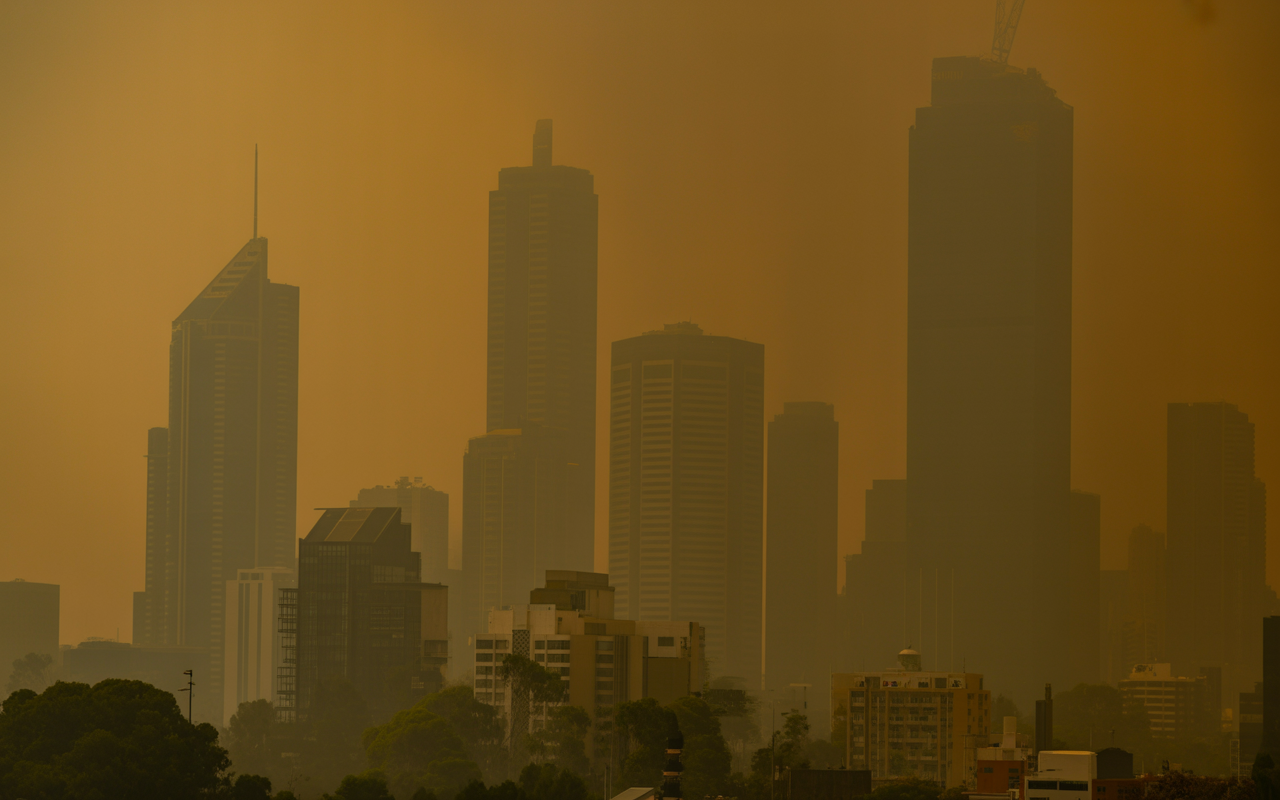
Bushfire smoke can quickly affect indoor air quality across Queensland, especially when smoke lingers for days or shifts with the wind. For homeowners, facility managers and mechanical contractors, the challenge is understanding what filtration can realistically do, and what still needs attention in the building itself.
At Total Air Filtration, a family-owned air filter manufacturer and supplier in Hillcrest, Brisbane QLD, we often help customers choose filters for smoke-prone conditions. The right setup can reduce airborne smoke particles indoors, but filtration works best as part of a wider response that also considers ventilation settings, system operation and building maintenance.
What bushfire smoke means for indoor air
Bushfire smoke is a mix of fine particles and gases, and the two behave differently indoors.
Filters are designed to capture particles as air passes through the HVAC system or a standalone unit. That means they can help reduce the amount of smoke particulate that recirculates indoors, provided the system is configured to move air through the filter rather than around it.
Odour is a different issue. A standard particle filter may remove visible smoke particles, but it will not necessarily remove the smell of smoke. That is where carbon filtration may assist in some situations.
During smoke events, the building’s response should also include practical steps such as:
- •keeping doors and windows closed where possible
- •checking that air intakes are not drawing in the heaviest smoke where the system allows adjustment
- •ensuring filter housings are sealed properly so air does not bypass the filter
- •monitoring indoor conditions and responding to complaints or visible smoke intrusion early
If occupants have health concerns, they should seek medical advice. Filtration is one part of the building response, not a substitute for medical care.
How filters help during smoke events
A good filter can make a noticeable difference to how much smoke particulate circulates through an HVAC system. The key is choosing a filter that suits the system and can operate without excessive resistance.
For many homes and light commercial systems, the best result comes from a filter that balances capture performance with the fan and system design. Higher-efficiency filters may capture more fine particulate, but they also create more pressure drop. If the fan or air handler is not designed for that load, airflow can suffer.
That is why it is important to consider:
- •the existing fan capacity
- •the size and condition of the filter section
- •whether the frame and seals are in good condition
- •whether the system was designed for higher-grade filtration in the first place
If you are unsure what will fit, how to measure an air filter is a useful starting point before ordering replacements or upgrades.
Choosing the right filter type
Different applications call for different filter constructions. In smoke events, you are usually trying to increase capture of fine airborne particles while keeping the system workable.
Depending on the equipment, that may involve:
- •pleated panel filters for general particle removal in lighter-duty systems
- •extended-surface filters where more dust loading capacity is needed
- •higher-efficiency filters for systems that can accommodate them
- •pre-filters upstream of finer filters in some commercial arrangements
For some systems, it may also make sense to use custom air filters when the standard sizes or performance options do not suit the housing.
Supporting HVAC systems during smoke periods
During bushfire smoke events, the HVAC system itself needs attention, not just the filter media.
A well-maintained system is more likely to keep air moving through the filter path as intended. If filters are already loaded with dust, smoke periods can push them closer to the limit quickly. That can increase resistance and make it harder for the system to maintain airflow.
What homeowners can check
Homeowners can usually look for simple signs that the system needs attention:
- •reduced airflow from vents
- •visible dust or smoke odour lingering indoors
- •filter housings that are difficult to access or have poor sealing
- •unusual fan noise or system strain
If your system has a pressure gauge or differential pressure monitoring, check it during smoke events so you can see whether the filter load is increasing. Where gauges are fitted, pressure drop is a practical indicator for replacement timing.
What facility managers and contractors should review
For larger buildings, smoke events are a good time to confirm the air handling strategy with the mechanical services engineer or building owner. Site requirements can vary, and AS 1668.2:2024 may be relevant to the ventilation approach, but the actual settings and filter arrangement should always be confirmed for the specific site.
Useful checks include:
- •whether outdoor air intake rates can be adjusted for the event
- •whether economiser modes or purge cycles should be reviewed
- •whether pre-filters are protecting finer downstream filters
- •whether the filter rack seals properly to prevent bypass
- •whether there is room in the system for a higher-capacity filter arrangement if required
If a building needs ongoing support, filter servicing can help keep filter changes and inspections organised, and commercial filter servicing may be more suitable for larger or more complex sites.
Where carbon filtration can help with odours
Carbon filtration is worth considering when smoke odour is part of the problem. Activated carbon can adsorb some odorous compounds, which may make indoor air feel less smoky even when particle levels have already improved.
That said, carbon filters have limits. They are not a substitute for particle filtration, and they are not equally effective for every smell or every concentration level. Performance also depends on contact time, carbon amount, airflow and how long the filter has been exposed to the odour load.
Carbon filtration may be useful when:
- •odour is the main concern after particle levels are reduced
- •a space has persistent smoke smells coming through ventilation
- •a sensitive area needs an additional layer of odour control
It is important not to oversell what carbon can do. In many systems, the best arrangement is a particle filter for smoke matter plus a carbon stage where odour management matters.
Maintenance matters as much as the filter choice
A smoke event can load a filter faster than normal dusty conditions, so inspection is more important than relying on a fixed replacement calendar.
How often to inspect depends on the system, the site conditions and the amount of dust or smoke the building is exposed to. Follow the filter and equipment manufacturer instructions, and check pressure drop where gauges are fitted.
A few practical points help keep the system reliable:
- •confirm the filter is installed in the correct airflow direction
- •check seals and gaskets for leaks
- •make sure the frame is not damaged or warped
- •inspect the housing for dust build-up that could affect seating
- •replace or clean filters according to the specific product instructions
Some filters are designed to be washable - check the product instructions before cleaning anything. If a filter is not intended to be washed, cleaning it may damage the media or reduce performance.
When higher-efficiency filtration makes sense
In some homes and commercial buildings, smoke events reveal that the existing filter grade is not enough for the space. That does not automatically mean the highest-efficiency option is the right one.
For some applications, a better outcome comes from improving the whole filter strategy rather than simply selecting a denser media. For example, a pre-filter plus a finer final filter can be a practical way to manage loading while maintaining airflow.
If you are working with classifications, remember that MERV, EN 779 and ISO 16890 do not convert directly, so comparisons should be made carefully. EN 779 classes such as G3/G4/F5-F9 are still widely used in Australia, even though the standard has been superseded by ISO 16890.
If a HEPA filter is being considered for a specialised application, the relevant EN 1822 ratings are H13 at greater than or equal to 99.95% efficiency and H14 at greater than or equal to 99.995% efficiency at the most penetrating particle size. Whether that level is suitable depends on the system design and the site requirement.
Talk to Total Air Filtration
If you need help selecting filters for bushfire smoke conditions, Total Air Filtration can supply or make the right filters for your system, including standard, custom and carbon-filter options where suitable. For advice or product support, call 07 3800 3448 or request a quote.
You can also explore our products or contact us if you want to talk through the system, the site conditions and the best filtration approach for your building.
Written by
The Total Air Filtration Team
General information only — always follow the instructions for your filter and system. Have questions about this article? We're here to help.