
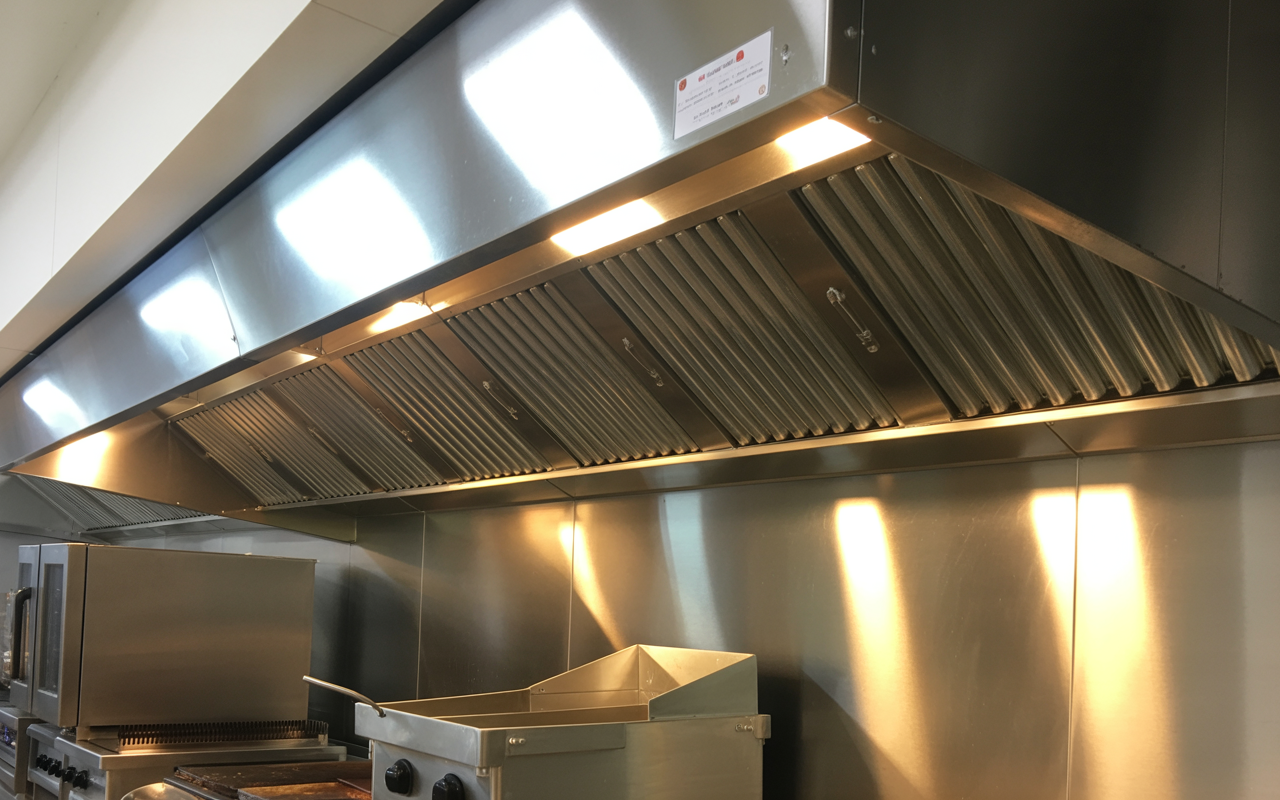
How to Choose Grease Filters for a Small Café Exhaust Hood
Small café exhaust hoods often have limited space, tight access and mixed cooking loads, so the grease filter choice matters more than many people expect. The right filter style can make cleaning easier, improve day-to-day airflow and help the hood fit the kitchen layout without constant fettling.
For mechanical contractors, café owners and facility managers, the main question is rarely “which filter is best in theory?” It is usually “which filter will fit the hood properly, catch grease reliably and still be easy to clean when the kitchen is busy?”
Start with the hood size, frame and access
Before choosing a grease filter style, check the hood opening carefully. Small café exhaust hoods often leave little room for oversized frames, awkward retaining clips or filters that need extra clearance to remove.
A few practical points matter straight away:
- •Measure the clear opening, not just the nominal hood size.
- •Check how the filter is retained, including tabs, latches and tracks.
- •Confirm whether filters need to slide out from the front, side or underneath.
- •Look at clearance around lights, duct transitions and nearby shelving.
- •Make sure the filter can be removed without pulling apart half the canopy.
If you need help confirming measurements, our how to measure an air filter guide is a useful starting point, and if the hood needs a non-standard size, custom air filters may be the better path.
For small commercial kitchens, the best filter is often the one that can be removed and reinstalled cleanly without forcing it. A filter that is too tight can rattle, buckle or leave bypass gaps, while one that is too loose may not seat properly.
Baffle filters: usually the strongest fit for grease-heavy hoods
Baffle filters are a common choice for café exhaust hoods because they are made to handle grease-laden air and are generally straightforward to remove for cleaning. They use angled metal channels that change direction of the airflow, helping grease collect on the surfaces and drain away into the hood’s collection points.
Why contractors like them
- •They tend to be durable in busy kitchen environments.
- •They are usually easier to clean than fine mesh styles.
- •Their rigid construction helps them hold shape in repeated use.
- •They suit hoods where access is narrow but the filter can slide in and out cleanly.
What to watch for
- •They are often heavier than mesh filters.
- •If the hood is shallow, the depth of the baffle can reduce usable space.
- •Poorly sized baffles can leave gaps or make the hood door hard to close.
- •If the kitchen has very light cooking only, a heavy-duty baffle may be more filter than is needed.
In compact cafés, baffle filters often strike the best balance between grease handling and practical maintenance. They are especially useful where the hood serves fryers, grills or other equipment that produces noticeable grease.
Mesh filters: lighter and simpler, but usually less forgiving
Mesh grease filters use layers of woven or expanded metal to trap grease as air passes through. They are commonly found in lighter-duty installations and can suit small café hoods where grease load is modest and ease of handling is a priority.
Where mesh filters can work well
- •In small hoods with light cooking duties.
- •Where filter removal needs to be quick and easy.
- •When the hood design has limited clearance for a deeper baffle unit.
- •Where the owner prefers a lighter filter to handle during cleaning.
The trade-offs
- •Fine mesh can clog more quickly when grease load is high.
- •Grease can be harder to remove if the filter is neglected.
- •Airflow can drop off more noticeably as the mesh loads up.
- •Some mesh products are more vulnerable to distortion if handled roughly.
For a café with espresso equipment and only modest heated food prep, mesh may be adequate if the hood and cooking pattern suit it. But if the menu changes, or the kitchen sees more frying and grilling, mesh filters can become harder to manage.
Other grease filter styles: when space or access is the main issue
Not every small café hood is best served by a standard baffle or mesh unit. In some fitouts, the answer may involve a different style or a purpose-built arrangement that suits the hood geometry.
Perforated or plate-style filters
Some hoods use perforated metal or plate-style grease filters. These can be compact and visually tidy, but their effectiveness and cleanability depend on the exact product design.
They may suit installations where:
- •the hood depth is limited,
- •the filter opening is unusually narrow,
- •the kitchen layout makes a slimmer profile helpful.
Grease filters with removable inserts
Some products are designed with removable sections or inserts to make cleaning simpler. These can be useful where the filter is large but access is awkward, because staff may be able to clean smaller components more easily.
Washable products
Some filters are designed to be washable - check the product instructions. That said, “washable” does not mean maintenance-free. The real question is whether the filter can be cleaned effectively without warping, clogging or leaving residue behind.
For any non-standard option, check the hood manufacturer’s requirements and confirm the site needs with the mechanical services engineer or building owner. AS 1668.2:2024 is a key ventilation reference in Australia, but the right solution still depends on the specific installation.
Airflow impact: why filter choice affects more than grease capture
In a small café, airflow matters because the exhaust hood has to move air steadily without being overworked. The wrong filter style, or a filter that is poorly maintained, can restrict airflow and make the hood less effective at capturing cooking emissions at the source.
A few practical considerations help:
- •Dense or clogged mesh can create more resistance than many people expect.
- •Baffle filters are often a good compromise between grease capture and manageable airflow.
- •A filter that is too deep for the hood may reduce plenum space and disrupt flow.
- •Poor fit can let air bypass the filter entirely, which defeats part of the purpose.
If the hood has pressure gauges fitted, monitor pressure drop and use that reading alongside visual inspection. Inspection frequency depends on the system, site conditions and dust load, and you should always follow the filter and equipment manufacturer instructions.
It is also worth looking at the whole exhaust path, not just the filter face. A clean filter cannot compensate for a cramped hood layout, blocked ducting or a fan operating outside its intended range.
Choosing the right option for a compact café
For a small café, the right grease filter choice usually comes down to the cooking style, the available space and how often staff can realistically clean it.
A sensible decision process is:
- •Match the filter style to the cooking load.
- •Confirm the exact fit before ordering replacements.
- •Check how the filter is removed, especially in a tight canopy.
- •Think about how often staff can access it safely.
- •Choose a style that balances cleaning effort with airflow.
As a rule of thumb, baffle filters are often the safer all-round choice for heavier café cooking, while mesh can suit lighter-duty, space-constrained hoods if maintenance is well managed. If the hood is unusual or the replacement market is inconsistent, custom-made filters can save a lot of back-and-forth.
Getting the right filter supply for the job
At Total Air Filtration, we are a family-owned air filter manufacturer and supplier in Hillcrest, Brisbane QLD, and we help supply and make filters for commercial kitchens and other air handling applications. If you need help matching a baffle, mesh or custom filter to a small café hood, we can talk through the fit and the practical cleaning details.
Call 07 3800 3448 or request a quote. You can also explore our products or read more about filter servicing if you are reviewing an existing installation.
Written by
The Total Air Filtration Team
General information only — always follow the instructions for your filter and system. Have questions about this article? We're here to help.