
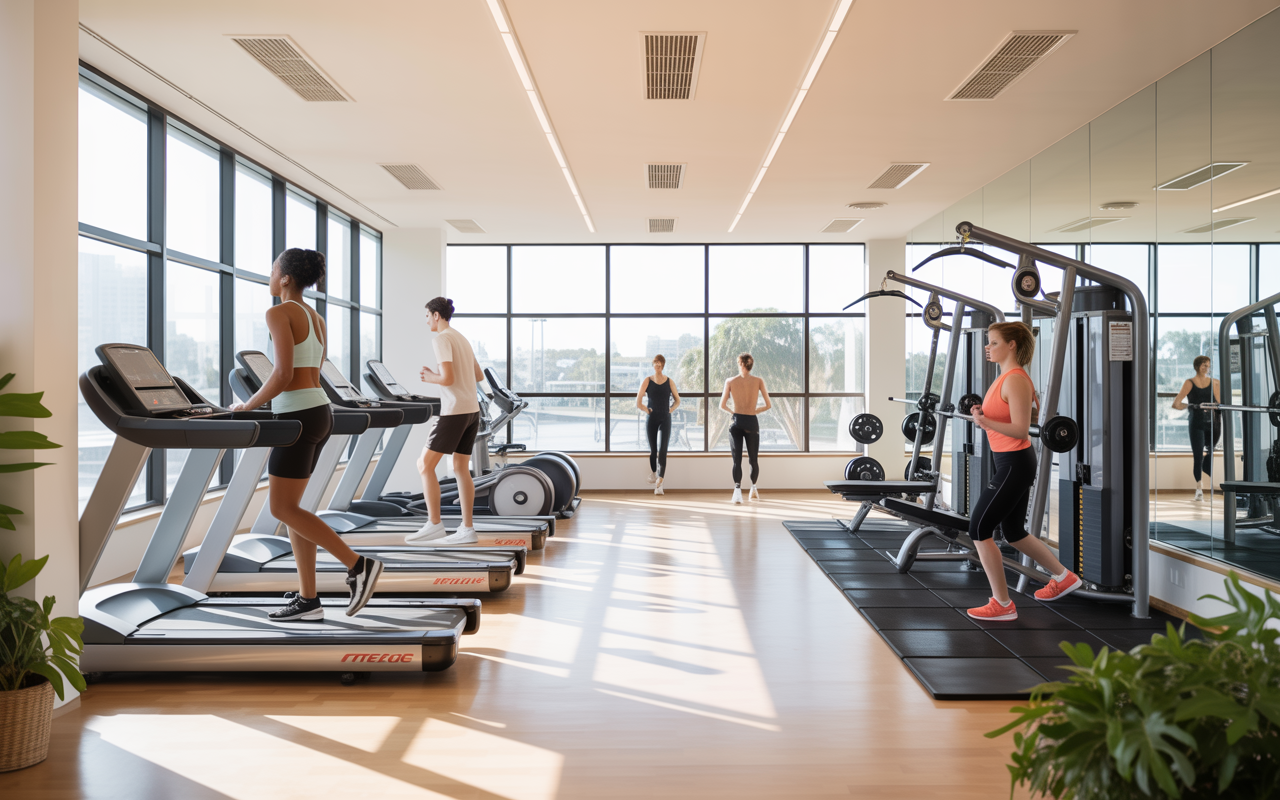
How Gym Operators Can Balance Airflow, Odours and Dust Control
Gyms put air filters under a very specific kind of pressure. You are dealing with sweat odours, fine dust from shoes and flooring, chalk around lifting zones, and ventilation systems that have to keep moving air while equipment runs for long hours and members come and go all day.
For gym owners, facility managers and contractors, the challenge is not just choosing a filter that captures particles. It is choosing a setup that suits the space, protects airflow, and is practical to maintain in a high-use environment.
What makes gym air filtration different
A gym is not a standard office or retail tenancy. Airborne load can change quickly depending on the zone, the time of day and the type of training taking place.
Common gym challenges include:
- •Sweat and odour build-up in change rooms, studios and training floors
- •Chalk dust around weightlifting areas and functional training zones
- •Fine dust tracked in on shoes from car parks, streets and outdoor courts
- •Lint, fibres and general debris from towels, mats and clothing
- •Higher dust loading from heavy foot traffic and constant door opening
- •More wear on systems that run for long periods or cycle frequently
The best filter solution is one that matches those conditions rather than simply using the highest rating available. In many gyms, overly restrictive filtration can make airflow harder to maintain, while under-specified filtration can leave dust and odour management weak.
Start with the ventilation system, not just the filter
Before upgrading filters, it is worth checking how the ventilation system is set up and what it was designed to handle. Airflow, fan capacity, duct condition and filter housing all affect performance.
If your site is being reviewed or renovated, AS 1668.2:2024 may be relevant for ventilation design and operation, but site requirements should always be confirmed with the mechanical services engineer or building owner.
A few practical questions help narrow the right approach:
- •Is the gym using a single central system, multiple split systems, or a mix?
- •Are there separate areas for cardio, weights, group classes and change rooms?
- •Is the system short on static pressure headroom already?
- •Are filters difficult to access for inspection and servicing?
- •Is dust loading highest near entries, studios or lifting zones?
If the system is already working hard, moving to a much denser filter without checking fan capability can reduce airflow. In a gym, that can mean stuffy rooms, uneven coverage and a system that struggles under normal operating conditions.
Filter choices that suit different gym conditions
For many gyms, the right approach is a staged one: a pre-filter to catch larger dust and debris, followed by a finer filter stage where the system allows it.
Coarser filters for pre-filtration
Pre-filters are often used to capture larger particles before they reach finer filters or sensitive components. In busy gyms, this can help manage lint, general dust and heavier debris from foot traffic.
Depending on the system, common EN 779 classes such as G3, G4 and F5-F9 may still be encountered in Australia, even though ISO 16890 is now the current standard. These ratings do not convert directly, so it is better to match the product to the system rather than trying to force a simple equivalent.
Finer filtration where the system can support it
Where a system is designed for it, higher-efficiency filters can help capture smaller airborne particles. In some facilities, that may be useful in reception areas, studios or zones with more controlled ventilation.
The key is balance. A filter that is too restrictive for the fan or housing can create problems with airflow, pressure drop and maintenance. A filter that is too open may not give the dust control the space needs.
Odour management considerations
Sweat odour is not solved by particle filters alone. Dust filtration and odour control are related, but they are not the same job.
Where odour is a concern, gym operators sometimes look at filtration alongside:
- •Better ventilation rates and air movement
- •More frequent cleaning of mats, flooring and soft surfaces
- •Good waste management in change rooms and staff areas
- •Keeping damp towels and laundry out of the airstream
- •Checking whether additional treatment is appropriate for the system design
If you are unsure what the system can support, speak with a mechanical services engineer or use our products as a starting point to compare filter types suitable for commercial environments.
How to manage chalk, dust and heavy foot traffic
Chalk is one of the more demanding contaminants in a gym because it is fine, dry and easy to spread. It can move through lifting areas, cling to nearby surfaces and load filters faster than general background dust.
Foot traffic adds another layer. Every entryway brings in dirt, grit and fibres, especially where members arrive straight from outdoors or car parks.
A practical gym filtration plan often includes:
- •Entry matting to reduce tracked-in debris before it reaches the system
- •Regular visual checks of return air grilles and supply diffusers
- •Pre-filter stages in dusty or high-traffic zones
- •Separate attention to lifting areas where chalk use is concentrated
- •Good housekeeping around plant rooms and filter access points
If your site has a lifting platform, functional training area or boxing zone, it is worth checking whether the local dust load is affecting nearby returns. Sometimes a small layout change, better intake placement or improved pre-filtration can make a noticeable difference to maintenance demands.
Washable, disposable or custom filters?
The right answer depends on the equipment, the site conditions and how the filters are accessed.
Some filters are designed to be washable - check the product instructions. That can be useful in certain applications, but washability is a property of specific products, not a general rule for all gym filters.
Disposable filters are often preferred where consistent replacement is important and access is straightforward. Custom filters can be useful where the existing frame size is unusual, the system is older, or the site needs a specific media type or construction.
If your current filter size is hard to source, you can use how to measure an air filter to confirm dimensions before ordering, or consider custom air filters for a better fit.
When deciding between options, think about:
- •Access to the filter rack
- •How quickly the filters load with dust
- •Whether the system needs a rigid frame or a flexible media type
- •How often the plant room is inspected
- •Whether the filter must suit a standard or non-standard housing
Maintenance that keeps gyms running smoothly
In a gym, filter maintenance works best when it is tied to inspection, not guesswork. Inspection frequency depends on the system, site conditions and dust load, and where gauges are fitted, pressure drop should be monitored.
That means a busy boxing studio with chalk and heavy foot traffic may need more attention than a low-traffic wellness room. A main intake close to a street entrance may also load faster than a return in a quieter internal zone.
Good maintenance practice includes:
- •Checking filters during routine plant room visits
- •Looking for visible loading, damage or bypass around the frame
- •Confirming the seal is intact when filters are changed
- •Recording pressure drop where gauges are installed
- •Following the filter and equipment manufacturer instructions
If your maintenance team is stretched, filter servicing or commercial filter servicing can help keep the system organised and reduce the risk of missed inspections.
Get the right balance for your site
The best gym filter setup is one that supports airflow, handles the dust load and fits the way the facility is actually used. That usually means looking at the whole system, not just a single filter rating.
Total Air Filtration is a family-owned air filter manufacturer and supplier in Hillcrest, Brisbane QLD, established in 2009, and we work with gyms, contractors and facility teams who need practical solutions for busy sites.
If you need help selecting or making the right filters for your gym, call 07 3800 3448 or request a quote.
You can also contact us or review industries we supply if you are planning filtration across multiple facility types.
Written by
The Total Air Filtration Team
General information only — always follow the instructions for your filter and system. Have questions about this article? We're here to help.