
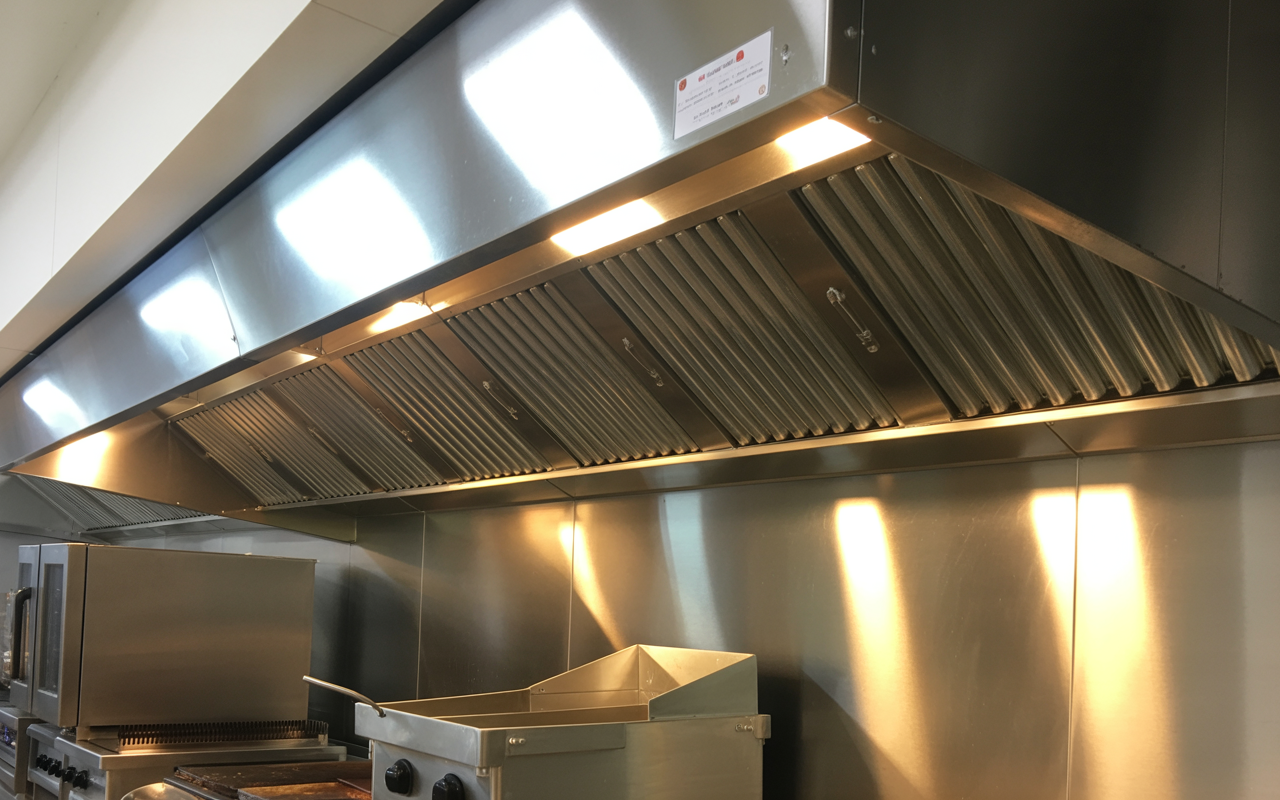
How Grease Filters Support Safer Commercial Kitchen Ventilation
Commercial kitchen exhaust systems do more than move air out of a kitchen. They help manage grease-laden vapour, heat and odour at the source, and the grease filter is one of the first components doing that work. When the right filter is selected and properly fitted, it supports cleaner airflow through the canopy and ductwork, and helps the system operate as intended.
For mechanical contractors, facility managers and industrial buyers, grease filters are not just a replaceable consumable. They are part of the ventilation design, the maintenance routine and, in many sites, the practical path to meeting the requirements of the kitchen exhaust system and the building owner’s expectations.
What grease filters do in a kitchen exhaust system
Grease filters sit inside the kitchen hood or canopy, just above the cooking line. Their job is to intercept grease droplets and larger airborne particles before they travel deeper into the exhaust system.
As cooking equipment generates hot air, steam and vapour, fine grease particles are carried upwards into the extraction plume. The filter media or baffle profile slows that airstream and encourages heavier particles to separate out, where they collect on the filter surfaces instead of coating ductwork and fans.
In practical terms, grease filters help to:
- •Capture larger grease droplets and splatter
- •Reduce the amount of grease entering ducts and exhaust fans
- •Support more even airflow across the canopy face
- •Make routine cleaning and maintenance more manageable
The exact capture behaviour depends on the filter type, the cooking load and how the canopy is designed. A filter that performs well in one kitchen may not be the best choice for another if the airflow pattern, heat output or grease load is different.
What grease filters capture, and what they do not
A common misconception is that a grease filter should catch everything leaving a kitchen. In reality, it is designed for grease-laden particles and larger airborne debris, not every airborne contaminant.
Grease filters are intended to capture:
- •Oil and grease droplets released during cooking
- •Larger particulates from frying, grilling and sautéing
- •Some food aerosols and heavier residue carried in the exhaust stream
They are not designed to replace other controls in the ventilation system. For example, odour management, fire suppression, duct cleaning and balanced air supply all play separate roles. If a kitchen has odour concerns or special exhaust requirements, the full system design needs to be reviewed rather than relying on the grease filter alone.
This is especially important in commercial kitchens where ventilation demand changes across service periods. A filter that loads up quickly or restricts airflow too much can affect canopy capture and create maintenance headaches downstream.
Why correct selection and fit matter
A grease filter must suit the hood design, airflow rate and cooking duty. If it is undersized, poorly fitted or the wrong style for the application, grease can bypass the filter and enter the ductwork. If the fit is too loose, air may take the path of least resistance around the frame rather than through the filter face.
Correct selection matters for several reasons.
Airflow and capture performance
Kitchen exhaust systems are designed around a specific air volume and capture pattern. If the grease filter creates too much resistance, airflow can drop and the hood may struggle to capture vapours at the cooking line. If it offers too little resistance or poor separation, grease may pass through more readily.
Seal and frame compatibility
The filter must seat correctly in the canopy tracks or retaining system. A proper fit helps keep air moving through the intended path. It also makes installation and removal safer and simpler for cleaning crews.
Build quality and maintenance access
Some grease filters are built for higher grease loads, while others are better suited to lighter-duty commercial kitchens. The right choice depends on the equipment below the hood, the cooking methods used and the cleaning regime on site. Some filters are designed to be washable - check the product instructions.
If you are ordering replacements, it is worth verifying dimensions carefully. Even a small mismatch can affect fit, rattle during operation or create gaps at the frame edges. If you need help confirming dimensions, how to measure an air filter explains the basic process, and the same careful approach applies when checking grease filter sizes and frame profiles.
Compliance, maintenance and practical site checks
In Australian commercial kitchens, ventilation requirements are commonly considered alongside AS 1668.2:2024 and the site-specific design documentation. That said, the right filter on its own does not guarantee compliance. Site requirements should always be confirmed with the mechanical services engineer or building owner.
A well-chosen grease filter supports the broader system, but the maintenance approach matters just as much.
What to check during inspections
Inspection frequency depends on the system, site conditions and grease load. Follow the filter and equipment manufacturer instructions, and monitor pressure drop where gauges are fitted.
During inspections, look for:
- •Visible grease build-up on the filter surface
- •Damaged frames, bent baffles or loose mesh
- •Gaps at the edges or poor seating in the canopy
- •Uneven loading, which can indicate airflow issues
- •Signs that cleaning has not removed residue fully
If a filter is heavily loaded, damaged or no longer fits properly, it should be replaced rather than reused. In a kitchen environment, a worn filter can become a weak point in the whole exhaust arrangement.
Cleaning and servicing considerations
Many sites include filter cleaning in broader filter servicing or commercial filter servicing schedules. That routine should be matched to kitchen use, not assumed from a generic timetable.
When planning maintenance, consider:
- •The cooking style and grease output
- •How often the kitchen operates
- •Whether the system has pressure monitoring
- •Access for safe removal and reinstallation
- •Any manufacturer guidance for the hood and filter frame
If the system is difficult to access or the filters are awkward to remove, a better-fitting replacement may save time and reduce handling issues over the long term.
Choosing the right grease filter for the job
There are several common grease filter styles used in commercial kitchens, and the best option depends on the hood design and how the kitchen operates. Baffle-style filters are widely used where grease separation and cleaning access are important. Mesh-style filters may suit lighter-duty applications, while other configurations are used in purpose-built systems.
When selecting a filter, check:
- •Dimensions and mounting style
- •The canopy manufacturer’s requirements
- •Resistance to the kitchen’s grease load and heat conditions
- •Whether the filter can be removed and cleaned safely
- •Whether replacement units need to match an existing frame profile
If a standard size does not fit, custom-made options may be the most practical solution. That is where custom air filters can be useful, particularly for older kitchens, modified canopies or equipment with non-standard openings.
For buyers managing multiple sites, it also helps to keep a clear record of installed filter sizes, canopy types and maintenance notes. That makes reordering simpler and reduces the risk of mismatched products being installed later.
Need help selecting or replacing grease filters?
Total Air Filtration is a family-owned air filter manufacturer and supplier in Hillcrest, Brisbane QLD, established 2009. We can help supply or make the right grease filters for your kitchen exhaust application, including standard and custom requirements.
If you need guidance on fit, replacement options or a filter that matches your canopy, call 07 3800 3448 or request a quote. You can also contact us for assistance with a specific site or explore our products to see the range we supply.
Written by
The Total Air Filtration Team
General information only — always follow the instructions for your filter and system. Have questions about this article? We're here to help.