
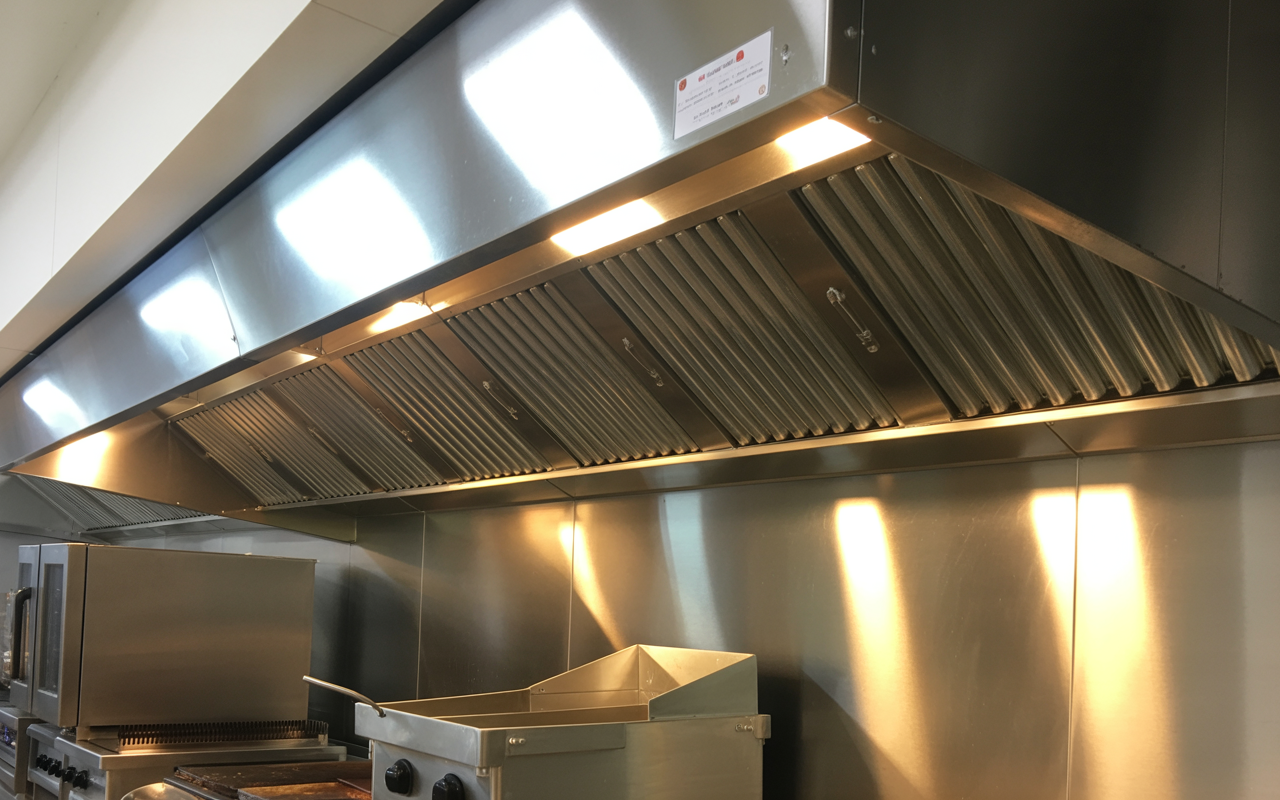
Grease Filters for Commercial Wok Stations in Asian Restaurants
Commercial wok stations put a very particular demand on kitchen ventilation. High heat, rapid tossing, oils, sauces and intense flame all combine to produce grease, fine airborne residue and odour in a way that is different from many other cooking areas.
For restaurant owners and contractors, the challenge is not just choosing a grease filter. It is designing a system that can capture the load, keep airflow stable and make cleaning practical in a busy kitchen.
Why wok cooking is different
Wok cooking produces a concentrated plume directly above the burner or cooking surface. That plume can contain larger grease droplets, fine aerosolised oil, steam, smoke and food particles, all moving quickly and at high temperature.
Compared with a flatter cooking line, a wok station often has:
- •intense and localised heat release
- •frequent flare-up and splatter
- •sticky grease vapour that can cool and condense in ductwork
- •fine residue from sauces, spices and high-temperature cooking
- •rapid changes in cooking intensity through the service period
That combination matters because a filter that handles one type of airborne material well may still struggle when the load changes from greasy droplets to hotter, finer residue. The result can be uneven capture, faster build-up and more frequent maintenance if the system is not matched to the cooking style.
What the filter has to do
In a commercial kitchen, grease filters are there to capture grease droplets and larger particulate before they move deeper into the exhaust system. Around a wok station, that capture has to happen while airflow is dealing with heat and a dense, mixed aerosol.
A good setup needs to balance three things:
- •capture efficiency for grease and suspended residue
- •airflow resistance that does not choke the canopy or exhaust fan
- •cleanability so maintenance staff can remove built-up material without damaging the filter
If resistance becomes too high, the canopy may stop drawing evenly across the cooking surface. If the filter is too open, grease can travel further into the system and settle where it is harder to remove. The goal is to find the right middle ground for the cooking load, not simply use the densest filter available.
Common filter types used over wok stations
Depending on the hood design and kitchen duties, systems may use baffle-style grease filters, mesh-style filters or other purpose-made commercial kitchen filter media. The right choice depends on the canopy, airflow rates and the way the kitchen is used.
Some filters are designed to be washable - check the product instructions. In busy cooking areas, washability can be useful, but only if the product is made for it and the cleaning process suits the material and frame.
If you are matching a filter to a new or upgraded kitchen, it can also help to review the full ventilation arrangement rather than looking at the filter in isolation. Our our products page is a good place to start, and for custom sizes or non-standard frames, see custom air filters.
Airflow design matters as much as the filter
Even a well-made grease filter will underperform if the airflow design is poor. Wok stations are often exposed to cross drafts, staff movement and kitchen equipment placed too close to the canopy edge. These factors can disturb the capture zone and allow grease-laden air to escape around the hood.
Good airflow design should consider:
- •canopy size and projection over the cooking line
- •the position of the wok burner beneath the hood
- •nearby supply air that may push fumes away from the capture zone
- •the path of exhaust air through the ductwork
- •access for safe removal and cleaning of filters
A practical design aims to capture the plume at the source rather than trying to pull it across the room. That usually means the canopy, filter bank and exhaust fan need to be considered together.
If the kitchen layout is already fixed, adjustments may still be possible through filter selection, hood positioning or airflow balancing. In many projects, the mechanical services engineer and building owner should confirm site requirements, particularly where the ventilation design needs to align with AS 1668.2:2024 and the broader kitchen fit-out.
Fine residue, heat and grease build-up
Wok cooking does not only create visible smoke. It also creates a fine film of residue that can settle on filter surfaces, frames and ductwork. When that residue mixes with grease, it can become sticky and difficult to remove.
This is why maintenance teams often need to look beyond obvious clogging. A filter may still appear open in places while being coated in a thin layer of grease and fine carbonised material that affects performance.
Things worth monitoring include:
- •visible grease films on the filter face or frame
- •uneven extraction across the canopy
- •odour lingering near the cooking line
- •signs of residue build-up in nearby duct sections
- •pressure drop where gauges are fitted
Inspection frequency depends on the system, site conditions and dust load. Follow the filter and equipment manufacturer instructions, and use pressure drop readings where gauges are installed to help decide when cleaning or replacement is needed.
Practical selection points for restaurant owners and contractors
When choosing grease filters for a wok station, it helps to ask a few practical questions before ordering parts or locking in the canopy design.
- •Is the cooking style mainly high-heat stir-frying, or does it also involve simmering and sauce reduction?
- •Does the hood need to deal with a mixed load of steam, grease and fine residue?
- •Is there enough access for cleaning staff to remove the filters safely?
- •Are standard sizes suitable, or will a custom frame or panel be needed?
- •Will the filter choice suit the exhaust fan and duct layout without creating excessive resistance?
If you are unsure how to measure a replacement filter, our guide on how to measure an air filter may help when working out dimensions for a non-standard opening.
For businesses managing multiple cooking areas or looking after an existing system, regular filter servicing or commercial filter servicing can help keep the system in working order and make inspection easier to plan.
Getting the specification right from the start
Wok stations are often installed into tight kitchen layouts, and it can be tempting to treat the grease filter as a simple consumable. In practice, it is part of a wider ventilation system that has to handle heat, airflow, access and cleaning together.
A good specification should identify:
- •the cooking equipment beneath the hood
- •the expected grease and residue load
- •the hood dimensions and mounting height
- •the cleaning method and access path
- •whether standard or custom filters are needed
That is especially important in Asian restaurants where wok cooking may be central to service, not occasional. The more intense the cooking load, the more important it becomes to match the filter and airflow design to the real operating conditions.
If you supply, fit or maintain commercial kitchen systems, it is worth checking the full ventilation arrangement early rather than waiting until the first maintenance issue appears. For a broader look at the sectors we work with, see industries we supply.
Talk to Total Air Filtration
Total Air Filtration is a family-owned air filter manufacturer and supplier based in Hillcrest, Brisbane QLD, established 2009. If you need the right grease filters for a commercial wok station, we can supply standard options or make custom filters to suit your system.
Call 07 3800 3448 or request a quote. You can also contact us if you want help working through a replacement or new fit-out.
Written by
The Total Air Filtration Team
General information only — always follow the instructions for your filter and system. Have questions about this article? We're here to help.