
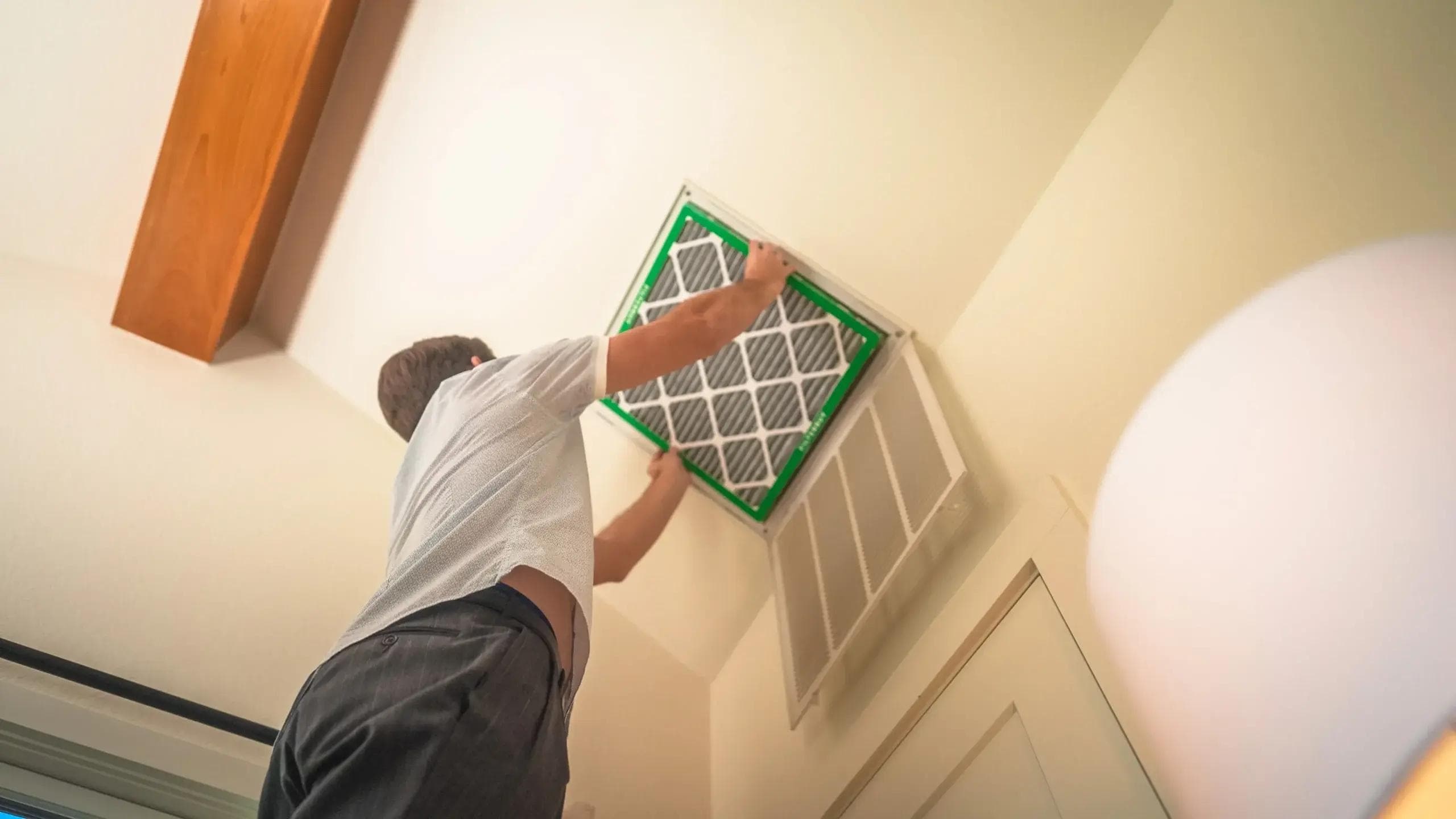
Choosing Between Washable and Disposable Filters for a Beachside Holiday Let
Beachside holiday lets can be a tougher environment for air filters than many owners expect. Salt air, wind-blown sand and frequent guest changeovers all affect how much attention the system needs, so the best choice is usually the one that suits the property’s real operating pattern rather than the cheapest option on day one.
Why coastal holiday properties need a practical filter choice
A holiday let near the beach often has more variable use than a permanent residence. One booking may bring in a full house, open doors, sand on shoes and more cooking or shower moisture. Then the property may sit vacant for a while before the next arrival. That stop-start pattern can make filter care harder to predict, especially if the air-conditioning or mechanical ventilation is not checked regularly.
For beachside properties, the main questions are usually:
- •How much dust and sand is likely to be drawn into the system
- •How easy it is to access the filter for inspection and replacement or cleaning
- •Whether short-stay turnover leaves enough time for maintenance between guests
- •Whether the system is sensitive to airflow restriction from a loaded filter
If you are unsure what your system needs, it is worth checking the equipment documentation and, where relevant, the ventilation design requirements under AS 1668.2:2024 with the mechanical services engineer or building owner.
Washable filters: useful in the right setup
Some filters are designed to be washable - check the product instructions before buying or reusing them. In a holiday property, that can be appealing if the filter is easy to remove and reinstall, and if there is someone on-site who can actually wash, dry and refit it properly.
Washable filters may suit a beachside holiday let when:
- •The system is accessible and simple to maintain
- •The property has staff or a manager who can inspect the filter between guest stays
- •The site tends to collect visible sand and larger particles rather than very fine dust alone
- •You want to avoid keeping spare filters on hand for quick swaps
The trade-off is that washable filters need consistent handling. If they are not cleaned thoroughly, dried properly or reinstalled correctly, they can become a maintenance problem rather than a convenience. In a short-stay property, that matters because the next guest may arrive before the system has had time to be properly checked.
Washable filters are not a universal answer for every system. Their suitability depends on the product design, the equipment and how the property is managed.
Disposable filters: often simpler for guest turnover
Disposable filters are often easier to manage in holiday accommodation because they can be replaced quickly and kept on hand for a fast turnover. If the property is cleaned between stays by different people, a replacement filter can be a simpler task than washing and drying a reusable one.
Disposable filters may be a better fit when:
- •Guest turnover is frequent and maintenance time is limited
- •You want a straightforward inspection-and-replace process
- •The system is located in a hard-to-clean area
- •You prefer to keep spare filters ready for maintenance staff or cleaners
A disposable option can also help keep the maintenance process more consistent. Rather than relying on someone to remember whether a washable filter was rinsed last time, you can inspect the filter, check its condition and replace it when needed according to the manufacturer’s instructions and the site’s dust loading.
For many holiday owners, that predictability is valuable. It reduces the chance that a busy changeover turns into a forgotten maintenance task.
Dust loading and airflow matter more than the label
The right choice is not just about washable versus disposable. It is also about how much dust the property brings in and how the system behaves when the filter starts to load up.
Beachside sites often deal with a mix of:
- •Sand and fine grit tracked in from outside
- •Salt-laden air, which can affect surrounding surfaces and equipment
- •Dust from nearby roads, car parks, landscaping or renovation work
- •Moisture and mould concerns if the building is poorly ventilated or the system is not maintained properly
A filter that is easy to clean but does not fit well, or one that loads up quickly and is left in place too long, can create airflow restriction. Where pressure gauges are fitted, monitor the pressure drop and compare it with the manufacturer’s guidance. That gives you a clearer picture than relying on appearance alone.
If the system is in a harsh coastal spot, inspection frequency may need to be more frequent than in a low-dust inland property. There is no fixed schedule that suits every holiday let. The right interval depends on the equipment, the site conditions and the amount of dust being carried through the system.
How guest turnover changes the maintenance decision
Holiday properties live or die by convenience. If the air filter is awkward to reach, difficult to inspect or easy to forget, it can slip down the list during a busy changeover.
When choosing between washable and disposable filters, think about who will actually do the work.
If cleaners handle routine changeovers
A disposable filter often fits neatly into a standard turnover checklist. The cleaner can inspect it, replace it if required and move on without needing to wash and dry anything.
If a caretaker or owner visits between bookings
A washable filter may be workable if there is enough time to inspect, clean and refit it properly. That can be practical for properties with longer gaps between stays and a reliable maintenance routine.
If the property is managed remotely
Simplicity is usually the safest option. The less specialised the maintenance task, the less chance of a missed step. In that situation, a disposable filter, or a system designed for easy service access, may be the better fit.
Matching the filter to the system, not just the location
The property location matters, but the system itself matters just as much. A compact split system, a ducted setup, a ventilation unit or a larger commercial-style system will each have different access needs and filter requirements.
Before deciding, check:
- •Filter size and fit
- •Access space for removal and inspection
- •Whether the system can tolerate a more restrictive filter as it loads with dust
- •The manufacturer’s instructions for cleaning, replacement and pressure drop monitoring
- •Whether the property manager can reliably carry out the maintenance task
If you need help figuring out the right size or type, you can use how to measure an air filter or speak with a supplier that understands both standard and custom sizes. In some properties, custom air filters are the easiest way to get a proper fit and avoid gaps that let dust bypass the filter.
A sensible rule of thumb for beachside holiday lets
For a coastal holiday property, washable filters are most useful when the system is easy to access and someone can clean and dry them properly between uses. Disposable filters are often better when you want a simple, repeatable maintenance task during fast guest turnover.
If your main concern is staff convenience and a clear service process, disposable filters usually make life easier. If your main concern is reusing a product and you have the time and setup to maintain it correctly, a washable option may be suitable - provided it is designed for that use.
Either way, the key is to inspect the filter based on the system’s condition, the site’s dust load and the manufacturer’s instructions, rather than waiting for a fixed calendar date.
Talk to Total Air Filtration
Total Air Filtration is a family-owned air filter manufacturer and supplier in Hillcrest, Brisbane QLD. We can help you choose a filter arrangement that suits your beachside holiday let, whether you need a standard size or something more specific.
If you want help selecting the right filter or arranging a replacement, call 07 3800 3448 or request a quote. You can also view our products or contact us for more information.
Written by
The Total Air Filtration Team
General information only — always follow the instructions for your filter and system. Have questions about this article? We're here to help.