
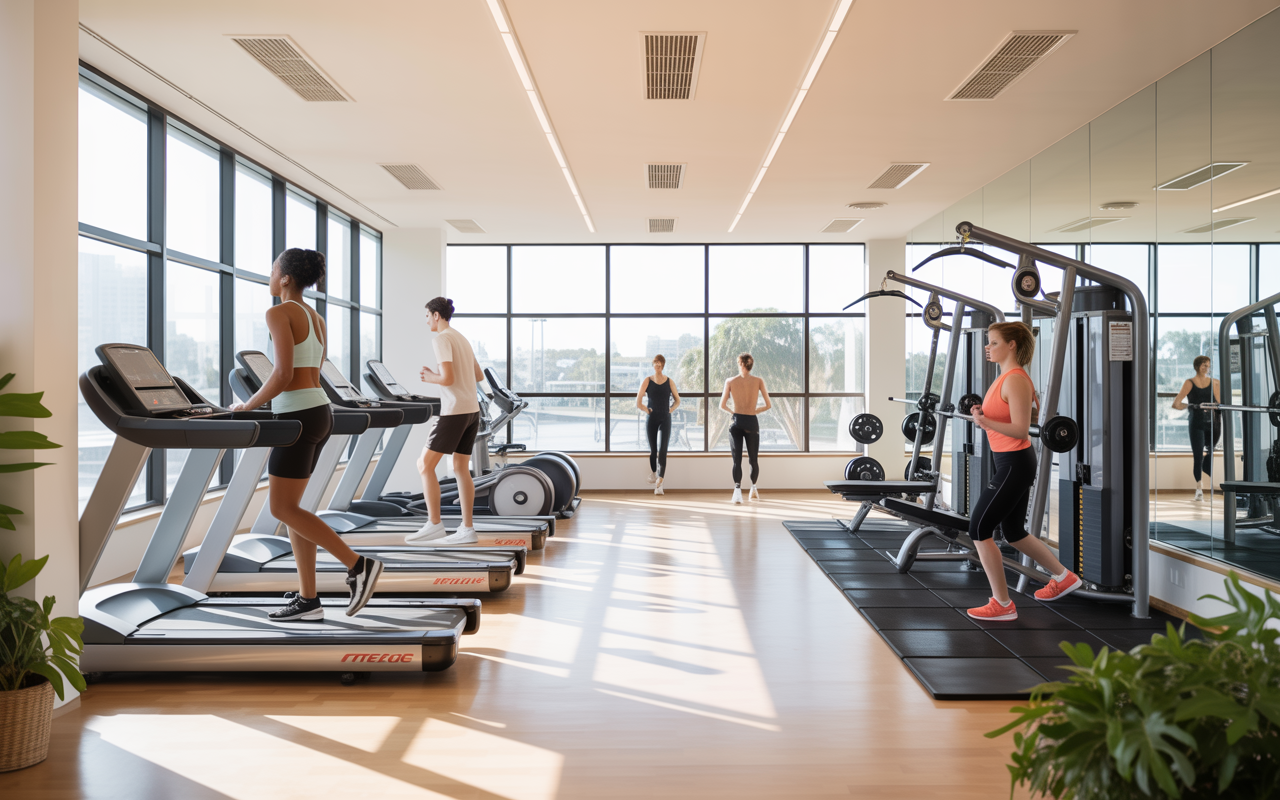
Air Filters for School Gymnasiums and Indoor Sports Halls
School gymnasiums and indoor sports halls are not just larger versions of classrooms. They handle bigger air volumes, more people moving through the space, more dust from shoes and equipment, and often more body odour after busy use. That combination changes what a filtration system needs to do, and it means the same filter used in a teaching area may not be the best fit for a sports hall.
For schools, councils and facility managers, the goal is to match the filter to the room, the air-handling system and the way the space is used. That starts with understanding load, airflow and maintenance access rather than choosing a filter based on size alone.
Why gymnasiums need a different approach
A standard classroom usually has a more predictable occupancy pattern and a lower level of airborne debris. In a gymnasium or indoor sports hall, the air can carry fine dust from floors, sports equipment, shoes and storage areas, along with lint from uniforms and other everyday debris. The room may also be used by large groups in short bursts, which can make odour management and airflow balance more important.
Because these spaces are typically large volume areas, the HVAC system may move significant amounts of air through the filter bank. That creates two practical considerations:
- •Filters need enough dust-holding capacity for the site conditions.
- •The system needs a filter arrangement that does not restrict airflow more than the equipment can handle.
If a filter is too restrictive for the plant, airflow can drop and the system may not perform as intended. If it is too open, it may allow more fine particles to remain in circulation.
Common filtration challenges in indoor sports spaces
Dust from flooring and activity
Dust in gymnasiums does not come from one source. It can be tracked in from outside, stirred up by movement, and released from stored items or nearby plant rooms. Some facilities also see extra dust during events, assembly use or after cleaning and maintenance activities.
This means filter choice should consider the likely dust load, not just the nominal size of the room. In higher-use spaces, pre-filtration can be helpful because it captures larger particles before they reach the finer stage of filtration.
Odour from heavy use
Body odour is one of the most noticeable issues in indoor sports areas, especially when ventilation is not well matched to occupancy or when spaces are used back-to-back. Air filters do not remove odour by themselves unless the system includes a suitable media type for that purpose, such as activated carbon or another odour-control layer where specified.
If odour is a recurring complaint, the filter strategy should be reviewed alongside ventilation rates, return air paths and system operation. In some sites, the issue is not only filtration, but also how the air is distributed and exhausted.
Heavy use and maintenance access
Unlike a classroom, a gymnasium may be used throughout the day by multiple groups. That can mean more frequent door opening, more particulate load, and less downtime for maintenance. Filter access also matters, because if the filters are hard to reach, servicing may be delayed.
For that reason, it is worth checking:
- •how easy it is to inspect the filter bank
- •whether the housing allows proper sealing
- •whether the filter size and format suit the installed frame
- •whether there is enough clearance for safe removal and replacement
If you are not sure what size or format is installed, how to measure an air filter is a useful starting point.
Choosing the right filter type for the system
The right filter depends on the equipment and the room, not just the use of the space. In Australian facilities, you may still encounter EN 779 classes such as G3, G4 and F5-F9, even though ISO 16890 is now widely used. Those ratings do not convert directly, so a like-for-like review is important when replacing an existing filter.
For school gymnasiums and indoor sports halls, common considerations include:
- •Pre-filters for larger debris and heavier dust loading
- •Fine filters where the system is designed to capture smaller airborne particles
- •Carbon or odour-control media where the application calls for it
- •Custom sizes where the housing is non-standard or the existing frame is not a common retail size
If your current setup is not working well, it may be worth reviewing the full system rather than replacing the same filter again. Our custom air filters page explains how bespoke sizes and constructions can be supplied for unusual housings.
When HEPA is relevant
HEPA filtration is not needed in every sports hall, and it is not a substitute for correct system design. Where a project genuinely specifies HEPA, the rating should be understood clearly: H13 is at least 99.95% efficiency and H14 is at least 99.995% efficiency at the most penetrating particle size under EN 1822.
If a designer, engineer or building owner is considering HEPA for a special-use area, the site requirements should be confirmed with the mechanical services engineer or building owner. In many gymnasium applications, a well-matched pre-filter and fine filter combination is more appropriate than moving straight to HEPA.
Maintenance, inspection and replacement planning
Filter life in a sports facility depends on the system, site conditions and dust load. There is no single replacement schedule that suits every gymnasium. Some sites will need closer attention during heavy-use periods, while others may remain stable for longer.
A practical maintenance plan should include:
- •inspection based on site conditions and equipment instructions
- •pressure drop checks where gauges are fitted
- •attention to visible dust loading, damage or bypass leakage
- •replacement or servicing when performance changes, not just by calendar date
If the filter is in a housing with poor seals, damaged frames or a bad fit, even a good filter can underperform. That is why filter servicing matters as much as filter selection. See our filter servicing and commercial filter servicing pages for more detail.
Some filters are designed to be washable - check the product instructions before cleaning or reusing anything. If a product is not designed for washing, cleaning it incorrectly can damage the media and reduce effectiveness.
Working with standards and site requirements
For ventilation and filtration decisions in schools and public facilities, AS 1668.2:2024 is often part of the conversation. That said, compliance depends on the whole installation, so the site requirements should always be confirmed with the mechanical services engineer or building owner.
A good filter decision for a gymnasium should consider:
- •the air-handling unit and its fan capacity
- •the room size and occupancy patterns
- •the level of dust from floor activity and outside tracking
- •whether odour control is required
- •the available filter frame, access and sealing arrangement
This is also where a supplier with practical manufacturing experience can help identify what will actually fit and work in the field, rather than only what looks suitable on paper.
Talk to Total Air Filtration
Total Air Filtration is a family-owned air filter manufacturer and supplier based in Hillcrest, Brisbane QLD. We can supply standard filters or make the right filters for your gymnasium, sports hall or other large-volume space.
If you need help matching an existing filter, specifying a replacement or planning a service visit, call 07 3800 3448 or request a quote.
You can also browse our products or contact us to discuss the right filter setup for your site.
Written by
The Total Air Filtration Team
General information only — always follow the instructions for your filter and system. Have questions about this article? We're here to help.