
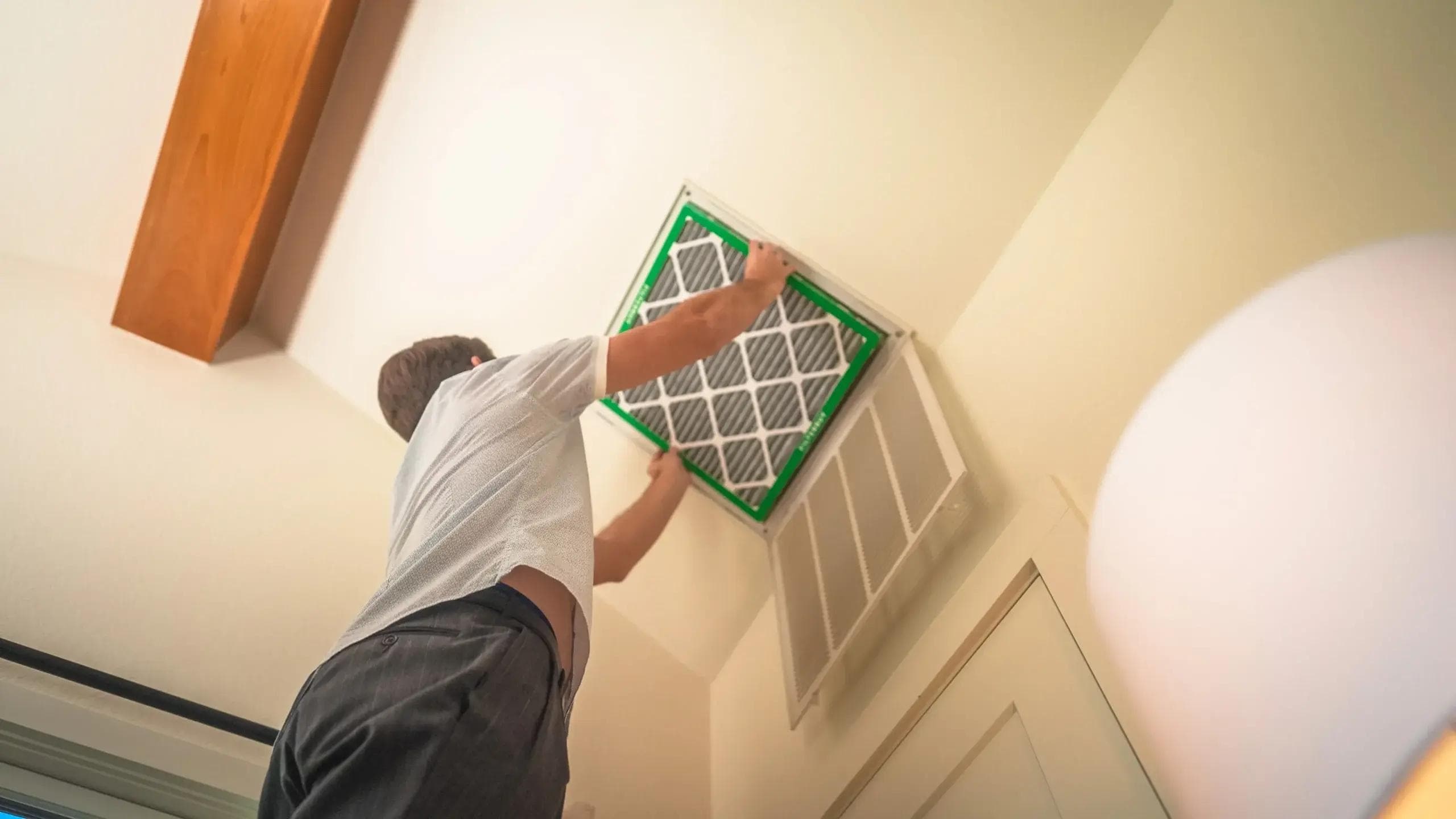
Air Filters for Queensland Coastal Apartments and Strata Buildings
Queensland coastal apartments and strata buildings face a different set of filtration issues to stand-alone homes or inland sites. Salt-laden air, shared HVAC systems, limited plant access and changing tenant expectations can all affect how well a building’s air filters perform.
For strata managers, facility managers and contractors, the goal is to choose filters that suit the system, the site conditions and the maintenance access available. That usually means thinking beyond the filter size alone and looking at installation, inspection access, airflow resistance and the type of dust and salt exposure the building sees.
Why coastal buildings need closer attention
Coastal air carries fine salt particles that can build up on external intakes, coil surfaces, fan components and filter banks. In apartment buildings, that buildup can be more noticeable when fresh air intakes are close to the foreshore, rooftop plant or exposed balconies.
Salt does not just affect appearance. It can contribute to faster loading of filters and can place additional strain on mechanical equipment if the filter selection or maintenance approach is not suited to the site.
Common issues in Queensland coastal buildings include:
- •filters loading more quickly because of salt haze and airborne dust
- •corrosion concerns around housings, frames and supports near intakes
- •odour complaints when ventilation is not balanced properly
- •reduced occupant comfort when airflow is restricted by a blocked or poorly fitted filter
- •difficulty checking filters in plant rooms, ceilings or rooftop units
The right response is usually a practical one: match the filter type to the system, keep access in mind, and inspect filters often enough for the site conditions and dust load.
Shared systems create different filtration priorities
Apartment complexes often rely on central or semi-central mechanical services that serve multiple lots, common areas or a mix of uses such as car parks, gyms and lobbies. That means one filter can affect many occupants.
Shared systems should be assessed with the building owner or mechanical services engineer, especially where ventilation design is being reviewed against AS 1668.2:2024. Site requirements vary, and the most suitable filter arrangement depends on the equipment, the air change strategy and the building layout.
A good filtration setup for a shared system should consider:
- •the fan capacity and allowable pressure drop
- •whether the filter is protecting equipment, improving supply air quality, or both
- •the level of outdoor air exposure at the intake location
- •whether the system needs pre-filtration before a finer final filter
- •how easy it is to inspect, remove and refit filters without damaging seals or frames
In many buildings, staged filtration is worth considering. A coarser pre-filter can capture larger debris before a finer filter takes on the smaller particles. That can help keep the system operating more consistently, provided the filter selection is appropriate for the equipment.
Maintenance access is often the real problem
Even the right filter will struggle if it is hard to reach, hard to identify, or installed in a way that encourages bypass around the edges. In strata buildings, access issues often determine whether maintenance gets done properly or gets delayed.
If technicians need ladders, special permits or repeated shutdowns to reach the filter bank, inspections can become more difficult to schedule. That can also make it harder to confirm whether the filter is seated correctly after replacement.
When reviewing a site, check for:
- •enough clearance to remove the filter without bending frames or media
- •safe access for maintenance staff or contractors
- •visible labels showing the filter size, orientation and type
- •seals and holding frames that prevent unfiltered air bypass
- •room for gauges or test points where pressure drop monitoring is used
Where the building uses pressure gauges or differential pressure monitoring, those readings are a useful way to judge filter loading. If no gauges are fitted, inspection frequency should still depend on the system, site conditions and dust load, along with the filter and equipment manufacturer instructions.
If a building is difficult to service, it can be worth looking at filter servicing support or planning a more practical replacement setup that suits the site rather than forcing a generic product into a poor access point.
Choosing the right filter type for coastal apartments
There is no single filter that suits every apartment building. The best option depends on whether the filter is handling outside air, recirculated air, exhaust air or a specific plant application.
For many commercial and strata systems, you may see filter classes described in familiar terms such as G3/G4 or F5-F9. These are EN 779 classes, which are still widely used in Australia even though ISO 16890 has superseded EN 779 in many applications. MERV, EN 779 and ISO 16890 do not convert directly, so it is better to compare the actual product data and the system requirements rather than rely on a simple conversion table.
In practice, consider:
- •particle loading from nearby roads, sea spray and construction dust
- •whether the system needs coarse, medium or finer filtration stages
- •the allowable resistance across the filter as it loads
- •whether the filter frame is metal, cardboard or another material suited to the environment
- •whether the product is intended for a standard pleated, panel, bag or custom configuration
Some filters are designed to be washable - check the product instructions. If a washable product is being considered, confirm that it suits the application, can be cleaned properly and will still fit and seal as intended after service.
Where a standard size does not suit the housing, custom air filters may be the most practical option, especially in older buildings or modified plant rooms.
Tenant comfort and complaint reduction
In apartment buildings, tenant comfort often comes down to steady airflow, predictable temperature control and fewer nuisance odours from common areas. Poor filtration can contribute to a stuffy feel, visible dust build-up around vents or inconsistent supply air performance.
That does not mean using the finest filter available. A filter that is too restrictive for the system can reduce airflow and create new problems. The objective is a balanced setup that suits the system design and the building’s use.
Helpful practical steps include:
- •confirming filters are fitted the correct way round
- •checking for gaps, damaged gaskets or loose frames
- •keeping intakes clear of leaf litter, bird debris and salt deposits where possible
- •reviewing complaints alongside maintenance records to spot repeated issues
- •making sure replacement filters match the housing dimensions exactly
If occupants report persistent odours, it is worth checking whether the issue is actually filtration, ventilation balance, exhaust performance or maintenance access rather than assuming the filter alone is at fault. For site-specific diagnosis, it can help to work with the building’s mechanical services team and confirm the system requirements before changing filter grades.
Planning replacements and measuring correctly
Ordering the wrong size is a common cause of wasted time on strata sites. Before replacing a filter, measure the existing filter or the housing carefully so the new product fits as intended. If there is any uncertainty, our guide on how to measure an air filter is a useful starting point.
When scheduling replacements, avoid fixed time rules that ignore the site. A coastal building may need closer monitoring than an inland one, while a sheltered site with lighter dust load may perform differently again. The best approach is to inspect based on actual conditions, system behaviour and any available pressure readings.
For larger portfolios, contractors often benefit from standardising the way filter sizes, access notes and system details are recorded. That makes future ordering simpler and reduces the risk of mismatched products across multiple buildings. If you are managing several properties, our industries we supply page can help you identify the right service path for your site type.
Total Air Filtration can help with the right fit
Total Air Filtration is a family-owned air filter manufacturer and supplier in Hillcrest, Brisbane QLD, and we work with strata teams, facility managers and contractors who need practical filtration solutions for coastal apartment buildings. We can help supply standard filters or make the right filters for your system, including difficult sizes and custom applications.
If you need support with a site review, replacement filter selection or a recurring maintenance issue, call 07 3800 3448 or request a quote. You can also contact us if you need help working out the next step for your building.
Written by
The Total Air Filtration Team
General information only — always follow the instructions for your filter and system. Have questions about this article? We're here to help.