
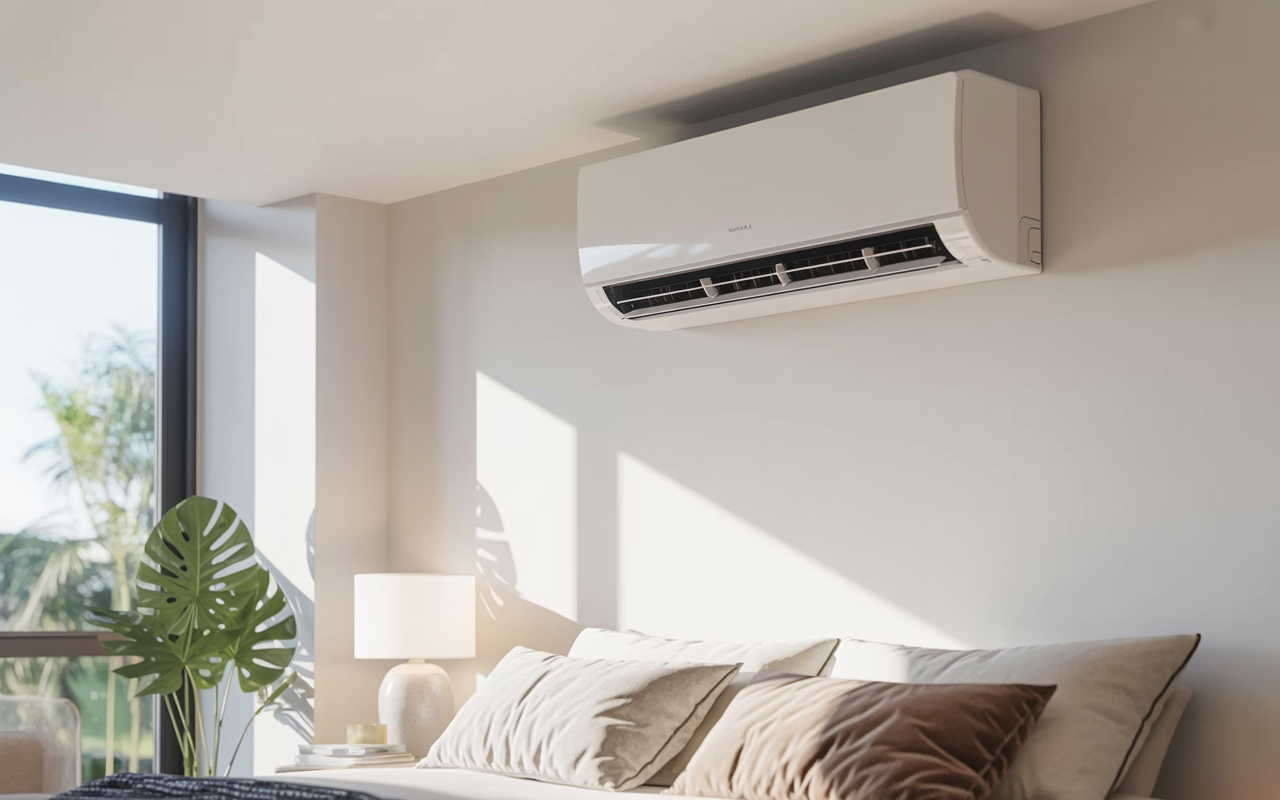
Air Filter Access in Ceiling Cassettes Installed in Bedrooms
Ceiling cassette air conditioners in bedrooms can be neat and unobtrusive, but they still need sensible filter access. If the filter is awkward to reach, fitted the wrong way around, or rubbing against the grille, the system may be harder to maintain and less pleasant to live with.
This guide looks at the practical side of bedroom cassette units in homes: how to open the panel safely, how to identify filter orientation, and how to make sure the grille closes properly after servicing.
Why filter access matters in bedroom cassettes
Bedroom cassette units are often installed to keep wall space clear and to spread air evenly across the room. The trade-off is that the filter is usually tucked into a ceiling opening, so simple maintenance depends on good access from below.
When access is difficult, people may delay inspection or force the panel open and closed. That can lead to:
- •damaged clips or hinges
- •distorted filter frames
- •gaps where unfiltered air can bypass the filter
- •a grille that does not sit flush after reassembly
For homeowners and property managers, the practical goal is straightforward: the filter should be reachable without strain, removable without bending, and reinstated so the cassette closes cleanly.
How ceiling cassette access usually works
Most bedroom cassette units have a decorative grille or panel that opens to reveal the filter media and internal compartment. The exact layout depends on the brand and model, so always follow the equipment manual where available.
Common access features
- •a hinged return-air grille
- •spring clips or latches at the panel edge
- •removable filter frames that slide out from the grille opening
- •a lightweight mesh or pleated filter element seated in a rigid frame
Before opening the unit, switch the system off at the controller. If the access panel feels tight, do not force it. A stiff panel can indicate a misaligned grille, a damaged clip, or a filter that has shifted in its frame.
If the cassette is mounted high in a compact bedroom, it may help to plan access during installation. In homes with limited ceiling void or decorative trim, the service method should be checked before the unit is commissioned.
Getting the filter orientation right
Filter orientation matters because many cassette filters are shaped to fit a specific airflow path. Some have a frame lip, arrow marking, tab, or notch that indicates the correct direction.
A filter installed backwards may still sit in place, but it can interfere with the grille or create poor seating at the edges. In practical terms, that means the filter should match the frame and the airflow path designed by the manufacturer.
What to check before refitting
- •the arrow or airflow direction marking on the frame
- •which side faces the return-air opening
- •whether the frame tabs align with the cassette rails or slots
- •whether the filter sits flat without bowing
- •whether any gasket or sealing edge is positioned as intended
If you are replacing the original filter with a non-standard product, the dimensions and frame shape matter just as much as the media type. A filter that is close but not exact can catch on the grille, leave a gap, or rattle during operation. If you need help sizing a replacement, see our guide on how to measure an air filter.
Making sure the grille fits properly
The grille or return-air panel should close without resistance. If it needs to be pushed, twisted, or held down to latch, something is not seated correctly.
A good fit usually means:
- •the filter frame is fully inserted
- •the grille hinge or clips engage evenly
- •there is no visible bulging at the edge of the filter
- •the panel sits level with the ceiling finish
- •no rattling is heard when the unit starts up
If the grille is too tight after a filter change, the issue may be the replacement filter depth, a frame that is slightly oversized, or a filter that has not seated fully in its track. In some homes, decorative trim around the cassette opening can also interfere with the panel closure if the installation is very compact.
Signs the fit needs attention
- •the panel only closes on one side
- •the latch feels forced
- •the grille bows outward after closure
- •the filter edges catch on the frame
- •there is a gap where air can bypass the filter
For property managers, a simple visual check after service can prevent repeat call-outs. The panel should look neat, close evenly, and open again without strain.
Practical maintenance tips for bedrooms
Bedroom units can collect dust from normal household activity, open windows, pets, and nearby construction or renovation. Inspection frequency depends on the system, site conditions and dust load, so there is no one-size-fits-all schedule.
A sensible maintenance routine
- •check the filter whenever the cassette is being cleaned or serviced
- •inspect more often if the room is dusty or the unit is used heavily
- •follow the filter and equipment manufacturer instructions
- •monitor pressure drop where gauges are fitted
- •replace or clean the filter according to the product instructions and the system’s condition
Some filters are designed to be washable - check the product instructions before cleaning. If the filter media is damaged, warped, or no longer sits squarely in the frame, replacement is usually the better option than trying to bend it back into shape.
If the bedroom unit is part of a larger dwelling ventilation strategy, site requirements should be confirmed with the mechanical services engineer or building owner, particularly where the system is subject to AS 1668.2:2024 considerations.
Choosing the right replacement for a cassette unit
Bedroom cassette filters need to match the unit’s physical space as well as its airflow needs. A well-made filter is only useful if it fits cleanly and can be removed again without damage.
When selecting a replacement, consider:
- •exact width, height and depth
- •the frame profile and any locating tabs
- •whether the unit uses a panel-mounted filter or a separate cartridge-style frame
- •the type of media required by the equipment
- •whether the product is intended for standard replacement or custom manufacture
If the original part is no longer available, a custom-made filter may be the most practical solution. Our custom air filters page explains how tailored sizes and frame styles can help in non-standard installations. You can also browse our products if you are comparing replacement options for a home or managed property.
For buildings with multiple cassette units, keeping a record of the model number, filter size, and access method makes future servicing easier. That is especially useful when different bedrooms have different ceiling layouts.
When to ask for help
If the cassette grille will not close, the filter keeps slipping, or the access panel seems unsafe to open, it is worth getting advice rather than forcing the unit. The same applies if the opening is awkwardly located above furniture, built-ins, or a narrow walkway.
Total Air Filtration is a family-owned air filter manufacturer and supplier based in Hillcrest, Brisbane QLD, and we can help supply or make the right filters for bedroom cassette applications. If you need a replacement, sizing advice, or a custom fit, call 07 3800 3448 or request a quote.
You can also contact us if you would like to discuss a specific cassette model or servicing requirement.
Written by
The Total Air Filtration Team
General information only — always follow the instructions for your filter and system. Have questions about this article? We're here to help.