
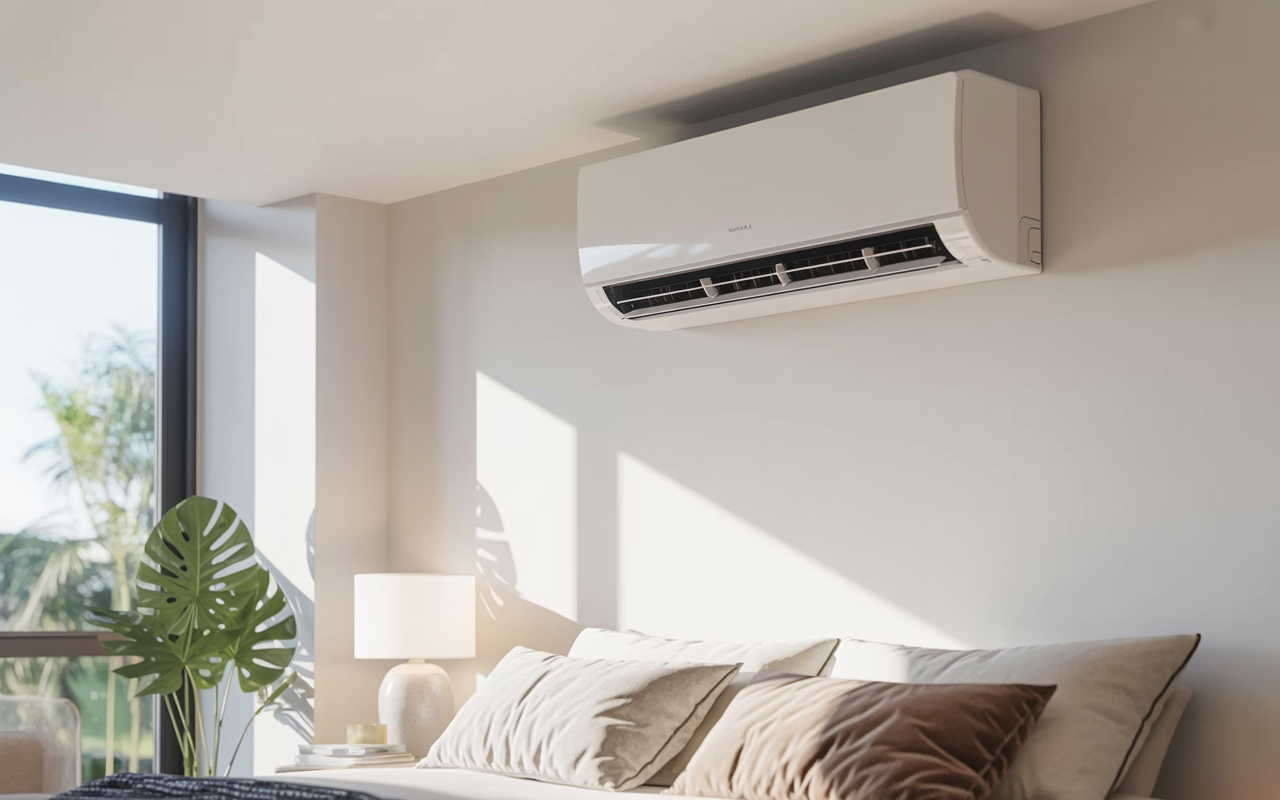
Why Your Split System Sounds Louder When the Filter Is Dirty
If your wall-mounted split system has started sounding louder than usual, the filter is one of the first places to check. When dust builds up on the filter, airflow becomes restricted, the fan has to work harder, and the unit can develop a stronger whir, whoosh or rattle than you are used to hearing.
That change in sound is often the system telling you it is under strain. It does not always mean there is a serious fault, but it does mean the air path is no longer moving as freely as it should.
Why a dirty filter changes the sound of the unit
A split system is designed to pull room air through the filter, move it across the indoor coil, and send conditioned air back into the room. When the filter is loaded with dust and lint, the fan has to pull air through a narrower opening.
That extra resistance can make the indoor unit sound different in a few ways:
- •the fan may seem louder because it is working against a blocked air path
- •airflow noise can become more noticeable as the system tries to push air through the restriction
- •the fan motor may sound strained or less steady than normal
- •the unit can produce more vibration or a higher-pitched tone if the fan speed changes to compensate
In simple terms, the filter is part of the system’s breathing space. When it is clogged, the system has to “push” harder to do the same job, and that effort is often audible.
How restricted airflow makes the fan work harder
The fan in a wall-mounted split system is built to move air at a set rate. A clean filter lets air pass with relatively little resistance. A dirty one creates a pressure drop across the filter, which means the fan must overcome more resistance to keep air moving.
That extra load can affect the sound you hear in the room:
More fan effort, more noise
When the fan is under strain, it can create a stronger rushing sound. Some people describe it as the unit “blowing harder”, even when the actual comfort level in the room is not improving.
Turbulent airflow around the filter
Dust build-up can make air move unevenly through the filter media. Instead of a smooth flow, the air can become turbulent, which adds to the audible noise from the indoor unit.
Changes in operating speed
Some systems adjust their fan behaviour based on temperature or load. If airflow is restricted, the unit may spend more time at a higher fan setting or cycle in a way that seems noisier than normal.
Motor strain can be noticeable
You may hear a slight humming, buzzing or more pronounced mechanical noise if the fan assembly is working harder than it should. That does not automatically mean the motor is failing, but it is a sign the system is not moving air efficiently.
What else a dirty filter can affect
Noise is often the first clue, but a clogged filter can influence other day-to-day behaviour as well.
Uneven room comfort
If less air is moving through the unit, you may notice the room takes longer to feel comfortable or that airflow from the louvres feels weaker than usual.
Dust re-circulation concerns
A filter is there to capture particles from the room air. If it is overloaded, it can no longer do that job as effectively, and the build-up itself can become a source of dust release when the unit starts up or shuts down.
Ice or coil-related issues
Restricted airflow can sometimes contribute to coil problems, including icing in some systems. If you see unusual moisture, frost or water behaviour around the indoor unit, it is worth having the system checked by a qualified technician.
More wear over time
A fan that regularly runs against a blocked filter may be subjected to unnecessary stress. Over time, that can mean more wear on components, even if the system continues to run.
How to check whether the filter is the cause
Before assuming the noise is a mechanical fault, take a look at the filter and the surrounding unit.
Signs the filter may be clogged
- •visible dust or lint coating the filter surface
- •reduced airflow from the indoor unit
- •the unit sounds louder than it did previously
- •dust build-up around the air intake grille
- •the room comfort has changed without another obvious cause
If your system uses washable filter panels, some filters are designed to be washable - check the product instructions before cleaning. If the filter is disposable or specialist, do not try to wash it unless the manufacturer says you can.
A practical cleaning approach
If the filter is accessible and the manufacturer allows removal, switch the system off first, open the indoor panel carefully and inspect the filter. If it is reusable, remove loose dust gently and clean it according to the product instructions.
If the filter is damaged, warped or heavily embedded with dust that will not release easily, replacement may be the better option.
If you are unsure about the filter type or size, how to measure an air filter can help you identify the right dimensions before ordering a replacement.
When the noise may be more than a dirty filter
A louder split system is not always caused by the filter alone. If the filter looks clean but the unit still sounds unusual, there may be another issue worth investigating.
Possible causes to look at
- •a loose indoor cover or panel
- •a blocked return air path around the unit
- •fan imbalance caused by debris in the housing
- •a problem with the fan motor or bearings
- •installation issues that allow vibration to travel through the wall
If the system makes grinding, scraping or repeated clicking sounds, stop using it and have it checked by a licensed technician. A filter clean-up may help in some cases, but it will not fix every noise issue.
How often should the filter be inspected?
There is no single schedule that suits every home or tenancy. Inspection frequency depends on the system, site conditions and dust load.
A unit in a dusty room, near renovation work, with pets, or in a space that runs for long periods may need more frequent attention than a system in a low-dust environment.
The safest approach is to follow the filter and equipment manufacturer instructions, and monitor pressure drop where gauges are fitted. If your site has a building management or ventilation arrangement, the requirements should also be confirmed with the mechanical services engineer or building owner. For some installations, AS 1668.2:2024 may be relevant to the broader ventilation setup, but the site-specific requirements still need to be confirmed by the right professional.
If the filter is part of a larger maintenance plan, filter servicing can help keep the system in better working order.
Getting the right replacement filter
If the filter is damaged, missing, or no longer cleaning up properly, the replacement needs to suit the unit exactly. Size, frame depth, media type and fit all matter. A poor fit can let air bypass the filter and can also create extra noise.
Total Air Filtration is a family-owned air filter manufacturer and supplier in Hillcrest, Brisbane QLD, established 2009. We can help with standard and custom air filters for many split system and ventilation applications, depending on your requirements.
If you need assistance identifying the right product, you can also browse our products or contact us for guidance.
Talk to Total Air Filtration
If your split system is sounding louder and you suspect the filter is part of the problem, we can help you find the right replacement or supply a made-to-fit option. Call 07 3800 3448 or request a quote and we will help you work out the next step.
Written by
The Total Air Filtration Team
General information only — always follow the instructions for your filter and system. Have questions about this article? We're here to help.