
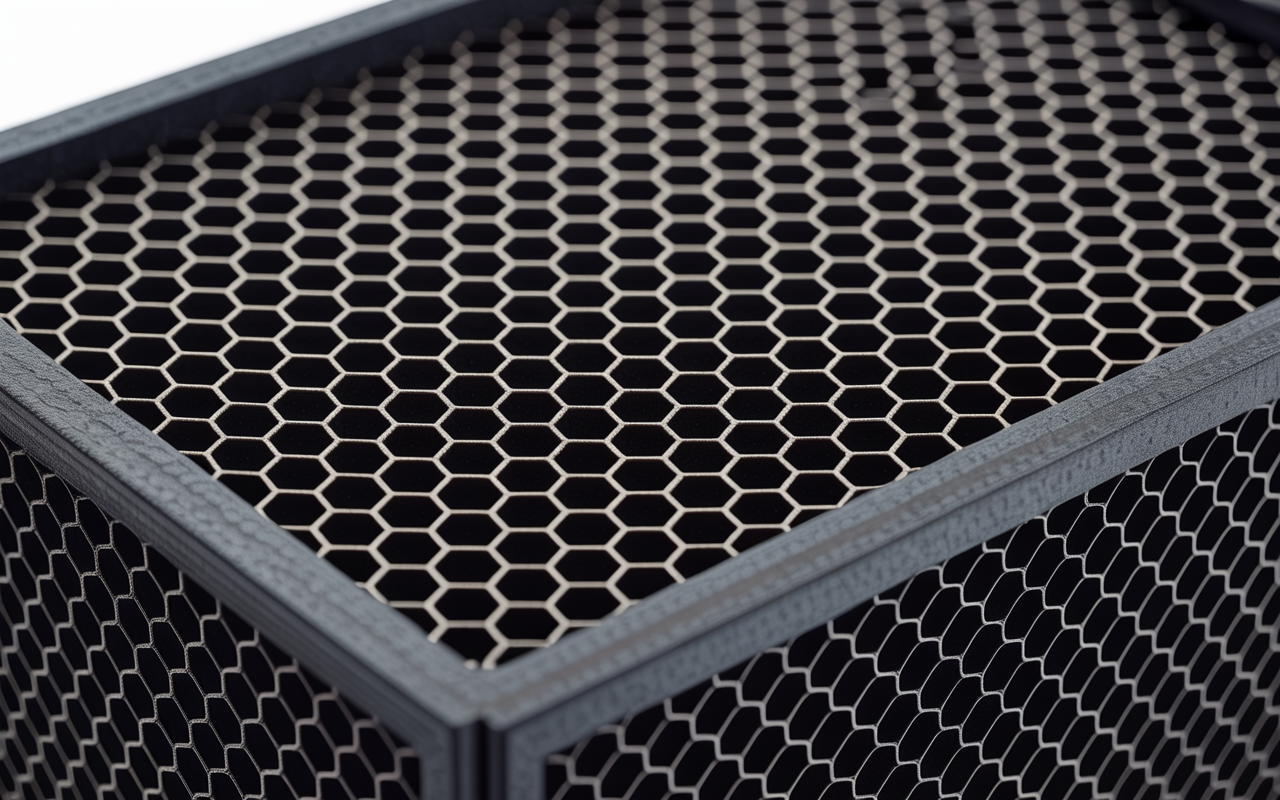
When to Use Carbon Filtration in Industrial and Commercial Ventilation Systems
Industrial and commercial ventilation systems often need more than particle filtration. In some workplaces, the main concern is odour, fumes or other gaseous contaminants that a standard dust filter will not address well. That is where carbon filtration can play a useful role, provided the system is matched to the site, the contaminant type and the airflow requirements.
For industrial buyers, facility managers and mechanical contractors, the key question is not whether carbon is “better”, but whether it is the right tool for the job. In the right application, it can help support cleaner and more workable indoor air in areas where odour or gas control matters.
What carbon filtration does
Carbon filters use activated carbon to adsorb certain gases and odorous compounds from the airstream. They are commonly selected when a site has nuisance odours, light process fumes or other airborne gases that need to be reduced before air is recirculated or discharged.
Unlike particulate filters, carbon is not designed to capture dust, lint or soot on its own. In most systems, it works best as part of a broader filtration strategy that may include pre-filtration for larger particles, followed by carbon where odour or gas control is needed.
Where it fits in a ventilation system
Carbon filtration may be used in:
- •Supply air systems where incoming air needs conditioning before it reaches occupied areas
- •Exhaust or recirculating systems where odour needs to be controlled at the source
- •Localised process extraction where fumes are generated in a defined zone
- •Plant areas where air is being treated before discharge or reuse
If the system also needs dust control, particle filters should be specified separately. For projects involving custom dimensions or unusual housings, custom air filters may be the most practical option.
Suitable applications for odour control
Carbon filtration is often considered when a workplace has persistent odour issues that affect usability, housekeeping or tenant comfort. The source may be internal, external or both. The most suitable projects are usually those where the contaminant load is known and reasonably consistent.
Depots and vehicle-related facilities
Depots can produce a mix of diesel odours, exhaust-related gases and general operational smells. Carbon filtration may be suitable in amenities, offices, dispatch areas or adjoining occupied spaces where those odours drift in from service bays or loading areas.
It is less about treating the entire depot as one zone and more about targeting the spaces where people work for longer periods. In many cases, carbon is paired with good source extraction, door management and a sensible fresh air strategy.
Marine facilities
Marine environments can present strong odours from fuel handling, maintenance tasks, bilge areas, waste handling and salt-laden air. Carbon filtration is often considered for workshops, control rooms, stores, enclosed walkways and other occupied spaces where those odours can become persistent.
In marine settings, the filter selection also needs to consider corrosion, moisture and variable outdoor air conditions. The right housing and change-out access are just as important as the carbon media itself.
Printing and graphics areas
Printing environments may involve solvent odours, ink-related fumes and other process smells, depending on the equipment and materials used. Carbon filtration can be suitable for occupied areas near presses, finishing rooms, plate rooms or adjoining offices where odour transfer is a concern.
For print sites, the process details matter. The type of ink, cleaning agent or solvent influences what the carbon needs to address. In some cases, a mechanical services engineer will specify a combined solution that includes extraction, air dilution and carbon media in the relevant locations.
General process areas
Many process areas produce gases or odours that are not visible as dust. Examples can include adhesive use, mixing, packaging, cleaning operations, waste handling and certain manufacturing steps. Carbon filtration may suit these zones when the emissions are known and the airflow can be properly controlled.
If the site has multiple odour sources, it is worth mapping where the smell is generated, where it travels and which spaces need protection. That makes it easier to decide whether the answer is a point-of-use filter, a larger air handling upgrade or a combination of both.
When carbon filtration is a good choice
Carbon filtration is generally worth considering when one or more of the following apply:
- •The main issue is odour rather than dust
- •The contaminant is gaseous or vapour-based
- •The affected area is occupied for extended periods
- •Odour is transferring into offices, amenities or customer-facing spaces
- •There is a defined process source that can be captured or treated
It is usually less suitable when the problem is heavy particulate loading, sticky aerosols or wet contaminants without a pre-filter stage. In those cases, the carbon media may load too quickly or perform poorly if the system is not designed correctly.
If you are comparing filtration options across different site types, our products page is a useful place to start.
Practical design and maintenance considerations
Good carbon filtration starts with the right specification. The housing, face velocity, depth of media and system pressure drop all affect performance. If the filter is undersized, air may bypass the media or move too quickly for useful adsorption. If it is oversized or poorly arranged, the installation may be difficult to service.
A few points are worth checking early:
- •What odour or gas needs to be addressed
- •Whether the source is continuous, intermittent or seasonal
- •Whether the air is recirculated, exhausted or both
- •Whether there is existing pre-filtration upstream
- •How the filter will be accessed for inspection and replacement
Inspection frequency depends on the system, site conditions and dust load. Follow the filter and equipment manufacturer instructions, and monitor pressure drop where gauges are fitted. Some filters are designed to be washable - check the product instructions.
For sites with a broader maintenance program, filter servicing and commercial filter servicing may help keep the system on track.
Standards, project coordination and site checks
Ventilation projects should always be aligned with the site’s design intent and operating conditions. For Australian projects, AS 1668.2:2024 is commonly referenced for ventilation-related requirements, but site needs should be confirmed with the mechanical services engineer or building owner.
That matters because carbon filtration is rarely a standalone decision. The airflow rates, room use, exhaust arrangements and surrounding areas all influence whether the solution will work as intended. On occupied sites, especially where odour complaints are involved, it is often useful to confirm the likely source before ordering replacement media or new housings.
If you are measuring an existing filter arrangement, how to measure an air filter can help with the basics.
Talk to Total Air Filtration
Total Air Filtration is a family-owned air filter manufacturer and supplier in Hillcrest, Brisbane QLD, established 2009. We can supply or make the right filters for odour and gas control applications, including commercial and industrial systems that need a practical fit for the site.
If you need help selecting carbon filtration for a depot, marine facility, printing area or process space, call 07 3800 3448 or request a quote.
You can also contact us or view the industries we supply for more information.
Written by
The Total Air Filtration Team
General information only — always follow the instructions for your filter and system. Have questions about this article? We're here to help.