
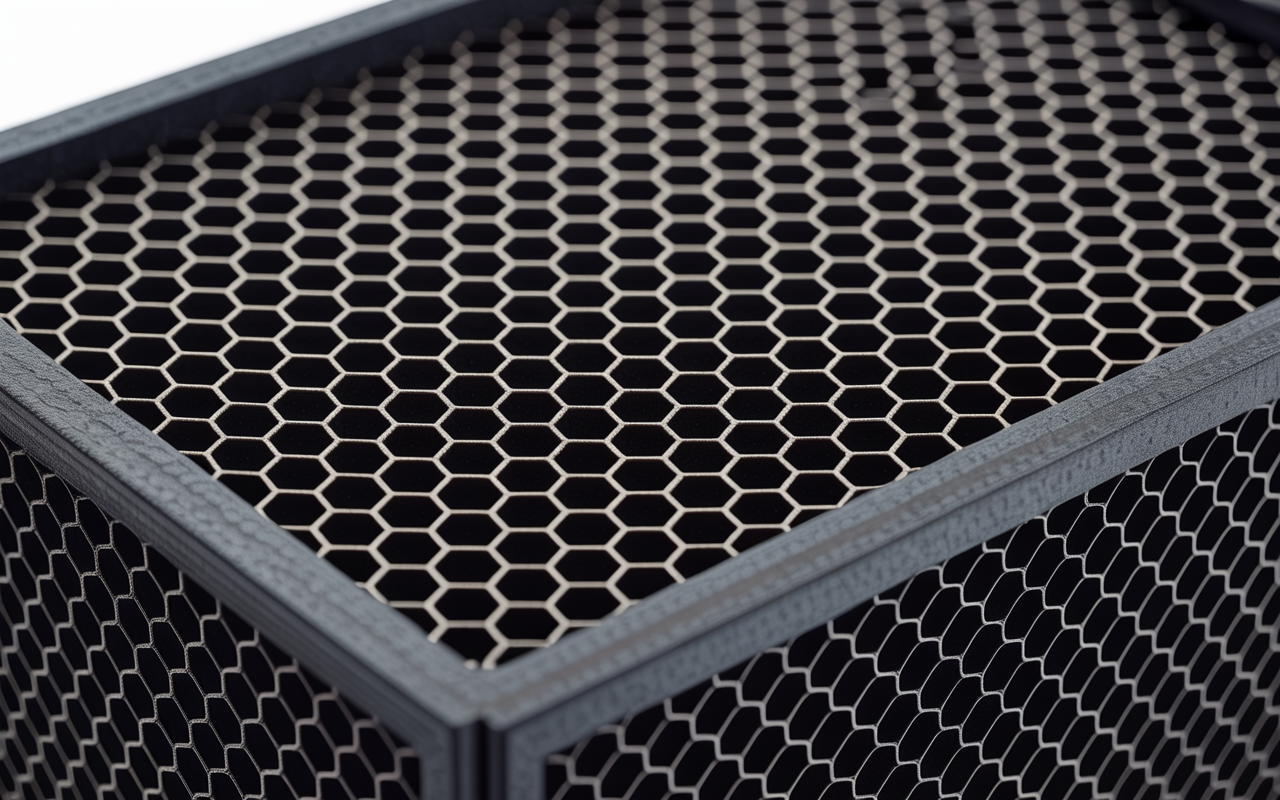
When to Use a Carbon Stage in Paint Mixing Rooms
Paint mixing rooms often need more than particle filtration alone. If your room handles solvent-based coatings, thinners, reducers or cleaning chemicals, a carbon stage can help manage odours and some vapour loading before air is recirculated or exhausted, depending on the system design.
The key is knowing where carbon filtration adds value and where it is not the right tool. In many automotive and industrial setups, a carbon stage is best used as part of a broader ventilation and filtration arrangement, not as a substitute for safe handling, source control or correct mechanical design.
What a carbon stage does in a paint mixing room
Carbon filtration uses activated carbon to adsorb certain gaseous contaminants from the air stream. In practical terms, that means it can help reduce the solvent smell you notice when paints are mixed, decanted, tinted or stored in a room with limited natural ventilation.
A carbon stage may be useful where the main concern is nuisance odour from volatile compounds released by:
- •solvent-based paints and clear coats
- •thinners and reducers
- •gun wash areas or cleaning stations
- •decanting and measuring benches
- •closed storage cupboards or small mixing enclosures
It is important to be realistic about what carbon can do. Carbon stages do not remove dust, overspray or liquid mist, so they are usually paired with a particulate filter stage ahead of them.
Situations where carbon filtration makes sense
Carbon is most often considered when a room has a noticeable vapour or odour issue, but the air handling system is otherwise already managing particles well. That is common in rooms used for preparation rather than spraying, especially where the goal is to keep odours from spreading into adjacent work areas, offices or enclosed plant spaces.
A carbon stage may suit:
- •dedicated paint mixing rooms in smash repair shops
- •industrial tinting and batching rooms
- •mixing booths or enclosed make-up rooms
- •chemical storage or dispensing rooms where solvent odours build up
- •recirculating systems where particulate filtration is already in place and odour control is needed
If the room is part of a broader ventilation system, carbon can also be used to help polish the air before it is returned to the space, provided the overall design suits the site and the equipment manufacturer allows that arrangement.
Where carbon is usually not enough on its own
Carbon is not a catch-all solution for poor ventilation. If vapours are building up because air changes are inadequate, if the room is too small for the process load, or if doors are constantly opened to larger work areas, the first step is to review airflow and extraction rather than relying on filtration alone.
Carbon stages are also limited by the nature of the vapours present. Some gases are better controlled with source extraction, ducted exhaust or process changes. If the room involves heavy solvent use, the mechanical services engineer or building owner should confirm the overall approach, including whether the installation aligns with site requirements and AS 1668.2:2024 where relevant.
A carbon stage is generally not the answer when:
- •overspray or paint mist is the main issue
- •the room has no effective make-up air or exhaust path
- •the system is undersized for the room load
- •the contaminant profile is unknown
- •the process generates concentrated vapours that need engineered extraction
Choosing the right filter stack
In paint mixing rooms, the filter arrangement often starts with a particle stage to protect the system and catch dust, lint and fine debris. Carbon is then added after the particulate stage where the air stream still needs odour or vapour treatment.
A typical arrangement might include:
- •a pre-filter to capture larger dust and debris
- •a finer particulate filter to clean up the air stream
- •a carbon stage for odour and solvent vapour adsorption
The exact arrangement depends on whether the system is recirculating or exhausting, what materials are being used, and how much airborne contamination the room produces. For some applications, custom sizes or frames are needed to suit the existing cabinet, rack or ducted unit. If that is the case, custom air filters may be the easiest way to match the equipment rather than forcing an off-the-shelf size into place.
If you are measuring existing filters for replacement or retrofitting, how to measure an air filter is a useful starting point before you order.
What to check before adding carbon
Before specifying a carbon stage, it helps to review the room and the equipment together. A few practical questions will quickly show whether carbon is likely to help.
Check the air path
Carbon only works on the air that actually passes through it. If air leaks around the filter frame or bypasses the unit, performance drops. Good sealing, correct frame fitment and suitable fan pressure are all important.
Check the contaminant type
Carbon is most useful for solvent smells and certain vapours. It is not a replacement for dust filtration, and it does not suit every chemical profile.
Check the maintenance access
Carbon stages need to be inspectable and replaceable. Inspection frequency depends on the system, site conditions and contaminant load, and you should follow the filter and equipment manufacturer instructions. Where gauges are fitted, pressure drop should be monitored so you can see when the filters are loading.
Check whether washable media is appropriate
Some filters are designed to be washable - check the product instructions. Carbon products are generally treated differently from washable dust filters, so do not assume all filter media can be cleaned and reused.
Maintenance and replacement planning
Carbon does not last forever, and it does not give a visual clue the same way a dusty pre-filter might. Odour breakthrough, reduced airflow or a change in system pressure can all be signs that the stage needs inspection.
For most sites, the best approach is to build inspection into normal maintenance rounds rather than waiting for complaints from the workshop floor. If the room is part of a managed facility, the servicing plan may also need to sit alongside broader filter changeout work. We can help with filter servicing and commercial filter servicing where required.
Keep records of the filter type, size and orientation so replacements are straightforward. If the room has been modified, or if the paint system has changed since the original install, it is worth re-checking whether the existing filter arrangement still matches the actual duty.
Getting the balance right for your site
A good paint mixing room setup should control dust, handle odours where possible, and support safe, practical day-to-day work. Carbon stages are most valuable when solvent smells are drifting through the room or into nearby spaces, and when the air system already has the airflow and particle filtration needed to do the rest of the job.
If you are planning a new room, upgrading an existing cabinet or replacing hard-to-find filters, Total Air Filtration is a family-owned air filter manufacturer and supplier based in Hillcrest, Brisbane QLD.
To talk through the application, call 07 3800 3448 or request a quote. You can also browse our products or contact us if you want help matching the filter to the room and equipment.
Written by
The Total Air Filtration Team
General information only — always follow the instructions for your filter and system. Have questions about this article? We're here to help.