
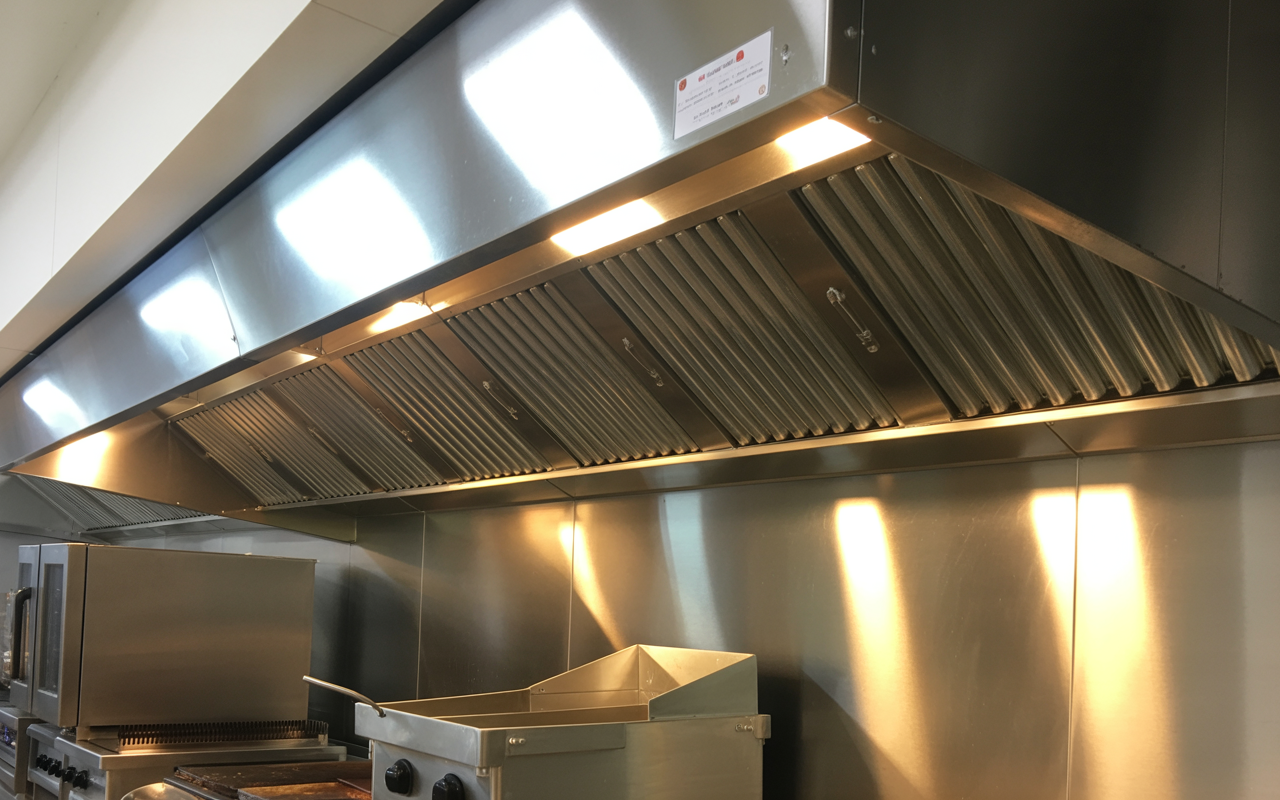
What to Specify for a Pizza Shop With High Heat and Constant Oven Use
Pizza shops put air filters under constant pressure. Between intense oven heat, grease-laden air, flour dust and long operating hours, the wrong filter setup can clog quickly, restrict airflow and create avoidable maintenance headaches.
If you are opening a new venue or reviewing an existing system, the goal is not just to “fit a filter”. It is to specify the right filter material, grease loading approach, odour control stage and airflow allowances for a kitchen that rarely gets a break.
Start with the kitchen environment, not just the grille size
A pizza shop is a demanding air-handling environment because the oven area runs hot for long periods and the kitchen can produce a mix of fine particles, vapour and grease. That means the filter selection should be based on how the air system actually operates, not only on the dimensions of the return air opening.
For mechanical contractors, the practical questions are:
- •Is the system dealing with supply air, return air, exhaust make-up air, or a combination of these?
- •Is there continuous oven use through lunch and dinner service?
- •Does the kitchen produce heavy grease carry-over from cooking, slicing, finishing or adjoining fryers?
- •Is odour control needed for nearby dining areas, landlords or neighbouring tenancies?
- •Is there enough fan capacity to handle the resistance of the selected filters without starving airflow?
For owners, the main takeaway is that a pizza shop often needs a more robust filter arrangement than a low-duty retail tenancy. Heat and grease quickly reveal weak points in filter selection and access design.
Choose filter media that suits heat and loading
In a pizza shop, filter material matters because the air stream can include warm air, grease and very fine dust from flour and toppings. A filter that performs well in a cool office setting may not be the right choice above a busy oven line.
Common considerations include:
- •Pre-filter stages to catch larger particles before they reach finer filters
- •Rigid or pleated media where extra surface area is needed to slow loading
- •Grease-resistant construction in sections exposed to cooking by-products
- •Frames and seals that remain stable in warm conditions and do not warp or leak easily
Some filters are designed to be washable - check the product instructions. That can be useful in some grease-heavy applications, but washability is a property of specific products, not a universal feature. If a filter is meant to be replaced rather than washed, cleaning it may damage the media or reduce performance.
Where high-efficiency filtration is being considered for a conditioned area or adjacent dining space, make sure the stage is matched to the system design. HEPA filters are only appropriate where the system has been designed for that level of resistance and airflow control. If a project calls for HEPA, H13 is at least 99.95% efficiency and H14 is at least 99.995% efficiency at the most penetrating particle size under EN 1822.
Plan for grease loading before it becomes a blockage
Grease loading is one of the biggest issues in pizza venues. Even if the kitchen is not deep frying, warm air can carry oil mist and fine cooking residue into filters and ductwork. Once that residue builds up, airflow can drop and the system may become harder to balance.
Good specification should help with three things:
- •capturing grease before it reaches finer filters
- •allowing the filter face velocity and free area to suit heavy use
- •making inspection and change-out straightforward for staff or service contractors
In practice, that often means using a staged approach. A more open first stage can trap larger debris, while a second stage deals with finer particles and visible dust. In some kitchens, a grease-rated filter section may be more appropriate in the early part of the system than a dense media filter placed too close to the cooking area.
Access is just as important as media choice. If filters are difficult to remove, clean or inspect, the system tends to be left too long between checks. For a venue with constant oven use, it is better to specify service access that suits the real workload from the start.
Build odour control into the system where it belongs
Pizza venues often generate strong cooking odours, and in some sites that smell can travel into dining areas, neighbouring tenancies or outdoor seating zones. Odour control is not a one-size-fits-all exercise, because the right solution depends on the system layout and what the building owner or mechanical services engineer has allowed for.
Possible approaches may include:
- •Activated carbon stages for odour adsorption where the system has been designed for them
- •Well-sealed filter frames to prevent untreated bypass air
- •Correct exhaust and make-up air balance so odours do not spill where they should not
- •Appropriate exhaust placement to keep discharge away from entrances, air intakes and public areas
Carbon filters are useful when odour control is part of the brief, but they should be selected with the airflow, resistance and replacement access in mind. In a high-duty pizza shop, a carbon stage that is undersized for the air volume will load up quickly and lose effectiveness sooner than expected.
If odour control is a priority in a shared building, confirm requirements with the mechanical services engineer or building owner, and consider whether the system needs local exhaust changes as well as filtration upgrades.
Keep airflow in mind at every stage
A pizza kitchen can only perform well if air can move through the system at the intended rate. Overspecifying filtration can create excess resistance, while underspecifying it can leave the kitchen with poor capture and rapid loading.
Key airflow considerations include:
- •Fan capacity and whether it can handle the chosen filter resistance
- •Filter face area to reduce pressure drop across the media
- •Housing depth so the filter has enough surface area for the duty
- •Bypass control so air cannot slip around the filter edges
- •Pressure drop monitoring where gauges or indicators are fitted
Pressure drop is especially useful in busy kitchens because it gives a clearer signal than appearance alone. A filter may look only partly loaded and still be restricting airflow. Inspection frequency depends on the system, site conditions and dust load, and you should follow the filter and equipment manufacturer instructions.
For new or upgraded systems, it is also worth checking that filter access, mounting and fan selection align with AS 1668.2:2024 requirements and the broader mechanical design for the tenancy. Site requirements should be confirmed with the mechanical services engineer or building owner.
What to specify for a pizza shop fit-out or upgrade
If you are planning a pizza shop system, a practical specification usually starts with the operating conditions and then works back to the filter choice.
A solid brief often includes:
- •the type of air stream being filtered
- •the expected grease and flour loading
- •whether odour control is required
- •the available filter depth and housing space
- •the target airflow and allowable resistance
- •access for inspection, cleaning or replacement
- •the need for custom sizing if standard frames do not suit the plant or grille dimensions
If you need help working out the right dimensions first, see how to measure an air filter. For non-standard housings or difficult openings, custom air filters can be a better fit than forcing a standard size into the wrong frame.
Talk to Total Air Filtration about the right setup
A pizza shop with high heat and constant oven use needs filters chosen for the actual duty, not guesswork. Total Air Filtration is a family-owned air filter manufacturer and supplier in Hillcrest, Brisbane QLD, established 2009, and we can help supply or make the right filters for your venue.
If you are planning a new fit-out, replacing a struggling filter stage or tightening up odour control, call 07 3800 3448 or request a quote.
You can also explore our products, filter servicing or contact us if you need help matching the filter setup to your kitchen system.
Written by
The Total Air Filtration Team
General information only — always follow the instructions for your filter and system. Have questions about this article? We're here to help.