
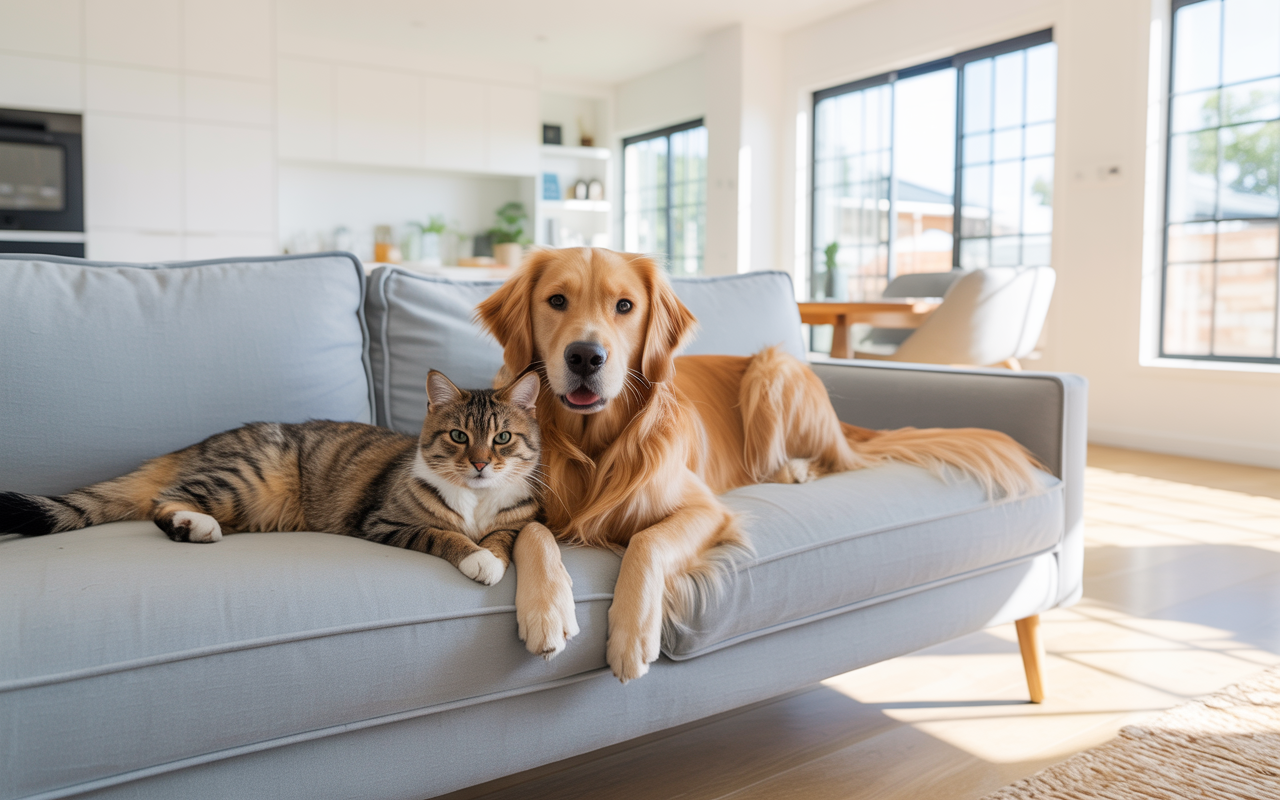
What to Do When a Home Smells Like Wet Dog After Rainy Weather
When a home smells like wet dog after rainy weather, the issue is usually not just the dog. Damp air can make pet odours hang around longer, especially in enclosed rooms where air does not move freely and soft furnishings absorb moisture. The good news is that you can often improve the smell by tackling humidity, airflow and the type of filter media in the space.
Why rainy weather makes pet odours stronger
Pet odours are made up of tiny airborne particles and vapours from fur, skin oils, saliva and whatever a pet has walked through outside. In dry conditions, those smells may disperse more quickly. When humidity rises, the air holds more moisture, and that can make odours linger close to carpets, curtains, bedding and upholstery.
A few things tend to happen at once:
- •Damp air slows the drying of fur, soft furnishings and floor coverings
- •Wet surfaces can release trapped odours back into the room
- •Poor airflow allows smells to build up in corners and closed rooms
- •Dust and pet dander can cling more easily to moist surfaces
If the smell is strongest after rain, the likely cause is a mix of moisture and trapped odour particles rather than one single source.
Start with moisture control
Before looking at filters, it helps to reduce the conditions that make the smell worse. If the home stays damp, any odour control effort will be harder work than it needs to be.
Practical steps include:
- •Dry the dog thoroughly after walks, especially paws, belly and coat
- •Wipe down entry mats and let them dry fully
- •Open windows when outdoor air is drier and safe to do so
- •Run ceiling fans or exhaust fans where they are fitted
- •Check for wet carpets, damp skirting boards or condensation on windows
- •Launder pet bedding and throws regularly, following fabric care instructions
If you rent the property, it is worth checking that bathroom, laundry and kitchen extraction is actually moving air outdoors as intended. In some homes, poor ventilation can leave the entire space feeling stale after wet weather.
Which filter media can help with damp animal smells
Air filters do not remove every source of odour, but the right media can help capture the airborne particles that contribute to that wet dog smell. The best choice depends on the system in the home or building, the available filter space and the type of odour challenge.
Particle filters for fur and dander
Filters designed to capture dust, lint, pet hair and dander can help reduce the material that carries odour through the air. In many homes, a properly fitted particulate filter is a useful first step.
Look for filters suited to the equipment and the available pressure drop. If a filter is too restrictive for the system, airflow may suffer. If it is too coarse, it may not capture enough of the airborne material that contributes to smell.
Activated carbon media for odour adsorption
Where the main concern is smell rather than visible dust, carbon-containing media may help. Activated carbon is used to adsorb many odour molecules, including some of the compounds associated with pets and damp interiors.
This can be useful in:
- •Homes with enclosed living areas
- •Pet-friendly rentals where smells move between rooms
- •Air-handling units that recirculate indoor air
- •Laundries, mudrooms or entry areas where wet pets come inside
Carbon media is often used alongside particle filtration, since the two media do different jobs. The particle layer captures solids and the carbon layer targets gaseous odour compounds.
When to consider higher-grade filtration
In some systems, higher-efficiency filters may be suitable if the fan and housing are designed for them. If you are looking at rated filters, it is important to match the filter to the system rather than assuming a better rating is always the best choice.
For commercial or larger residential systems, site requirements should be confirmed with the mechanical services engineer or building owner, especially where AS 1668.2:2024 ventilation considerations apply.
If you are unsure what fits, how to measure an air filter is a good place to start before you request a quote.
Maintenance matters as much as media choice
A good filter can only do its job if it is the right size, installed correctly and checked often enough for the site conditions. A dusty home with pets, wet weather and regular cooking may place more load on the filter than a lightly occupied space.
Things to keep in mind:
- •Inspect filters based on the system, the site and the dust load
- •Follow the filter and equipment manufacturer instructions
- •Check pressure drop where gauges are fitted
- •Replace or service filters when airflow or odour control starts to decline
- •Make sure the frame, gasket or seal is not leaking unfiltered air around the edges
If a filter has become damp, damaged or heavily loaded with dust and pet hair, it may not perform as intended. Some filters are designed to be washable - check the product instructions before cleaning anything.
Other causes that can mimic wet dog odour
Not every wet dog smell comes from the dog. Rainy weather can expose other odour sources that are easy to miss because the smell seems to arrive with the pet.
Common hidden sources include:
- •Damp underlay or carpet after a spill or leak
- •Mould or mildew in poorly ventilated cupboards and wardrobes
- •Laundry baskets, pet mats or towels that stay wet too long
- •Aircon returns or ducts collecting dust and moisture
- •Entryways where wet shoes and pet paws track in grime
If the smell keeps returning even after cleaning and filter changes, it may be worth checking for moisture ingress or ventilation issues. In rental properties, raising the issue with the owner or property manager early can help prevent a larger damp problem.
A practical approach for homes and pet-friendly rentals
For most homes, the best results come from a combination of cleaning, drying and the right filtration. That usually means:
- •Remove the source of moisture first
- •Use particle filtration to capture hair, dust and dander
- •Add odour-focused media where the system allows it
- •Keep airflow moving through the house
- •Check for hidden damp spots after heavy rain
If the odour is mainly localised to one room, a small system change there may be enough. If the smell moves through the whole property, the issue may be in the return air path, ventilation setup or filter selection.
For landlords and property managers, choosing robust, correctly sized filter media can help keep enclosed spaces more comfortable between tenancies and during wet weather. For homeowners, the same approach can make pet ownership far easier to live with when the weather turns damp.
Need the right filter for a damp, pet-friendly space?
Total Air Filtration is a family-owned air filter manufacturer and supplier in Hillcrest, Brisbane QLD, and we can help supply or make filters suited to your system and site conditions. Call 07 3800 3448 or request a quote if you need help with a pet-friendly home, rental property or enclosed space.
You can also explore our products or custom air filters if you need a specific fit or media combination.
Written by
The Total Air Filtration Team
General information only — always follow the instructions for your filter and system. Have questions about this article? We're here to help.