
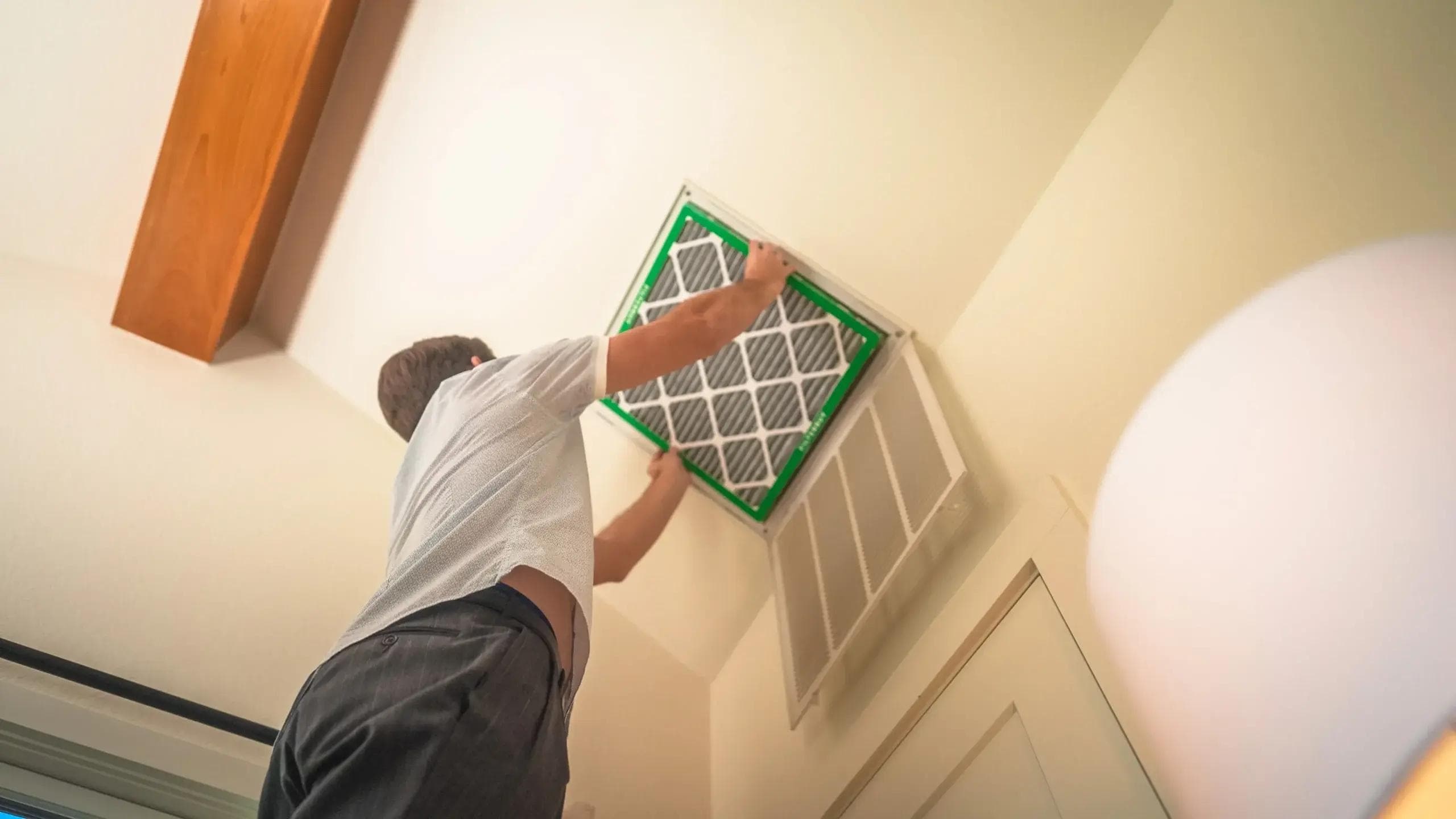
What Causes a Return Air Grille to Whistle in a Brisbane Home?
If a return air grille is whistling in a Brisbane home, the noise is usually a sign that air is being forced through a restriction or a gap. In most cases, the cause is local to the grille, the filter, or the return-air pathway rather than the fan itself.
The good news is that the problem is often straightforward to diagnose. Once you understand where the pressure drop is being created, you can usually trace the noise to an undersized opening, a dirty media surface, or poor seal contact around the filter edge.
Why a return air grille whistles
A whistle forms when air is pulled through a narrow or uneven opening at enough velocity to create turbulence. The sound can come and go with fan speed, system demand, door position, or how dirty the filter is at the time.
In a home, the return grille is meant to let air move back to the air handling equipment with as little resistance as practical. When that airflow path is restricted, the system will often make itself known with noise.
Common causes include:
- •A return opening that is too small for the airflow demand
- •A filter loaded with dust and debris
- •Gaps at the filter frame or around the holding system
- •A warped grille, bent retaining clip, or poorly fitted access panel
- •Additional restrictions in the return path, such as blocked cavities or closed doors affecting air movement
For contractors, it is worth checking the return path as a complete assembly, not just the grille face. A quiet-looking grille can still whistle if the actual air path behind it is constricted.
Undersized openings are a frequent cause
An undersized return opening is one of the most common reasons a grille whistles. If the opening cannot pass the required airflow comfortably, the air speed increases through the available area and noise follows.
This is especially noticeable when:
- •A system has been upgraded, but the return grille size has not changed
- •A filter wall or return plenum has been modified without checking the effective free area
- •The grille has decorative fins or a tight blade pattern that reduces free area more than expected
- •The return path is relying on one opening when the space really needs more return area
A grille can look large enough on paper, yet still have a limited free area once the blade pattern, frame, and filter arrangement are considered. In practical terms, what matters is not just the visible face size, but how much air can actually pass through without forcing the system to work through a bottleneck.
If the opening is too small, the remedy is usually to increase free area, reduce restriction in the return path, or reassess the grille and filter arrangement so the airflow can move more evenly.
Dirty media can make the noise worse
As a filter loads with dust, the resistance to airflow rises. That extra resistance can increase the velocity through any weak point in the return path, making a whistle more obvious.
This is not just about the filter being dirty in a general sense. The issue is that once the media begins to load, the system may start pulling harder through the remaining open areas, especially if the filter surface is unevenly loaded or the return cavity already has limited airflow.
Signs the filter media may be part of the problem include:
- •The whistle becomes louder over time
- •The noise is stronger when the system first starts or when airflow demand increases
- •Dust is visible on the face of the filter and around the grille
- •The system seems to be straining more than usual
If the filter is due for inspection, remove it and check whether the whistle changes when the system runs briefly without the same restriction in place. If the noise reduces, that points toward a loading or fit issue rather than a problem with the fan motor itself.
Inspection frequency depends on the system, site conditions and dust load. Follow the filter and equipment manufacturer instructions, and monitor pressure drop where gauges are fitted.
Poor seal contact around the filter edge
A poor seal around the filter edge is another common reason a return grille whistles. Even a small gap can become a high-speed air leak, and that concentrated airflow can produce a sharp whistling sound.
This can happen when:
- •The filter is not seated squarely in the frame
- •The frame is slightly distorted
- •The gasket is worn, compressed, or missing in spots
- •The retaining system does not hold the filter firmly against the sealing surface
- •The replacement filter is the wrong size for the housing
This is one of the first things to check in a Brisbane home where the return grille is noisy but otherwise appears undamaged. A filter may look installed correctly from the front, yet still leak around one edge if the frame is slightly out of square or the seal surface has debris on it.
For a proper fit, the filter should sit evenly against the frame with consistent contact around the perimeter. If the seal relies on a gasket or foam strip, inspect it for flattening, tearing or contamination. If the filter is undersized for the opening, the airflow may be bypassing around the edge rather than passing through the media as intended.
If you are unsure about sizing, how to measure an air filter is a useful starting point.
What to check on site
For homeowners, the simplest checks are visual and audible. For mechanical contractors, a more complete inspection can quickly identify whether the problem is in the return face, the filter assembly, or the air path behind it.
A useful check list includes:
- •Confirm the return grille is clean and not obstructed by furniture, curtains, or stored items
- •Inspect the filter for visible dust loading, distortion, or edge leakage
- •Make sure the filter is seated correctly and the frame is holding it flat
- •Look for damaged gaskets, worn clips, or loose access panels
- •Check whether the return opening has enough free area for the system demand
- •Compare the noise with different fan settings if the system allows it
If the building has a more complex ventilation setup, site requirements should be confirmed with the mechanical services engineer or building owner, especially where AS 1668.2:2024 is relevant to the ventilation arrangement.
When the grille itself is not the whole problem
Sometimes the grille is blamed because that is where the sound is heard, but the real issue lies deeper in the system. Return noise can be aggravated by a restrictive return duct, a poor transition, or pressure imbalances in the home.
In some cases, changing the grille alone will not solve the whistle if the filter housing still has a poor seal or the return path remains undersized. That is why a methodical check matters: opening size, filter condition, seal integrity, and the route air takes back to the equipment all need to work together.
If you are replacing the filter, make sure the product matches the application and the housing dimensions. For specialised installations, our products and custom air filters can help when standard sizes are not a clean fit. Some filters are designed to be washable - check the product instructions.
Getting the right filter fit for a quieter return
A whistle at the return grille is often a symptom of a filter or airflow mismatch, not just an annoying noise. Once the restriction is removed or the seal is corrected, the system usually sounds more stable and moves air more evenly.
At Total Air Filtration, a family-owned air filter manufacturer and supplier in Hillcrest, Brisbane QLD, established 2009, we help homeowners and mechanical contractors match the right filter to the right housing. We can supply standard options or make filters to suit existing frames and unusual openings.
If you need help finding the right fit, phone 07 3800 3448 or request a quote. You can also contact us or explore filter servicing for support with existing systems.
Written by
The Total Air Filtration Team
General information only — always follow the instructions for your filter and system. Have questions about this article? We're here to help.