Protecting AHUs from Dust in Bulk Ingredient Reception Areas
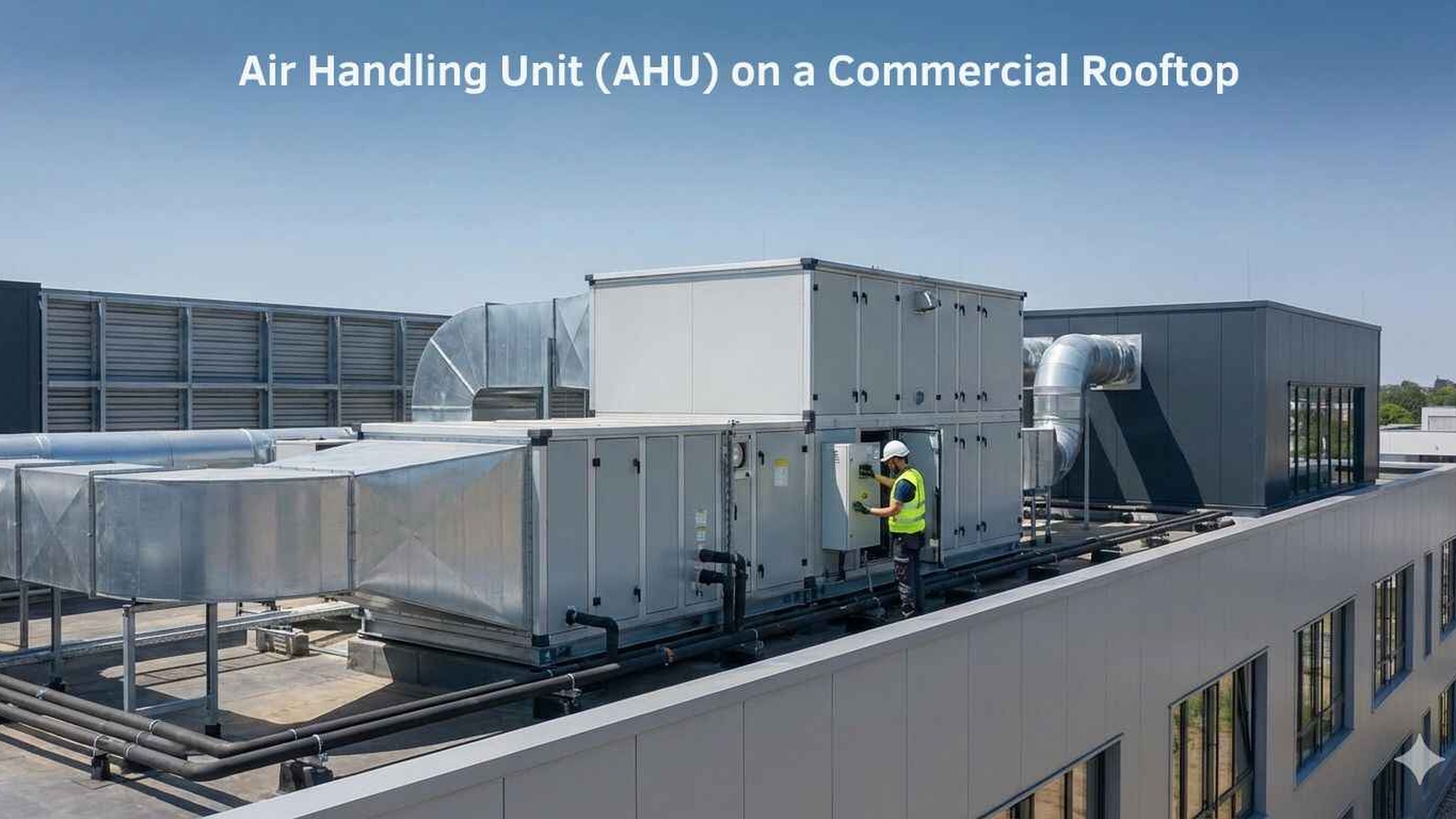
Bulk ingredient reception areas can put air handling units under constant dust pressure. Whether the source is bulk tipping, bag emptying or a busy delivery bay, the AHU nearby is exposed to a heavier and more variable dust load than a unit in a clean plant room.
The right combination of pre-filtration, access design and housing details can make a major difference to how well the system performs and how practical it is to maintain. The goal is simple: keep dust out of sensitive equipment, support steady airflow and make inspection and filter changeouts safer and easier.
Why AHUs struggle near ingredient reception points
Reception areas are often the dustiest part of a facility because the airborne load changes quickly during deliveries, decanting and clean-up. Fine powder can migrate into nearby ductwork, fan sections and control compartments if the AHU is too close to the source or poorly protected.
Common problems include:
- •Rapid loading of the first-stage filter
- •Dust settling inside the unit casing and around frames
- •Reduced airflow when filters block sooner than expected
- •More frequent maintenance access into a dirty, awkward location
- •Dust bypass where filters do not seal properly in the housing
For industrial buyers and facility managers, the issue is not only air quality in the room. It is also equipment reliability, maintenance access and how well the system is set up for the conditions on site.
Start with the location and airflow path
If the AHU can be located away from the heaviest dust source, that is often the first and best design decision. Even a modest increase in distance from tipping points, bag dump stations or delivery docks can reduce direct dust exposure.
Where relocation is not practical, the surrounding layout should help limit dust ingress into the unit. Consider how doors open, how vehicles reverse, where personnel stand during emptying, and whether the AHU intake sits in the path of disturbed dust.
Practical points to review include:
- •Keep outdoor air intakes away from discharge points, loading activity and dust plumes where possible
- •Avoid placing AHU access doors where they open directly into an active dusty workflow
- •Check whether prevailing winds can carry dust toward the intake or enclosure
- •Make sure service access does not require maintenance staff to work through a contaminated area
If the project is tied to general ventilation design, site requirements should be confirmed with the mechanical services engineer or building owner, and any relevant guidance such as AS 1668.2:2024 should be considered in context.
Use pre-filtration to take the load off the main filter
Pre-filtration is one of the most effective ways to protect AHUs in dusty reception areas. The pre-filter captures larger and heavier particles before they reach the finer final filter stage, helping the system cope with the dirty air coming from the process area.
A good pre-filtration strategy can also make servicing more manageable. Instead of exposing the final filter to the full dust burden, the first stage does the hard work. That can help keep pressure drop under control for longer, depending on the dust load and operating hours.
Matching the pre-filter to the dust source
Not all dust behaves the same way. Flour, grain dust, milk powder, sugar and mixed ingredient dusts all have different particle sizes, stickiness and tendency to bridge or compact.
That means the filter arrangement should be selected for the actual site conditions, not copied from a different application. In many cases, a staged setup is more practical than relying on a single filter grade.
Common approaches may include:
- •A coarse first stage for larger nuisance dust
- •A medium efficiency second stage to protect the final filter
- •A finer final filter where the system and ventilation design call for it
If you are unsure which filter arrangement suits the unit, our our products page is a useful starting point, and filter servicing can help with ongoing maintenance planning.
Housing design matters as much as the filter media
Even a good filter can underperform if the housing is poorly designed. In dusty reception areas, the AHU casing should help prevent bypass, tolerate frequent access and keep contamination from spreading into clean sections of the unit.
Housing features worth checking include:
Seal quality and frame support
The filter needs a stable frame and a sealing arrangement that keeps air from leaking around the edges. Poorly seated filters can allow dust-laden air to bypass the media and deposit inside the unit.
Access and changeout practicality
Service doors should open fully and allow the filter to be removed without dragging dust through clean sections of the AHU. If changeout space is cramped, maintenance staff may be tempted to rush, increasing the chance of poor reseating.
Surface finish and cleanability
Smooth internal surfaces are easier to clean than rough or cluttered ones. In reception areas with frequent dust release, the casing should be arranged so settled dust does not accumulate in hard-to-reach corners.
Drainage and moisture control
Where washdown, condensation or outside air moisture is present, the housing should be designed to avoid wet dust build-up. Moisture can turn loose powder into a stubborn deposit that is harder to remove.
Choose filter types that suit the site, not just the catalogue
Industrial reception areas often benefit from a staged approach using filters selected for the real dust profile and service conditions. Some filters are designed to be washable - check the product instructions before relying on that feature.
When choosing filters, consider:
- •Dust type and loading rate
- •Whether the AHU runs continuously or intermittently
- •The available space for deeper filter banks or added stages
- •Whether the system has pressure drop gauges or another way to track resistance
- •The practical time available for maintenance access during production
If your site uses common EN 779 terminology, remember that G3/G4/F5-F9 classes are still widely used in Australia, even though ISO 16890 has superseded EN 779. MERV, EN 779 and ISO 16890 ratings do not convert directly, so it is better to compare the actual product data and application conditions than to rely on a simple conversion.
For applications needing very high particulate control, HEPA filters may be considered in some systems. H13 is at least 99.95% efficient and H14 is at least 99.995% efficient at the most penetrating particle size under EN 1822, but whether that level is appropriate depends on the site design and operating requirements.
Plan maintenance around dust load, not a fixed calendar
In a bulk ingredient environment, filter inspection frequency depends on the system, site conditions and how much dust is being generated. It is better to monitor the pressure drop where gauges are fitted and follow the filter and equipment manufacturer instructions than to rely on a fixed schedule that may not suit the site.
A good maintenance plan should also consider:
- •How often dusty activities occur
- •Whether the unit sits close to a tipping point or delivery bay
- •Whether filters are loading unevenly because of airflow patterns
- •Whether the housing is easy to inspect without disturbing the process area
If a filter bank blocks too quickly, the answer may not be only a different filter grade. The real issue could be the intake position, the lack of a first-stage pre-filter, or a housing that allows dust to settle where it should not.
For ongoing support, commercial filter servicing can assist with planning and supply, while how to measure an air filter is useful when replacement filters need to match existing frames.
Getting the specification right from the start
For mechanical contractors, the best time to solve dust ingress is during the design and coordination stage. Check the AHU location, the access route, the filter bank depth and the seal arrangement before the unit is installed. For facility managers, the same review helps avoid maintenance issues that only appear once the area is in full production.
A few practical questions to ask are:
- •Can the AHU be positioned out of the direct dust path?
- •Is there room for a multi-stage filter arrangement?
- •Can filters be removed without contaminating clean areas?
- •Are pressure drop gauges fitted and visible to maintenance staff?
- •Is the housing suitable for the site’s dust load and cleaning method?
If the standard unit will not fit the space or the maintenance workflow, a made-to-measure solution may be the better choice. In many projects, custom dimensions and housings make the difference between a system that is difficult to maintain and one that is practical over the long term.
Talk to Total Air Filtration
Total Air Filtration is a family-owned air filter manufacturer and supplier based in Hillcrest, Brisbane QLD, and we can help specify or make the right filters for dusty industrial environments. For advice on pre-filtration, housing fit-up or replacement filters, call 07 3800 3448 or request a quote.
You can also explore custom air filters or contact us if you need help matching a filter solution to your AHU and site conditions.
Written by
The Total Air Filtration Team
General information only — always follow the instructions for your filter and system. Have questions about this article? We're here to help.