
Post-Flood HVAC Clean-Up for Ground-Floor Strata Common Areas
Internal flooding in a ground-floor strata building can leave more than visible water damage. Moisture, silt and debris can travel into return air paths, clog filters and settle inside ductwork, plant rooms and ceiling spaces, so the HVAC system needs a careful check before it is put back into normal service.
For property managers and strata committees, the goal is to restore airflow safely and cleanly, without pushing contaminated dust through common areas. The best approach is to isolate affected equipment, inspect the air path from grille to fan, remove anything water-affected and confirm that the system is ready to run again.
Start with a safe, visual inspection
Before touching the system, work with the building’s mechanical services contractor or maintenance team to isolate power where needed and confirm access is safe.
Look closely at the areas most likely to have been affected by floodwater or clean-up water:
- •return air grilles in foyers, corridors, lobbies and mail areas
- •ceiling return cavities and bulkheads around common areas
- •fan coil units, package units or mechanical rooms serving the ground floor
- •filter housings, access doors and seals
- •duct entry points near floor level or in low-lying service spaces
If you can see standing water, heavy dampness, visible silt or loose debris, treat the system as contaminated until it has been cleaned and checked properly. If there is any doubt about whether water reached motors, controls or insulation, the mechanical services engineer should assess the equipment before restart.
Check the return air path, not just the filter
A common mistake after flooding is replacing the filter and assuming the problem is solved. Return air paths can carry silt and fine debris deeper into the system, especially where common area grilles sit low to the floor or where floodwater has moved through corridors and service spaces.
Trace the return air path from the grille back to the fan or air handling unit. Check for:
- •wet or collapsed insulation
- •silt lines on internal surfaces
- •damaged gaskets or access panel seals
- •debris lodged behind grilles or in plenums
- •corrosion, staining or pooled moisture inside the housing
If the return air path is dirty, the filter will load up quickly again even after replacement. In some cases, the grille itself may need to be removed and cleaned, and the surrounding cavity vacuumed or wiped down before the system is restarted.
Where the building has multiple common area systems, check each one individually. One affected return can spread dust and odour through nearby spaces if it is brought back online too soon.
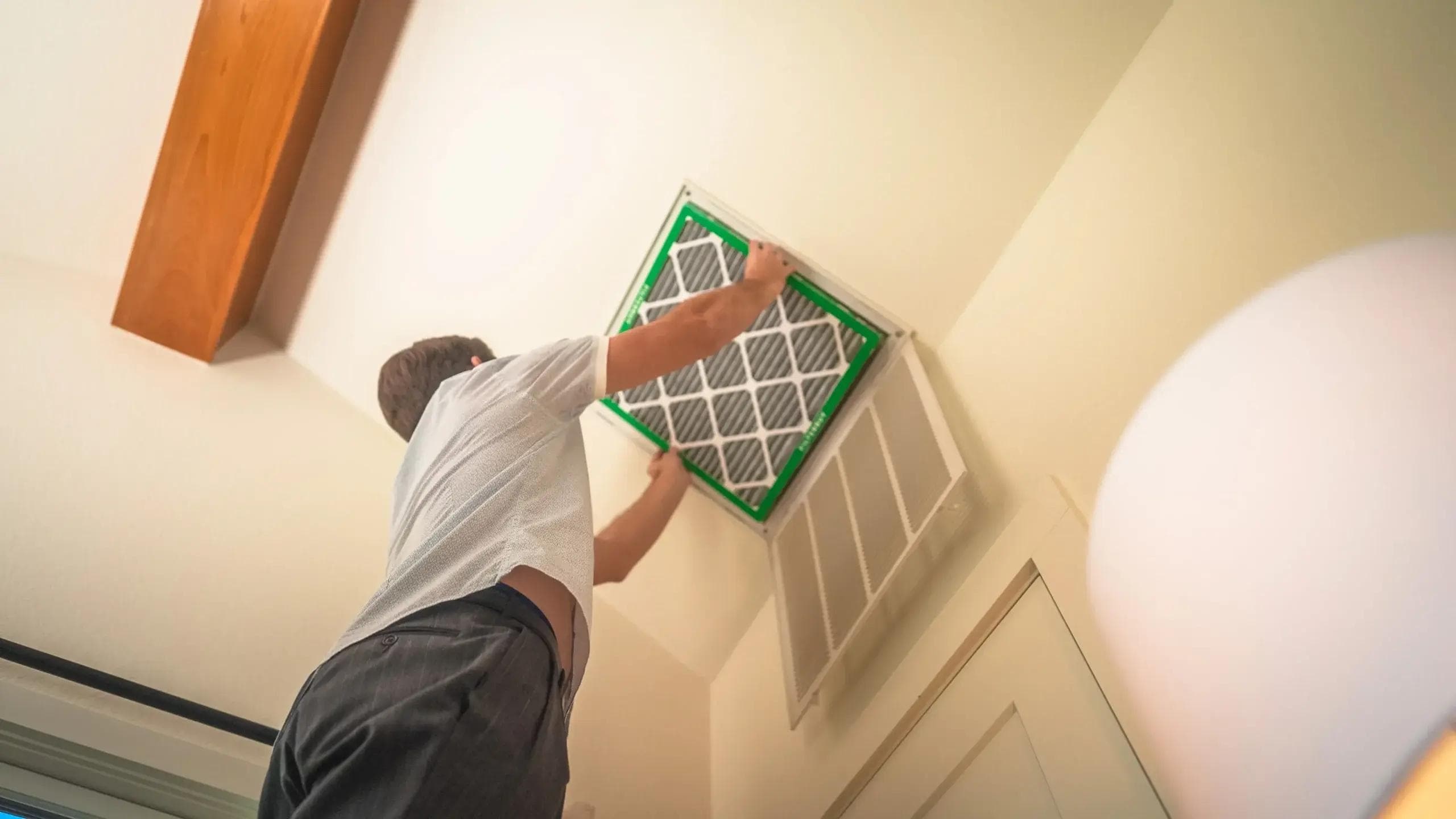
Replace any water-affected filters
Filters that have been exposed to floodwater, spray, wet silt or prolonged damp conditions should be replaced. Even if they still look intact, a saturated filter can distort, break down or hold contamination that is difficult to remove.
When selecting the replacement, confirm the correct size, frame depth and sealing arrangement for the unit. If you are unsure, how to measure an air filter can help you check the dimensions before ordering. In strata buildings, it is also worth confirming whether the unit uses a standard panel filter or a custom size.
If the existing filter type is no longer suitable because of the flood damage, the replacement should match the equipment requirements and the site conditions. For some systems, a different grade or construction may be appropriate, but that decision should be made with the building’s mechanical services engineer or owner after checking the system design and operating needs.
A few practical points to keep in mind:
- •remove the old filter carefully to avoid dislodging dust and silt
- •inspect the frame, holding tracks and seals before fitting the new one
- •make sure the filter sits squarely and does not bypass air around the edges
- •record the filter size and type for future maintenance
Some filters are designed to be washable - check the product instructions. If a washable product has been exposed to floodwater, do not assume it can simply be rinsed and reused unless the manufacturer says it is suitable for that treatment.
Remove silt contamination from the housing and surrounding spaces
Silt is a particular problem because it is fine, gritty and easily redistributed if cleaned poorly. Dry sweeping is usually a bad idea in enclosed common areas, because it can push dust back into the air and into the return path.
Use controlled clean-up methods suitable for the affected surface and material. In general, the priority is to remove loose contamination without spreading it further.
Practical clean-up steps often include:
- •vacuuming loose silt with appropriate equipment
- •wiping internal surfaces with damp, disposable cloths where suitable
- •cleaning grille faces, louvres and accessible duct edges
- •removing and cleaning access panels, frames and nearby service surfaces
- •checking for hidden debris in corners, ledges and ceiling voids
If any insulation, acoustic lining or porous material has been soaked and contaminated, it may need to be removed and replaced rather than cleaned in place. Porous materials can hold moisture and debris longer than metal surfaces and may continue to release odour or residue after the visible mess is gone.
Where silt has entered fan housings or coils, the mechanical contractor should clean these components properly before the system runs again. Turning the system on too early can pull remaining debris into other parts of the building.
Manage moisture, odour and mould risk after the flood
Flood clean-up is not complete when the visible water has gone. Any remaining dampness in return cavities, filters or insulation can lead to ongoing odour and mould growth. The focus should be on drying, ventilation and close follow-up.
Check that the affected area is fully dry before sealing up the system. If dehumidification, temporary ventilation or further access is needed, keep the area open until the contractor is satisfied it is dry enough to close.
A few signs that more work may be needed:
- •persistent damp or musty odour from return grilles
- •staining or water marks that suggest hidden moisture remains
- •condensation inside the housing or on duct surfaces
- •recurring dust discharge after the system starts up
If the building uses a filtration stage in a plant room or common area air handling unit, make sure replacement filters are installed only after the housing and upstream surfaces are cleaned. Installing a new filter into a dirty housing can shorten its useful life and allow contamination to remain in the system.
For buildings looking to review their ongoing maintenance approach after a flood event, filter servicing and commercial filter servicing can be useful references when planning the next inspection and clean.
Confirm the system is ready before reopening common areas
Before the HVAC system is returned to normal operation, confirm that all affected components have been inspected and cleaned, that replacement filters are correctly fitted, and that access panels are secure.
It is also sensible to review whether the current filtration arrangement still suits the site. If the flood has changed the condition of the plant room or common area air paths, the building may need a different filter solution or a custom size to suit repaired equipment. The relevant site requirements should be confirmed with the mechanical services engineer or building owner, and where applicable, reference should be made to AS 1668.2:2024 for ventilation design and operation.
Ongoing checks should be based on the actual system, the site conditions and the dust load. Follow the filter and equipment manufacturer instructions, and monitor pressure drop where gauges are fitted so you can see when the filter is becoming loaded.
Need replacement filters after a flood event?
If your strata building needs replacement filters, custom sizes or help matching the right product to a damaged system, Total Air Filtration can supply or make the right filters for the job. We are a family-owned air filter manufacturer and supplier based in Hillcrest, Brisbane QLD, and we can help with common area systems, plant room units and custom requirements.
Call 07 3800 3448 or request a quote. You can also browse our products or custom air filters if you are checking options for a post-flood clean-up.
Written by
The Total Air Filtration Team
General information only — always follow the instructions for your filter and system. Have questions about this article? We're here to help.