
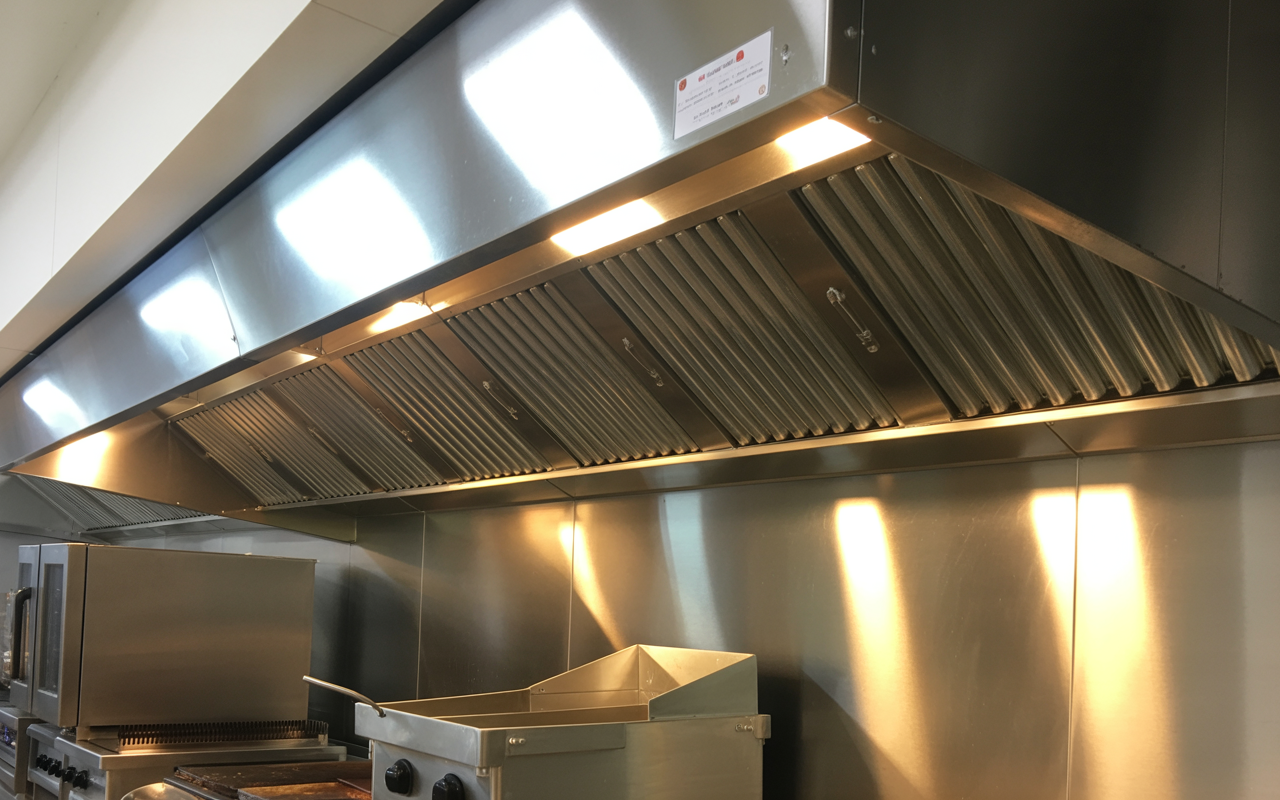
Odour Control in Commercial Kitchens: Beyond Grease Filtration
Commercial kitchen exhaust systems do more than catch grease. While grease filters are essential at the hood, they are only one part of the picture when a kitchen is dealing with smoke, odour and gaseous contaminants that can travel further through the exhaust system and into surrounding spaces.
For operators, mechanical contractors and facility managers, the key is understanding what each stage of filtration is meant to do. When the wrong problem is assigned to the wrong filter, the system can underperform, odours can linger, and maintenance becomes harder than it needs to be.
Grease capture is not the same as odour control
Grease filters are designed to remove airborne grease droplets and larger particles from cooking exhaust. That is important for keeping ductwork cleaner and reducing the build-up of greasy residue in the system.
But grease capture does not automatically solve the other issues that come with commercial cooking, including:
- •visible smoke from grills, fryers and charbroilers
- •cooking odours that travel beyond the kitchen
- •gaseous compounds produced during food preparation
- •fine particulates that can pass through a basic grease stage
This is where a lot of kitchen exhaust discussions go off track. A baffle filter or mesh filter may do a solid job of catching grease, but odour molecules are much smaller than grease droplets. If odour control is a priority, the system usually needs additional treatment downstream of the grease stage.
In practical terms, the grease filter protects the ductwork and equipment, while the odour-control stage helps address the air leaving the kitchen.
What carbon stages can do in a kitchen exhaust system
Activated carbon is commonly used where odour reduction is needed. It works by adsorbing certain gases and odour compounds onto the surface of the carbon media as air passes through it.
A carbon stage is often added after grease capture so the heavier contamination is removed first. That helps the carbon do its job without being clogged by grease at the outset.
Where carbon filtration fits best
Carbon stages can be useful in commercial kitchens where exhaust air is likely to create nuisance odours, such as:
- •tenancy kitchens in shopping centres
- •restaurants close to neighbouring properties
- •food preparation areas with intense cooking smells
- •sites where exhaust discharge location is restricted
- •projects that need a more controlled air treatment approach before discharge
Carbon is not a catch-all solution, and it is not a replacement for proper grease filtration or adequate exhaust design. It is one stage in a broader system, and it works best when the airflow, hood capture and maintenance approach are all considered together.
Limits to keep in mind
Carbon stages have limitations that are worth planning for early:
- •they are most effective when grease loading is controlled upstream
- •they are not suited to every gas or odour type
- •saturated carbon needs to be replaced or regenerated according to the product instructions
- •performance depends on airflow, contact time and the actual contaminant profile
That is why carbon should be selected to suit the application rather than treated as a universal fix.
Smoke, grease and gas: three different challenges
Commercial kitchen exhaust often needs to manage three separate issues at once, and each one behaves differently.
Grease droplets and particles
These are the easiest to understand. They are physical contaminants that can be captured by appropriately designed grease filters. The main goal is to prevent grease from building up inside the system and to support safer, cleaner operation.
Smoke and fine particulates
Smoke contains fine particles that may pass through a basic grease stage, depending on the cooking method and the filter arrangement. In some systems, additional stages may be used to help manage visible emissions before the exhaust leaves the building.
Odours and gaseous compounds
These are the hardest to deal with because they are not just particles. Odour control generally requires media or treatment designed to interact with gaseous contaminants, which is why carbon is often specified in kitchen exhaust applications where nuisance odour is a concern.
A good kitchen exhaust design recognises that one filter type will not solve all three problems. The selection has to match the source, the load and the site constraints.
Design and maintenance considerations for real-world sites
Good odour control starts with proper system design, not just with the final filter stage. For a kitchen exhaust system to work well, the hood, fan, ducting, filters and discharge arrangement all need to be considered together.
Points to review with the mechanical services engineer
For new projects or retrofit work, it is worth confirming:
- •the cooking equipment being served
- •the type and volume of exhaust air
- •where the exhaust is discharged
- •access for inspection and servicing
- •whether additional carbon stages are practical in the available space
- •how pressure drop will be monitored where gauges are fitted
If the project is being designed or modified, confirm site requirements with the mechanical services engineer or building owner, and check the relevant requirements in AS 1668.2:2024.
Maintenance matters as much as selection
Even a well-designed system will struggle if filters are left in place too long or inspected too infrequently. Inspection frequency depends on the system, the site conditions and the dust or grease load.
As a general rule, follow the filter or equipment manufacturer instructions and monitor pressure drop where gauges are fitted. That applies to grease stages and carbon stages alike.
For some products, cleaning may be possible, but washability is a property of specific filters only. Some filters are designed to be washable - check the product instructions before cleaning or reusing them.
If the maintenance team is unsure how to identify the correct fitment or access arrangement, how to measure an air filter can help with the basics.
Choosing the right filter stages for the job
The best kitchen exhaust setup is usually the one that matches the actual cooking process, the exhaust path and the available servicing space. That might mean a combination of grease capture and carbon media, or a different arrangement depending on the site.
Questions worth asking before specifying
- •What foods and cooking methods are involved?
- •Is the main concern grease loading, visible smoke, odour, or all three?
- •How much room is available for additional stages?
- •Can the system be accessed safely for inspection and replacement?
- •Is the exhaust likely to affect neighbouring tenancies or outdoor areas?
If you are reviewing an existing system, it can also help to look at the physical condition of the filters and housings rather than relying only on appearance. A filter may look clean enough at a glance while still being loaded enough to affect airflow.
If you need a replacement or a bespoke size, custom air filters may be suitable depending on the installation.
Support for commercial kitchens from Total Air Filtration
At Total Air Filtration, we manufacture and supply air filters for commercial environments, including kitchen applications that need more than basic grease capture. As a family-owned air filter manufacturer and supplier in Hillcrest, Brisbane QLD, we can help you match the filter stages to the system requirements and the practical realities of the site.
If you are planning a new installation, reviewing an existing exhaust system, or looking for replacement filters, call 07 3800 3448 or request a quote.
You can also browse our products or contact us to discuss the application in more detail.
Written by
The Total Air Filtration Team
General information only — always follow the instructions for your filter and system. Have questions about this article? We're here to help.