
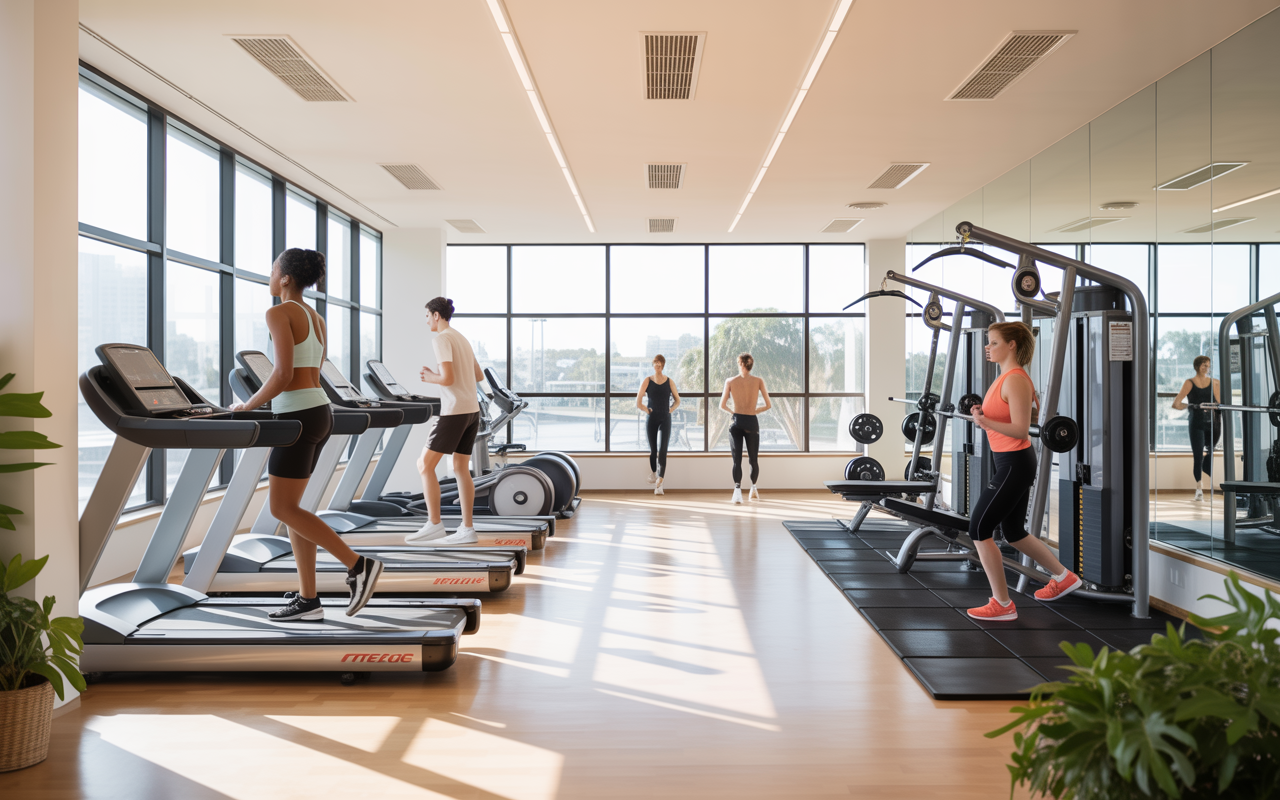
Maintaining Good Airflow in Fitness Studios With Glazed Frontages and Frequent Door Opening
Street-facing fitness studios have a different airflow challenge to enclosed tenancies. Large glazed frontages, frequent door opening and high foot traffic let outside air rush in and out, bringing dust, pollen, traffic grime and other fine particles with it. Over time, that extra outdoor air ingress can change how quickly filters load up, how stable indoor conditions feel, and how hard the HVAC system has to work to keep the space comfortable.
Why glazed frontages change the airflow picture
A studio with a full glass shopfront often looks open and inviting, but that same openness can make the space more exposed to the street environment. Every time the door opens, air moves to equalise pressure between inside and outside. If the venue sits near busy roads, tram corridors, cafés or footpaths, that air exchange can carry more particulate matter indoors than a more sealed tenancy would.
That matters for two reasons. First, incoming outdoor air can increase the amount of dust captured by pre-filters and final filters, which can shorten the useful life of the filter set. Second, the incoming air can affect comfort near the entry, reception and exercise zones, especially when the air conditioning is trying to keep temperature and humidity steady during busy periods.
For studio owners and facility managers, the practical point is simple: the building is not just conditioning recirculated air. It is also constantly reacting to the street.
How outdoor air ingress affects filter loading
Filters in fitness studios often see a mix of indoor-generated particles and outdoor dust. In a street-facing gym, the outdoor contribution can be significant because of repeated door cycling and the pressure changes that come with people moving in and out.
As filters load, airflow resistance rises. That can show up as:
- •reduced air delivery to occupied areas
- •uneven temperatures between the entry and the studio floor
- •more fan effort to maintain designed airflow
- •faster accumulation of visible dust on nearby surfaces if filtration and airflow are not balanced well
It is useful to think about filter loading as site-specific. A yoga studio with a few quiet entry points will behave differently to a boutique gym with all-day class turnover and a wide opening facing the street. Nearby construction, road dust, seasonal pollen and local wind conditions can all change how quickly filters collect debris.
The right approach is to inspect filters based on the actual site conditions, not a generic calendar. Check the pressure drop where gauges are fitted, and follow the filter and equipment manufacturer instructions for inspection and replacement decisions.
Comfort issues created by frequent door opening
Air leakage and door opening do more than bring in dust. They can create draughts, temperature swings and a sense that the space is hard to control. In a fitness setting, that can be especially noticeable during class changeovers, peak traffic times or when the entry door is propped open for longer than intended.
Common comfort complaints in glazed, street-facing studios include:
- •a cold or hot blast near the entry
- •humid or stale air drifting into the reception area
- •uneven air movement across the studio floor
- •odour transfer from the street or neighbouring tenancies
- •complaint-prone rooms that feel different from the rest of the venue
This is where filtration and ventilation need to work together. Better filtration alone will not fix a poorly balanced system, and more outdoor air is not automatically better if it is not conditioned and filtered appropriately. In many cases, the aim is to manage how outdoor air enters, where it enters, and how it is treated before it reaches the occupied zone.
Practical ways to reduce strain on filters and HVAC equipment
For contractors and site managers, the most effective fixes are usually mechanical and operational rather than cosmetic. A few practical measures can make a noticeable difference.
Review door behaviour and entry layout
If possible, limit the time the external door stays open during busy periods. Entry mats, a defined waiting zone and sensible front-desk layout can help reduce unnecessary air exchange. Where the tenancy allows it, vestibules or secondary door arrangements can also reduce direct street air entering the studio.
Check filtration stages and fit
A well-fitted filter is as important as the filter media itself. Bypass around the frame can let unfiltered air move through the system, especially in installations that see frequent pressure fluctuations. If the system allows it, using an effective pre-filter can help take the first hit from outdoor dust before finer filters do the final cleaning.
If you need replacement filters or a better fit for an awkward frame size, how to measure an air filter is a useful starting point, and custom air filters may suit non-standard housings.
Use pressure drop as a maintenance guide
Where gauges are fitted, pressure drop is one of the clearest indicators that a filter is loading up. It gives a better picture than visual inspection alone, especially in venues where airborne dust is not obvious but airflow has changed.
Inspection frequency depends on the system, site conditions and dust load. A busy studio with a street-facing façade may need closer attention than a quieter indoor tenancy. Always follow the equipment and filter manufacturer instructions.
Confirm ventilation settings with the right people
If the air conditioning or ventilation system is being altered, confirm site requirements with the mechanical services engineer or building owner. If the venue is being designed or refurbished, AS 1668.2:2024 is a relevant reference point for ventilation considerations, but the final setup still needs to suit the actual tenancy and use pattern.
Choosing the right filter approach for a studio environment
Fitness spaces are not all the same. A spin studio, reformer Pilates room, boxing gym and multi-use training space may each need a different balance of airflow, dust capture and maintenance access. The best filter arrangement depends on the system design, available space, fan capacity and how much outdoor air the frontage is likely to admit.
When selecting filters, think about:
- •the size and condition of the existing filter frame
- •whether the system uses pre-filters and final filters
- •the kind of dust expected from the street environment
- •whether access for inspection and replacement is straightforward
- •whether the product instructions allow washing for some specific models
Filter classes and standards also need careful handling. MERV, EN 779 and ISO 16890 do not convert directly, so it is better to match the filter to the system requirements and the site conditions rather than rely on a simple cross-reference. EN 779 classes such as G3/G4/F5-F9 are still widely used in Australia, even though ISO 16890 has superseded EN 779 in many contexts.
For higher-efficiency applications, HEPA values are defined at the most penetrating particle size under EN 1822. H13 is at least 99.95% efficient and H14 is at least 99.995% efficient. Those ratings are only relevant when the system is designed for that level of filtration.
Keeping maintenance practical for busy venues
Studio operators often have limited downtime between classes, so maintenance needs to be planned around access and visibility. Clear labelling, good spare filter storage and simple inspection access can make it much easier to stay on top of loading before it becomes a comfort issue.
A useful maintenance routine usually includes:
- •checking the filter condition during normal site visits
- •noting any change in fan noise or airflow
- •watching for dust build-up near intakes and returns
- •confirming doors and seals are not defeating the intended airflow path
- •keeping replacement records so the team knows what has been fitted
If the system is difficult to access, that is a design issue worth addressing early. It is better to choose a filter arrangement that can be inspected and replaced properly than to install something theoretically suitable but impractical in day-to-day use.
Talk to Total Air Filtration
Total Air Filtration is a family-owned air filter manufacturer and supplier based in Hillcrest, Brisbane QLD, and we work with commercial sites that need practical filter solutions for real-world conditions. If your studio has a glazed frontage, frequent door opening or a challenging street environment, we can help supply or make the right filters for the system.
Call 07 3800 3448 or request a quote. You can also explore our products or contact us if you want to discuss a specific installation.
Written by
The Total Air Filtration Team
General information only — always follow the instructions for your filter and system. Have questions about this article? We're here to help.