
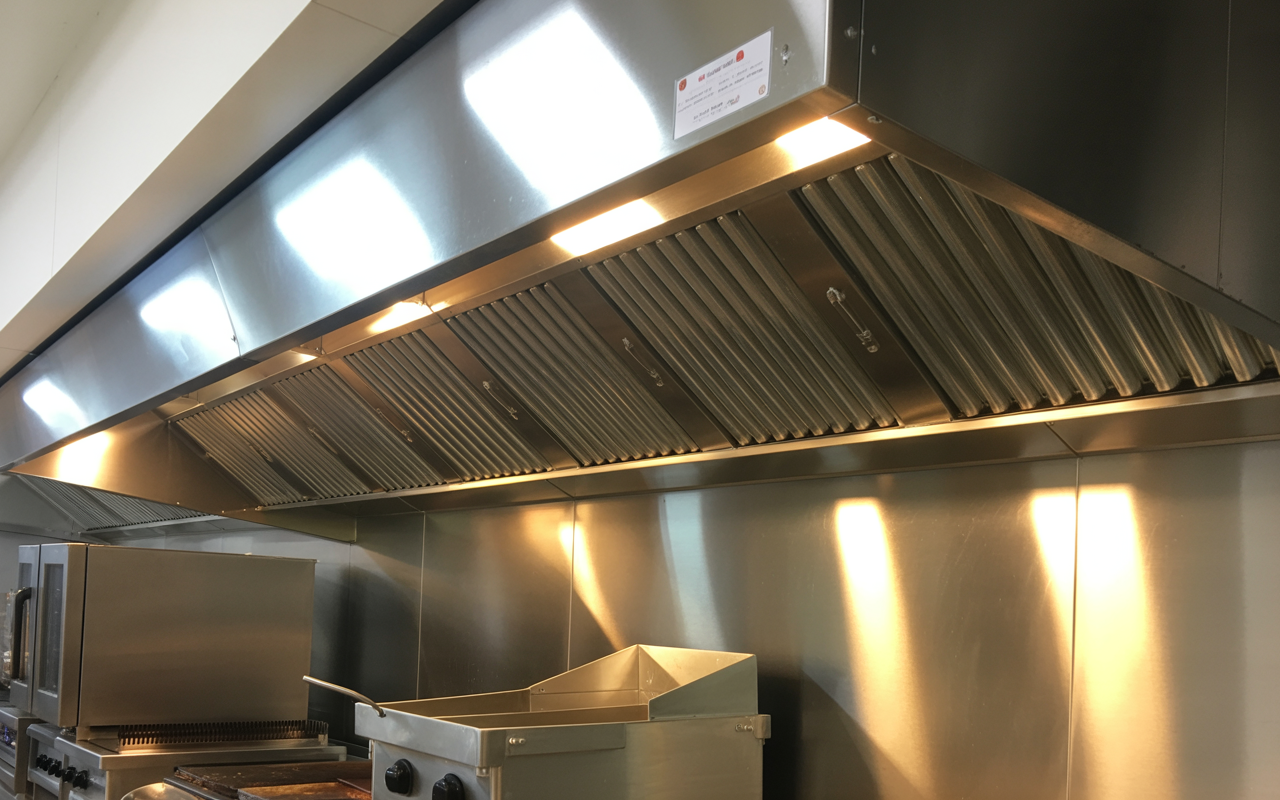
Inspecting Grease-Laden Filters in Back-of-House Kitchen Ventilation Systems
Back-of-house kitchen ventilation systems work hard in a demanding environment, and the filters inside them can tell you a lot before any tools come out. A good visual inspection helps restaurant operators and kitchen contractors spot grease build-up, airflow restriction and fit issues early, before they become larger maintenance problems.
Why visual inspection matters in kitchen filter banks
Grease-laden filters rarely fail in a dramatic way. More often, they show gradual changes in colour, shape and surface loading that point to poor capture, maintenance gaps or a system that is operating outside its usual conditions.
In commercial kitchens, the goal of inspection is not just to see whether a filter looks dirty. It is to judge how the grease is sitting on the media, whether the frame is still square, and whether air is still passing through the filter bank evenly. Those clues matter because kitchen conditions vary widely between sites, and inspection frequency should always suit the system, the site conditions and the dust or grease load.
If you are planning work on a commercial kitchen system, it is also worth checking the filter arrangement against the equipment documentation and, where relevant, the building’s ventilation design requirements. AS 1668.2:2024 is often referenced for ventilation arrangements, but site requirements should always be confirmed with the mechanical services engineer or building owner.
What to look for at a glance
A visual inspection should begin with the filter face, then move to the edges, frame and surrounding housing. Good lighting helps, but so does a consistent approach from one visit to the next.
Signs of normal, even loading
- •A fairly uniform layer of grease or residue across the exposed face
- •No obvious gaps where air appears to have bypassed the filter
- •The frame sitting square in its channel or holding rack
- •No visible sagging, bowing or twisting
- •Surfaces that appear loaded but still structurally intact
Even loading is what you want to see most often. It suggests air is being distributed reasonably through the bank, rather than overloading one section while leaving another underused.
Signs that need closer attention
- •Heavy loading concentrated in the centre while the edges remain comparatively clean
- •Dark, sticky build-up on one side only
- •Shiny tracks or streaks that suggest grease is being carried through airflow paths
- •Visible deformation of the filter media or mesh
- •Bent frames, loose corners or damaged seals
- •Gaps around the perimeter that may allow unfiltered air to pass
These patterns can point to poor fit, uneven airflow, blocked sections upstream or a filter type that is no longer suited to the site conditions.
Distortion: one of the clearest warning signs
A kitchen filter does not have to be torn to be ineffective. Distortion is often the earliest obvious sign that the filter bank is under stress.
Look for bowed frames, collapsed pleats, warped mesh or a filter that no longer sits flush in the holding system. If the filter has shifted within its frame, air may be taking the path of least resistance around the edges rather than through the intended media.
Distortion can also make removal and refitting harder. If a filter has to be forced back into place, that is often a sign the frame or housing needs attention, not just the filter itself.
When inspecting, check whether:
- •The filter remains square when viewed from the front and side
- •The corners meet the frame evenly
- •There is any racking or twist across the bank
- •The filter looks compressed in one area and loose in another
- •The retaining hardware is holding the filter firmly without crushing it
If the filter bank uses multiple sections, compare them side by side. One visibly distorted filter among several similar units may point to localised airflow imbalance or handling damage.
Loading patterns and what they suggest
Loading patterns can reveal more than the amount of grease present. They can show how air is moving through the kitchen exhaust system.
Centre loading
If the middle of the filter is heavily coated while the edges are lighter, airflow may be concentrated through the centre. This can happen when the filter bank is not evenly supported, when the hood or plenum is distributing air unevenly, or when certain sections are receiving more exhaust flow than others.
Edge loading
Grease concentrated at the sides or top edge can suggest bypass, poor seating or air movement that is carrying contaminants around the filter instead of through it. Check the seal surfaces and make sure the filter has not shifted during cleaning or reinstallation.
Patchy loading
Patchy or blotchy deposits may indicate intermittent airflow, localised splashing from cooking activity, or a filter that has not been seated consistently in the same position. It can also suggest that part of the bank is seeing more vapour or aerosol than the rest.
Deep loading or wet-looking build-up
A filter that appears heavily saturated, glossy or tacky may be holding more grease than usual. That does not automatically mean the filter has failed, but it does mean the inspection should include the housing, access panels and adjacent duct entry points for evidence of carryover or residue.
Checking the filter bank, not just the individual filter
Kitchen filtration problems are often system problems. A single filter can look acceptable on its own while the filter bank as a whole tells a different story.
Pay attention to the relationship between the filter and the bank around it:
- •Are all filters aligned evenly across the row or section?
- •Are any filters sitting higher, lower or deeper than the rest?
- •Do some units appear cleaner because air is avoiding them?
- •Is there visible residue on the housing that suggests leakage or bypass?
- •Are access points, clips and retaining bars still working properly?
It is also useful to note any repeated pattern from one inspection to the next. If the same section continues to load faster than the others, the issue may be upstream or related to the cooking line layout rather than the filter itself.
For operators who want to better understand filter types, performance and fit, our products page is a useful starting point. If the opening size or frame arrangement has changed, how to measure an air filter can help avoid ordering the wrong replacement.
When to replace, clean or call for support
Do not rely on appearance alone if the system has gauges fitted. Monitor pressure drop where gauges are installed, and follow the filter and equipment manufacturer instructions for cleaning, inspection and replacement.
Some filters are designed to be washable - check the product instructions before attempting to clean and reuse them. If a filter is bent, damaged, deformed or no longer seats correctly, cleaning is unlikely to fix the underlying issue.
It is a good idea to arrange further attention when:
- •The filter cannot be seated securely after removal and cleaning
- •The frame is visibly damaged or out of square
- •Loading is uneven enough to suggest bypass or airflow imbalance
- •Grease is accumulating in places the filter should not be reaching
- •The filter bank is difficult to access safely or consistently
If you are coordinating maintenance across a venue or group of sites, filter servicing and commercial filter servicing may be worth discussing as part of the maintenance plan.
Practical inspection habits for operators and contractors
A reliable inspection process does not need to be complicated. What matters is consistency.
Use the same lighting, access method and observation points where possible. Photograph the filter bank during inspections if your site procedures allow it, so that changes in distortion or loading can be compared over time. Note whether one section repeatedly shows heavier deposits, and whether the filter sits differently after reinstallation.
For contractors, it also helps to confirm the filter dimensions before ordering replacements, especially when frames have been modified or when older equipment has non-standard openings. If you need a custom size or a special frame arrangement, custom air filters may be the right path.
If you are unsure whether the current filter bank is the best fit for the kitchen layout, the exhaust duty or the access arrangement, it is sensible to review the application before replacing anything. That can save time during installation and reduce repeat adjustments later.
Talk to Total Air Filtration about the right kitchen filters
Total Air Filtration is a family-owned air filter manufacturer and supplier in Hillcrest, Brisbane QLD, established 2009. We can supply or make the right filters for commercial kitchen applications, and help you match the filter to the opening, frame and operating conditions.
Call 07 3800 3448 or request a quote if you need assistance with a replacement, a custom size or a recurring filter issue. You can also contact us for help with your next kitchen ventilation project.
Written by
The Total Air Filtration Team
General information only — always follow the instructions for your filter and system. Have questions about this article? We're here to help.