
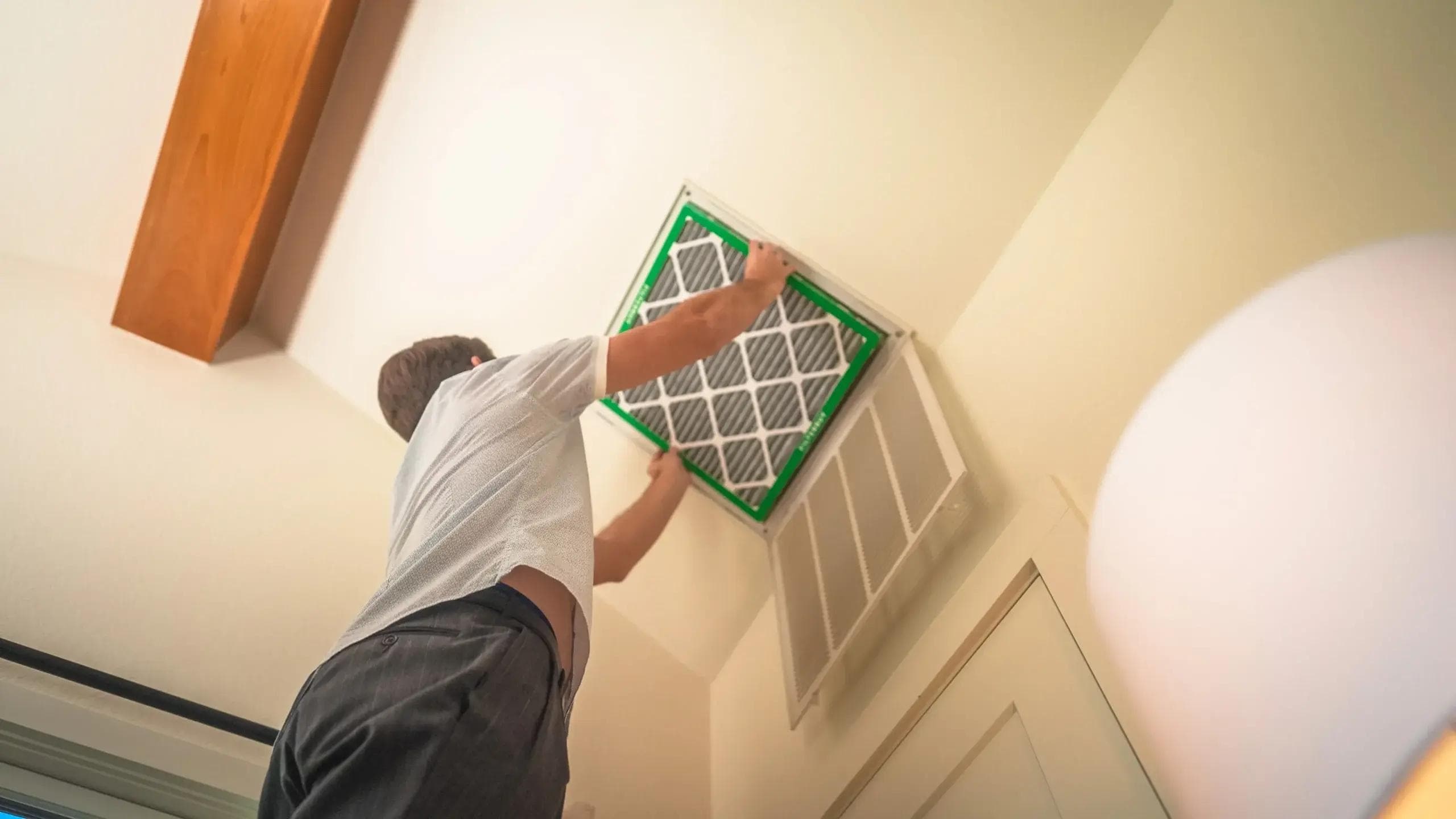
Inline Filters for Bathroom Exhaust Fans in Renovated Homes
Renovated homes often create bathroom exhaust layouts that are harder to service than original installations. Once a bathroom fan is pushed further from the outside discharge, or buried behind new ceilings and limited roof-space access, routine cleaning becomes less straightforward and dust can build up where you least want it. In those situations, an inline filter can be a practical way to help protect the fan, ductwork and associated components by capturing airborne particles before they enter the system.
Why bathroom exhaust in renovated homes can be harder to maintain
Bathroom exhaust systems in older homes are often simple, short and accessible. Renovations change that picture quickly. Added bulkheads, new insulation, rerouted services and redesigned roof spaces can leave the fan or ductwork in locations that are difficult to reach for inspection and cleaning.
For mechanical contractors, the key issue is not just performance on day one. It is what happens after the fit-out is complete, when the bathroom remains in everyday use but access for maintenance is limited. A fan that is easy to install may still be difficult to keep clean if the duct run is long, concealed or routed through a compact roof space.
Inline filtration can help in these scenarios by removing a portion of the dust and debris that would otherwise settle inside the duct or on the fan components. That can be especially useful where the bathroom exhaust draws air through a space that contains construction dust, lint, fibres or general household particles.
Where inline filters make sense
Inline filters are not needed in every bathroom exhaust system, but they can be a smart option where maintenance access is restricted or the duct path is less forgiving.
Common renovation situations
- •The fan is located far from the external discharge point, creating a longer duct run
- •Roof-space access is limited, making fan removal or cleaning difficult
- •The duct passes through dusty roof voids, storage areas or service spaces
- •The bathroom has been upgraded, but the original exhaust pathway has been retained
- •The system is likely to collect more particulate matter due to the surrounding site conditions
In these cases, an inline filter can be positioned so it is easier to reach than the fan itself. That gives contractors a practical service point without needing to disturb the full exhaust assembly each time maintenance is required.
What an inline filter can help with
The purpose of the filter is straightforward: capture particles before they reach the fan or build up in the ductwork. In bathroom exhaust applications, that can help reduce the amount of loose material moving through the system and settling on moving parts, housings or internal surfaces.
That does not mean the filter is a substitute for good system design. It should be used alongside appropriate duct sizing, sound installation practice and suitable fan selection. If the system is meant to meet specific ventilation requirements, site requirements should be confirmed with the mechanical services engineer or building owner, including reference to AS 1668.2:2024 where relevant.
Inline filtration can also be useful when the homeowner wants a more serviceable arrangement. Rather than opening up a finished ceiling or trying to reach a fan tucked into a difficult roof void, the contractor can often place the filter where it can be inspected more easily.
Design points for contractors
A good retrofit starts with understanding the actual service path, not just the fan location on the drawing. The best inline filter position is one that balances access, airflow and maintainability.
Things to check before specifying a filter
- •The available space for the filter housing and any access panel
- •The direction of airflow and how the filter will be mounted
- •How the filter will be removed without damaging finished surfaces
- •Whether the duct route allows easy re-sealing after maintenance
- •The likely dust load in the roof space or surrounding area
- •Whether the selected fan can handle the added resistance from the filter
The pressure drop across the filter should be considered as part of the overall system design. Where gauges are fitted, monitor pressure drop and use that information to decide when the filter needs attention. Inspection frequency depends on the system, site conditions and dust load, and the filter or equipment manufacturer instructions should always be followed.
It is also worth thinking about future access. If a filter is hidden behind plasterboard or installed where no one can reach it without dismantling finishes, it has not really solved the maintenance problem. A small amount of planning at the rough-in stage can make the system much easier to service later.
Filter selection considerations
Not every filter media or frame style will suit every bathroom exhaust application. The aim is to choose a filter that captures the particles of concern without creating unnecessary resistance or awkward servicing conditions.
Some filters are designed to be washable - check the product instructions. Others are disposable or intended for replacement rather than cleaning. The right choice depends on the fan arrangement, the level of dust expected and the preferences of the building owner or maintenance team.
For renovated homes, custom sizes may be needed where the available space is irregular or the duct path has been altered from the original layout. If standard sizes do not fit the cabinet, ceiling or filter holder, custom air filters can be made to suit the application.
If you are unsure how to confirm the dimensions for an existing opening or frame, how to measure an air filter is a useful starting point. Accurate measurements matter because a poor fit can let air bypass the filter and reduce the value of the installation.
Practical maintenance planning
When inline filtration is added to a bathroom exhaust system, the maintenance approach should be simple enough that it actually gets done. For contractors, that means leaving clear access, identifying the filter location and making sure the homeowner or facilities contact understands what to check.
A good handover might include:
- •Where the filter is located
- •How to access it without damaging finishes
- •What signs suggest the filter needs inspection
- •Which product instructions apply to the chosen filter
- •Whether the filter is washable or intended for replacement
- •Any system notes relevant to the duct run or fan arrangement
In some projects, the best outcome is not a large or complex filter assembly, but a modest inline unit placed in the right spot. That can be enough to make the system easier to keep clean, especially when roof access is awkward and the fan itself is not easy to reach.
If the site includes multiple exhaust points or a broader ventilation package, it may also help to review the rest of the arrangement as part of a wider maintenance plan. Our filter servicing and commercial filter servicing resources may be useful when you are coordinating ongoing access and replacement work across a project.
Talk to Total Air Filtration
For renovated homes with long duct runs or difficult roof-space access, inline filters can be a practical part of the bathroom exhaust solution. Total Air Filtration is a family-owned air filter manufacturer and supplier based in Hillcrest, Brisbane QLD, and we can help supply or make the right filters for the job.
If you need assistance with sizing, selection or a custom fit, please call 07 3800 3448 or request a quote. You can also contact us if you want to discuss a specific installation or an upcoming renovation project.
Written by
The Total Air Filtration Team
General information only — always follow the instructions for your filter and system. Have questions about this article? We're here to help.