
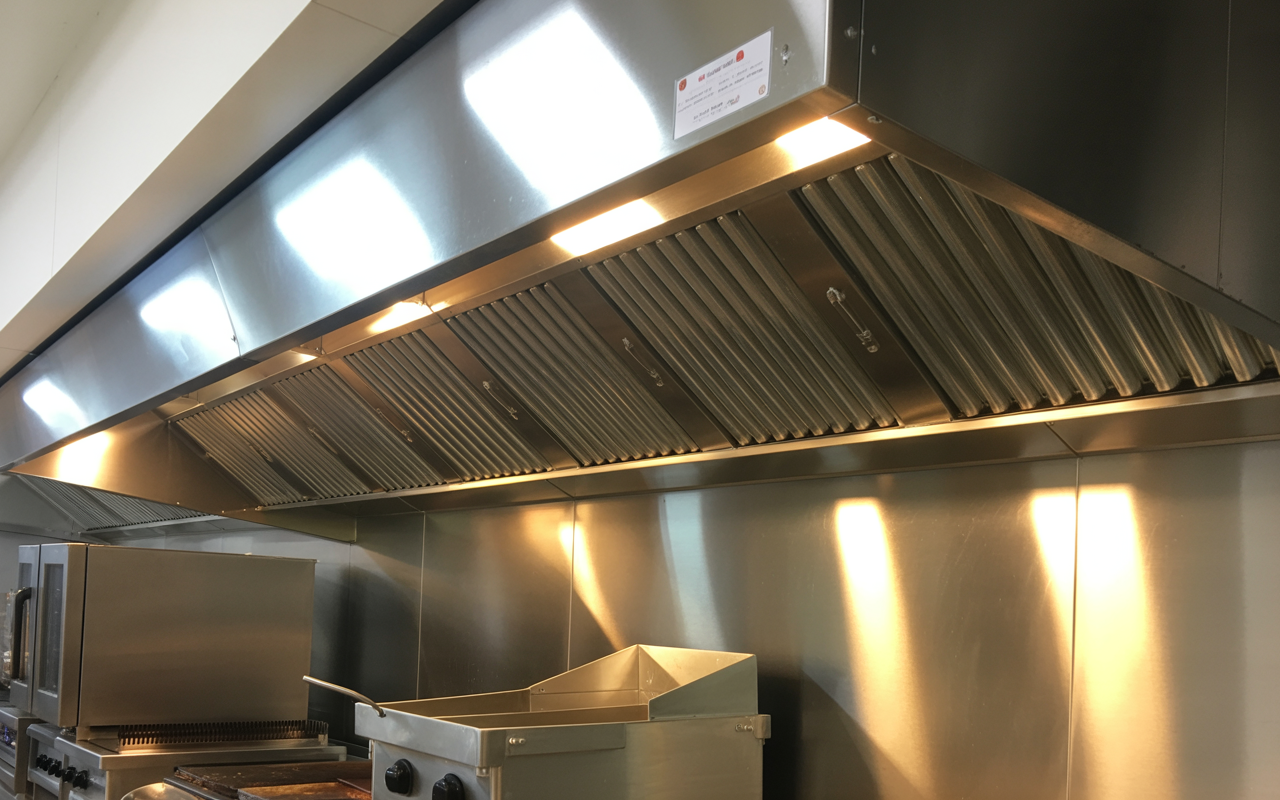
How to Select Exhaust Filtration for a Busy Fish-and-Chip Shop
Fish-and-chip shops put a lot of strain on exhaust systems. Between deep-frying, hot vapour, grease aerosol and strong cooking odours, the exhaust side has to do more than simply move air out of the kitchen.
Choosing the right filtration setup is about matching the grease load, airflow and maintenance access to the way the shop actually operates. The goal is to keep the exhaust path manageable, protect downstream components where possible and make servicing practical for takeaway owners and mechanical contractors.
What the exhaust side needs to handle
Deep-fry environments produce a mix of contaminants that behave differently in the air stream. Some are visible grease droplets, some are fine oil mist, and some are odour compounds that can travel well beyond the kitchen if the system is not designed carefully.
A practical exhaust filtration approach for a fish-and-chip shop usually needs to consider:
- •Grease capture from fryers, ranges and hot holding areas
- •Oil mist control where fine aerosol can coat ductwork and equipment
- •Odour management for fish, oil and heated food smells
- •Airflow resistance so the system can still move air properly as filters load up
- •Ease of cleaning or replacement so maintenance is realistic in a busy venue
The right solution depends on the hood design, exhaust rate, duct layout and how much fry traffic the site sees. A small takeaway with a few fryers has different needs to a high-volume shop with continuous cooking.
Start with grease, because it affects everything downstream
Grease is usually the first thing to manage. If it is allowed to build up in the hood, filters and ductwork, it can create cleaning headaches and add strain to the exhaust system.
For many commercial kitchen exhaust systems, the first line of defence is a grease filter or grease arresting stage in the hood itself. The aim is to capture larger droplets before they travel further into the system.
When assessing grease filtration, look at:
- •Filter type and whether it suits the hood design
- •Capture area and how well the filter covers the airflow path
- •Access for removal so staff or contractors can service it safely
- •Cleaning method and whether the product instructions allow washing or require replacement
- •Fit and sealing to reduce bypass around the filter frame
Some filters are designed to be washable - check the product instructions. Others are intended for replacement when loaded with grease or when pressure drop increases.
If you need a replacement filter for an existing hood or cabinet, how to measure an air filter can help before you order. For non-standard sizes, custom air filters may be the better option.
Managing oil mist and fine aerosol
Oil mist is trickier than coarse grease droplets because it can travel further through the exhaust path and leave sticky deposits on duct walls, fans and housings. Once that film builds up, airflow and maintenance both become harder to manage.
This is where the exhaust-side filtration arrangement matters. Depending on the system, a contractor may consider staged filtration to help capture finer contaminants before they reach sensitive components.
Useful design points include:
- •Multiple filtration stages where the system needs more than one level of capture
- •Low resistance media so airflow is not choked as the filter loads
- •Correct face velocity across the filter bank so air is distributed evenly
- •Service access for safe removal of greasy components
- •Compatibility with the hood and fan arrangement so the filtration does not create unwanted back pressure
In some systems, the final filter stage is not about removing visible grease alone, but about polishing the exhaust stream before it moves on to other equipment or discharge points. The right media and housing arrangement depends on the exact application.
Dealing with cooking odours without overcomplicating the system
Strong cooking odours are one of the biggest complaints around fry shops, especially where the exhaust outlet is close to neighbouring tenancies, footpaths or customer areas. Odour control is often part filtration, part airflow design and part maintenance discipline.
For exhaust-side odour management, consider:
- •Carbon-based filtration where appropriate for the system and airflow
- •Enough contact time between the air stream and the odour media
- •Upstream grease control so carbon is not fouled too quickly
- •Accessible housings for inspection and replacement
- •System balancing so odour control does not come at the cost of excessive airflow restriction
Carbon filters can help with odour adsorption in the right setup, but they are not a substitute for grease capture. If grease reaches the odour stage, performance can drop quickly and servicing becomes more difficult.
Match the filter choice to the kitchen and the ductwork
A fish-and-chip shop is not just a cooking line. It is a complete exhaust system with hood geometry, duct length, bends, fan selection and discharge location all affecting how well filtration works.
Before selecting or replacing filters, mechanical contractors and owners should review:
- •Airflow rate and whether the hood is sized correctly for the cooking load
- •Available space for filter depth, access doors and service clearances
- •Duct condition and whether existing grease deposits need to be addressed
- •Fan location and whether it sits before or after the filtration stages
- •Materials and seals that can tolerate the site’s temperature and grease exposure
If the system is being modified or rebuilt, it is sensible to confirm site requirements with the mechanical services engineer or building owner. AS 1668.2:2024 is often part of the conversation for ventilation design, but the final arrangement still needs to suit the site and the equipment in place.
Inspection and servicing matter as much as the filter selection
Even a well-chosen exhaust filter will not perform properly if it is left in place too long or fitted incorrectly. In greasy kitchen environments, condition changes can happen quickly depending on trading hours and menu load.
Good servicing practice includes:
- •Checking filters for visible loading, damage and grease bypass
- •Monitoring pressure drop where gauges are fitted
- •Following the filter and equipment manufacturer instructions
- •Inspecting at a frequency that suits the site conditions and dust or grease load
- •Replacing seals, frames or supports if they are worn or distorted
For operators who want regular support, filter servicing and commercial filter servicing can help keep the system easier to manage. If you supply several venues or manage a larger site, industries we supply is a useful place to see the kinds of applications we work with.
What to ask before you order
Before buying exhaust filters for a busy fish-and-chip shop, it helps to have a clear picture of the existing system. A few practical questions can save time and reduce guesswork.
Ask:
- •What contaminants is the system handling most: grease, oil mist or odour?
- •Is the current filter stage mainly a grease capture stage, an odour stage, or both?
- •How much access is available for cleaning and replacement?
- •Are there unusual dimensions, frames or housings that need custom manufacture?
- •Is there a pressure gauge or other way to track loading?
If you are replacing a hard-to-match filter, a custom solution may be the cleanest path. If you are unsure what fits, our products can help you compare options before you place an order.
Need help choosing the right exhaust filter?
Total Air Filtration is a family-owned air filter manufacturer and supplier in Hillcrest, Brisbane QLD, established in 2009. We can help supply or make the right filters for greasy, high-odour kitchen exhaust systems, including custom sizes for awkward frames and busy takeaway setups.
For help with a fish-and-chip shop exhaust system, call 07 3800 3448 or request a quote. You can also contact us if you need help working out what fits the hood, ductwork or fan arrangement.
Written by
The Total Air Filtration Team
General information only — always follow the instructions for your filter and system. Have questions about this article? We're here to help.