
How Outdoor Smoke Sensors Help During Local Bushfire Events
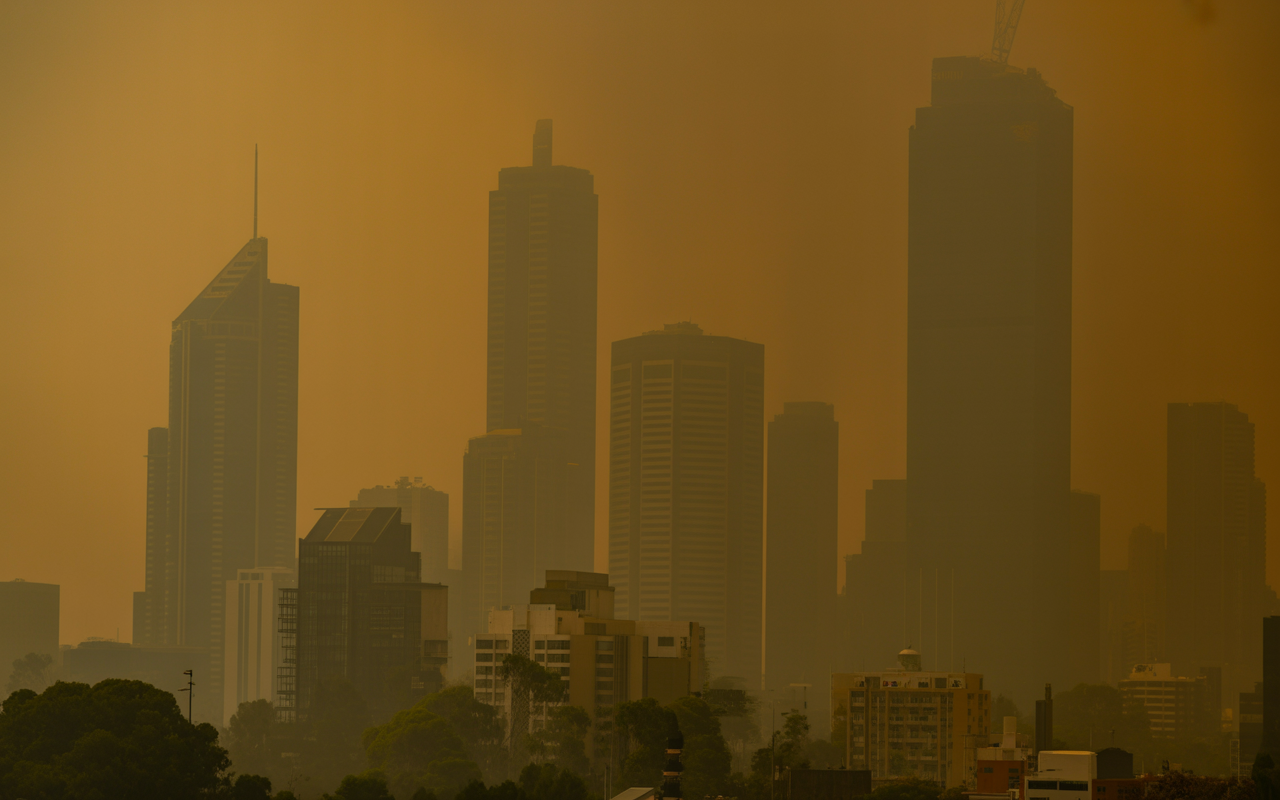
When bushfire smoke moves through a local area, the conditions outside can change quickly from clear to smoky and back again. Outdoor smoke sensors give you a clearer picture of what is happening near your building, while indoor readings show whether that smoke is actually getting in.
Used together, those two data points can help homeowners, facility managers and mechanical contractors decide when to adjust filtration or ventilation strategies, rather than reacting only when the smell becomes obvious indoors.
Why outdoor smoke data matters
Outdoor smoke sensors do not replace indoor monitoring, but they do add useful context. A sudden rise in outdoor particulate levels may explain a shift in indoor readings, especially in buildings that draw in outside air through mechanical ventilation or natural leakage.
That context is helpful because smoke events are often uneven. One suburb may be heavily affected while another, only a short distance away, sees much lower levels. Local outdoor data can tell you whether the building is in the path of a smoke plume, whether conditions are improving, and whether it is sensible to keep outdoor air intake low for a while.
For homeowners, this may mean noticing that the house feels stuffy but cleaner with windows closed. For facilities teams, it may mean deciding whether to reduce outside air, increase recirculation, or step up filtration in response to a short-term smoke event.
How to read outdoor and indoor data together
The most useful approach is to compare the two readings rather than looking at either one in isolation.
When outdoor smoke rises first
If the outdoor sensor shows smoke increasing before the indoor sensor changes, that is an early warning. It suggests the building may soon start drawing smoke in, particularly if doors are opened often or the HVAC system brings in a lot of outside air.
In that situation, you might:
- •reduce outdoor air intake where the system design allows
- •check that economiser settings are not bringing in smoky air unnecessarily
- •keep doors and windows closed where practical
- •confirm that filters are correctly seated and the system is operating as intended
When indoor readings rise but outdoor readings stay low
If indoor air quality worsens without a corresponding outdoor spike, the issue may be internal rather than from the bushfire event. That can point to poor filtration, bypass around the filter, contamination from cooking or cleaning, or a ventilation setting that is not matching occupancy.
Useful checks include:
- •looking for gaps around the filter frame or access door
- •checking pressure drop if gauges are fitted
- •confirming the correct filter size and fitment
- •reviewing whether the air handling system is operating in the expected mode
When both rise at the same time
If both outdoor and indoor readings rise together, the building is likely being affected by the smoke outside and bringing some of it indoors. That is usually the point where filtration and ventilation strategies need the most attention.
Actions may include:
- •increasing filtration within the limits of the system design
- •reducing outdoor air intake temporarily if appropriate
- •checking whether supply and return air paths are balanced
- •inspecting pre-filters and final filters for loading
What this means for filtration strategy
Outdoor smoke events place more load on filters because smoke particles can build up quickly in the air stream. The right response depends on the system, the filter stage, the site conditions and how much dust is already in the air.
A sensible approach is to treat the outdoor sensor as a trigger for closer monitoring rather than an automatic command to change everything at once. Once smoke is detected outside, inspect the filter condition more closely and watch the pressure drop where gauges are fitted. If the system is already heavily loaded, you may need to adjust the schedule for inspection and replacement based on actual conditions rather than routine timing alone.
For many systems, a staged filtration approach can help. A pre-filter may capture larger debris before air reaches the finer final filter. In higher-demand environments, the choice of filter grade and housing arrangement should be checked carefully so the system can handle the pressure loss without compromising airflow.
If you are planning a broader upgrade, our our products page is a good place to review available options, and custom air filters may be useful when standard sizes do not suit the frame or plant.
Ventilation decisions during a smoke event
Ventilation is not just about bringing in fresh air; it is about choosing the right amount and source of air for the conditions. During bushfire smoke events, too much outdoor air can increase the smoke entering a building, while too little outdoor air can create other comfort and design issues.
That is why outdoor smoke data is useful to building operators and mechanical contractors. It helps you decide whether to temporarily limit outside air, continue normal operation, or increase recirculation and filtration within the design constraints of the system.
For commercial sites, those decisions should be considered alongside AS 1668.2:2024 and the specific requirements of the building. Site requirements should always be confirmed with the mechanical services engineer or building owner.
A few practical points to review:
- •economiser operation may need attention during smoky periods
- •outdoor air dampers should be checked for correct movement
- •occupied spaces may need more frequent monitoring if doors are opening often
- •any temporary setting changes should be documented so they can be restored later
Choosing the right filter for smoky conditions
Not every filter behaves the same way during smoke events. Some systems can handle higher-efficiency filters, while others are limited by fan capacity or housing design. The right choice depends on the application, airflow requirements and what the equipment can support.
When comparing options, it helps to keep a few points in mind:
- •rating systems do not convert directly from one standard to another
- •G3/G4/F5-F9 are EN 779 classes that are still widely used in Australia, although EN 779 has been superseded by ISO 16890
- •if a HEPA filter is being considered, H13 is at least 99.95% and H14 is at least 99.995% efficient at MPPS under EN 1822
- •some filters are designed to be washable - check the product instructions
If you are unsure what will fit your system, measuring the existing filter correctly is important before ordering. Our guide on how to measure an air filter can help avoid sizing mistakes that lead to leakage or poor sealing.
A practical workflow for local bushfire events
A simple, repeatable workflow makes smoke events easier to manage.
- •check the outdoor smoke sensor or local outdoor readings before changing plant settings
- •compare outdoor readings with indoor readings in the main occupied areas
- •confirm whether the HVAC system is drawing in more outside air than necessary
- •inspect filters sooner if pressure drop is increasing or airflow seems reduced
- •record any temporary ventilation changes so the system can be returned to normal later
- •keep an eye on odour complaints, but do not rely on smell alone as a control signal
For homeowners, this may be as simple as deciding when to keep the house sealed and when to run the system in a more recirculating mode, if available. For facilities teams and contractors, the key is to align the response with the building’s operating needs and the equipment’s limits.
If you need ongoing support, our filter servicing and commercial filter servicing pages outline how we can help with maintenance planning and replacement support.
Talk to Total Air Filtration
Total Air Filtration is a family-owned air filter manufacturer and supplier based in Hillcrest, Brisbane QLD, established 2009. We can help supply the right filters for smoke-prone conditions or make custom filters to suit your system.
Call 07 3800 3448 or request a quote. You can also contact us if you want to talk through a specific building, air handling unit or replacement filter need.
Written by
The Total Air Filtration Team
General information only — always follow the instructions for your filter and system. Have questions about this article? We're here to help.