
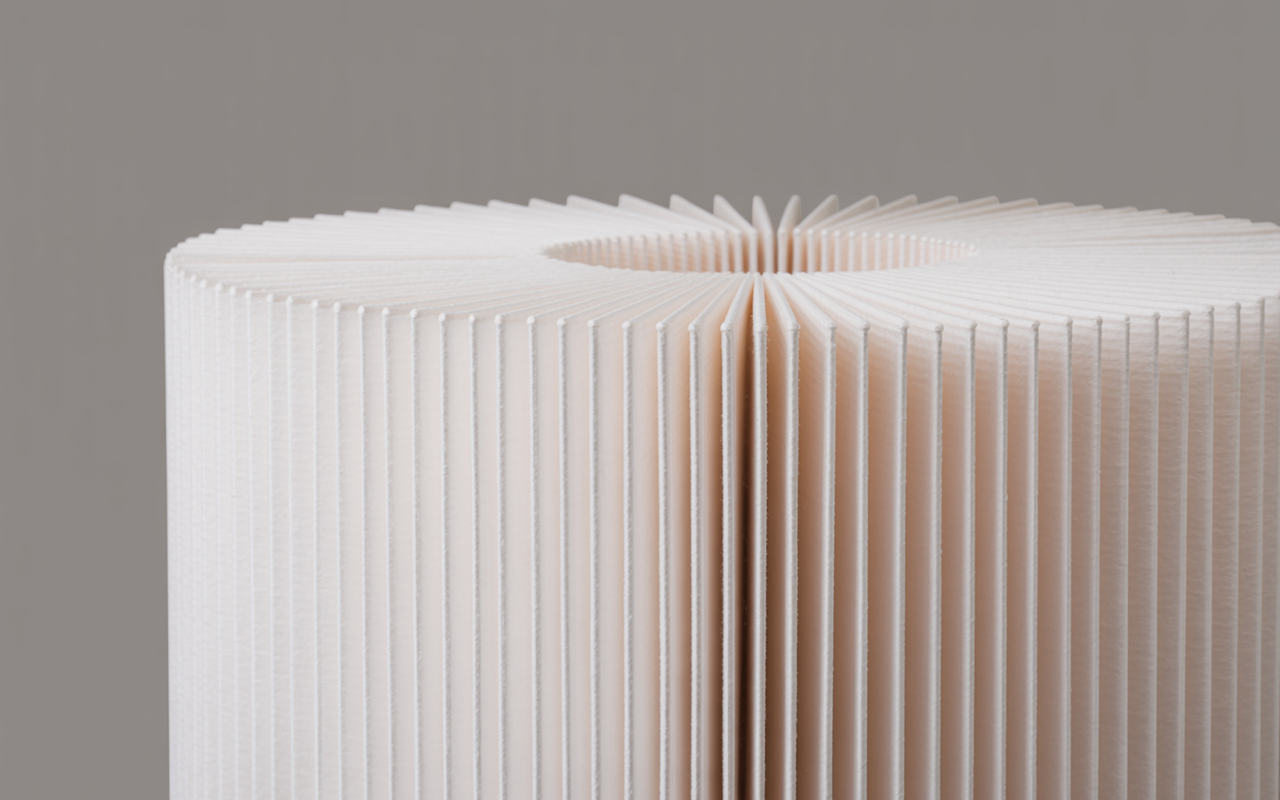
HEPA Filters in Cleanrooms: When H13 and H14 Actually Matter
When a project calls for HEPA filters, the temptation is to assume the higher class is always the safer choice. In practice, H13 and H14 are chosen for different reasons, and specifying the wrong one can create unnecessary cost, resistance, and maintenance complexity without adding real value.
For industrial buyers, mechanical contractors and facility managers, the key question is not which class sounds better. It is which class matches the cleanliness target, the process risk, and the operating conditions of the room or production space.
What H13 and H14 actually mean
H13 and H14 are HEPA classes defined under EN 1822. They describe filter efficiency at the most penetrating particle size, or MPPS, which is the particle size range that is hardest for the filter to capture.
In simple terms:
- •H13 is rated at 99.95% efficiency at MPPS under EN 1822.
- •H14 is rated at 99.995% efficiency at MPPS under EN 1822.
That extra decimal place is important in some environments, but not every cleanroom benefits from it. A higher class can mean a denser filter media structure, greater resistance to airflow, and more careful system design to keep air volumes where they need to be.
It is also worth noting that rating systems do not translate directly across standards. MERV, EN 779 and ISO 16890 do not convert cleanly to HEPA classes, so avoid quick “equivalency” assumptions when comparing product literature. In Australia, you may still see G3/G4/F5-F9 references on older or legacy specifications, even though EN 779 has been superseded by ISO 16890.
Where H13 is typically justified
H13 is often the practical choice when a space needs very high filtration efficiency, but the process does not demand the most restrictive HEPA class. It is commonly considered in controlled environments where particulate control matters, but where the room design, gowning protocol or process tolerance does not justify the tighter specification of H14.
Typical examples can include:
- •General cleanrooms supporting electronics assembly
- •Controlled manufacturing areas where dust control is important
- •Pharmaceutical support spaces that are not the most critical fill or exposure zones
- •Food and beverage processing rooms where airborne contamination control is needed around open product or packaging
- •Laboratory support areas and some technical workspaces
H13 is often the point where buyers get a strong balance between filtration performance and system practicality. It may be suitable where the plant is already built around a defined airflow and pressure regime, and the room classification does not require the tighter particle control of H14.
For these jobs, the filter selection should be matched to the fan performance, terminal housing, and access arrangement. If you are unsure whether the room needs a terminal HEPA, a bank arrangement, or a different filtration stage upstream, our products can help you compare options before you lock in the specification.
Where H14 becomes worth specifying
H14 is usually reserved for spaces where the process is more sensitive, the exposure risk to the product is higher, or the cleanliness target is more demanding. In those rooms, the extra efficiency can be justified because the cost of contamination control failure is much greater than in standard controlled production spaces.
H14 is often considered for:
- •Critical pharmaceutical processing areas
- •High-spec cleanrooms for microelectronics or precision optical work
- •Final-stage filtration serving highly controlled filling or assembly zones
- •Research environments with strict particulate control requirements
- •Enclosures or localised clean air systems protecting especially sensitive operations
The main point is not that H14 is “better” in all cases. It is that some rooms have a process requirement that genuinely benefits from the higher specification. In those applications, the design team must pay attention to the full system, not just the filter class. Air volume, leakage control, sealing method, access for testing, and the condition of prefiltration all affect whether the HEPA stage performs as intended.
If your project is new or if you are replacing a legacy setup, custom air filters may be the right path when standard sizes or housing details do not line up with the site.
The practical difference is often in the system, not just the label
A cleanroom is only as good as the complete air handling arrangement around it. An H14 filter installed in a poorly sealed housing, underfed by upstream filters, or running against the wrong fan curve will not deliver the result the specification is aiming for.
When deciding between H13 and H14, ask:
- •What is the room or process actually trying to control?
- •Is the specification driven by product sensitivity, operator comfort, or a formal room classification?
- •Can the air handling unit maintain the required airflow with the added resistance of the selected filter?
- •Is the housing suitable for the chosen frame type and gasket arrangement?
- •Will access, testing and replacement be straightforward in the plant room or ceiling space?
If you need to replace an existing filter, measuring matters as much as class. Frame dimensions, depth, seals and fixing style all need to match the housing. If you are not certain how to confirm the size, how to measure an air filter is a useful starting point.
Cleanrooms, controlled production spaces and AS 1668.2:2024
Many industrial and commercial sites involve more than one standard or design driver. A cleanroom may be built to a specific internal specification, while the broader ventilation arrangement also needs to align with site requirements and relevant guidance.
In Australia, AS 1668.2:2024 is often part of the discussion for ventilation design. That said, the correct filtration stage is not something to guess from the standard alone. Requirements should be confirmed with the mechanical services engineer or building owner, especially where the system must support a particular room class, process protocol or contamination control plan.
This is where communication on the project matters. The contractor, owner, and filter supplier should be aligned on:
- •The intended use of the room
- •The required cleanliness target
- •Whether the filter is part of general supply air or a terminal HEPA stage
- •Maintenance access and changeout constraints
- •The expected dust load upstream of the HEPA stage
Where a project is already in service, ongoing inspection is just as important as the original specification. Inspection frequency depends on the system, site conditions and dust load, and you should follow the filter and equipment manufacturer instructions. Where gauges are fitted, monitor pressure drop so you can tell when resistance is increasing and plan maintenance accordingly.
What to check before you specify or replace a HEPA filter
Before you order a replacement or sign off on a new build, make sure the filter selection is based on the actual site details, not just the class printed on the drawing.
A sensible checklist includes:
- •Confirm the required HEPA class with the project engineer
- •Check whether the room needs H13 or H14, not just “HEPA” in general
- •Verify the housing size, seal type and installation depth
- •Check the upstream stages so the HEPA filter is not carrying avoidable dust loading
- •Review access for safe replacement and any testing requirements
- •Confirm whether the filter is intended to be disposable, or whether some filters are designed to be washable - check the product instructions
If the existing arrangement is uncertain, filter servicing or commercial filter servicing may be helpful for understanding the condition of the current setup and what needs to be replaced.
Choosing the right class without over-specifying
The best HEPA choice is the one that fits the process. H13 is often the right answer for many controlled rooms where high filtration efficiency is necessary but not extreme. H14 is justified where the operation is more sensitive, the product risk is higher, or the cleanliness requirement leaves less room for compromise.
Over-specifying can make a system harder to manage, while under-specifying can leave the room short of its intended performance. The right approach is to match the filter class to the actual operating need, then make sure the housing, airflow and maintenance plan support it.
If you are planning a new installation, replacing a hard-to-match filter, or reviewing an existing cleanroom setup, Total Air Filtration can supply or make the right filters for the job. We are a family-owned air filter manufacturer and supplier in Hillcrest, Brisbane QLD, and you can call 07 3800 3448 or request a quote when you are ready to discuss the specification.
Written by
The Total Air Filtration Team
General information only — always follow the instructions for your filter and system. Have questions about this article? We're here to help.