
Choosing Air Filters for Split Systems in Bedrooms, Living Rooms and Small Homes
Choosing the right air filter for a split system is not just about catching dust. The best option depends on where the unit is installed, how easy it is to access, and whether the filter suits the indoor fan coil and the system’s airflow needs.
For homeowners and mechanical contractors alike, a good filter choice should balance particle capture, pressure drop, fit, and practical servicing access. In bedrooms, living rooms and small homes, those factors can vary quite a bit from one room to the next.
Start with the room and the way the space is used
A split system in a bedroom usually sees different conditions to one in a busy living room. Bedrooms may have lighter dust loads but can be sensitive to airflow noise and blocked returns. Living rooms often collect more lint, pet hair and general household dust because people move through them more often.
In a small home, a single split system may be expected to do more of the work across a compact layout. That can influence the filter selection because a filter with too much resistance can make the unit harder to service and may affect airflow if it is not suited to the equipment.
When choosing a filter, consider:
- •the amount of visible dust in the room
- •whether pets are present
- •how often doors and windows are left open
- •whether the unit is running for long periods
- •whether the room is used for sleeping, relaxing or general living
For systems serving higher-dust spaces, the filter may need a larger surface area or a design that is easier to clean and inspect. In calmer rooms, a simple, well-fitted filter may be all that is needed if it matches the manufacturer’s requirements.
Focus on filter performance, not just the label
A common mistake is choosing a filter purely by its rating or appearance. A finer filter can capture smaller particles, but if the filter is too restrictive for the system, it may cause avoidable pressure drop and reduce performance. The right choice is the one that matches the unit, the space and the intended duty.
For split systems, practical factors matter just as much as the filter media:
- •Particle capture: Choose a filter suited to the amount of dust and debris the room produces.
- •Airflow resistance: Confirm the filter will not place unnecessary load on the fan coil.
- •Fit: A filter that is too small, warped or loosely fitted can allow bypass around the edges.
- •Ease of replacement or cleaning: If access is awkward, a simpler serviceable design is often better.
Where a system uses a manufacturer-specified filter type, it is usually best to stay within that design unless the equipment supplier or mechanical services engineer confirms another option is suitable. For broader ventilation requirements, AS 1668.2:2024 may be relevant, but site requirements should always be confirmed with the mechanical services engineer or building owner.
Bedroom split systems: keep it simple and accessible
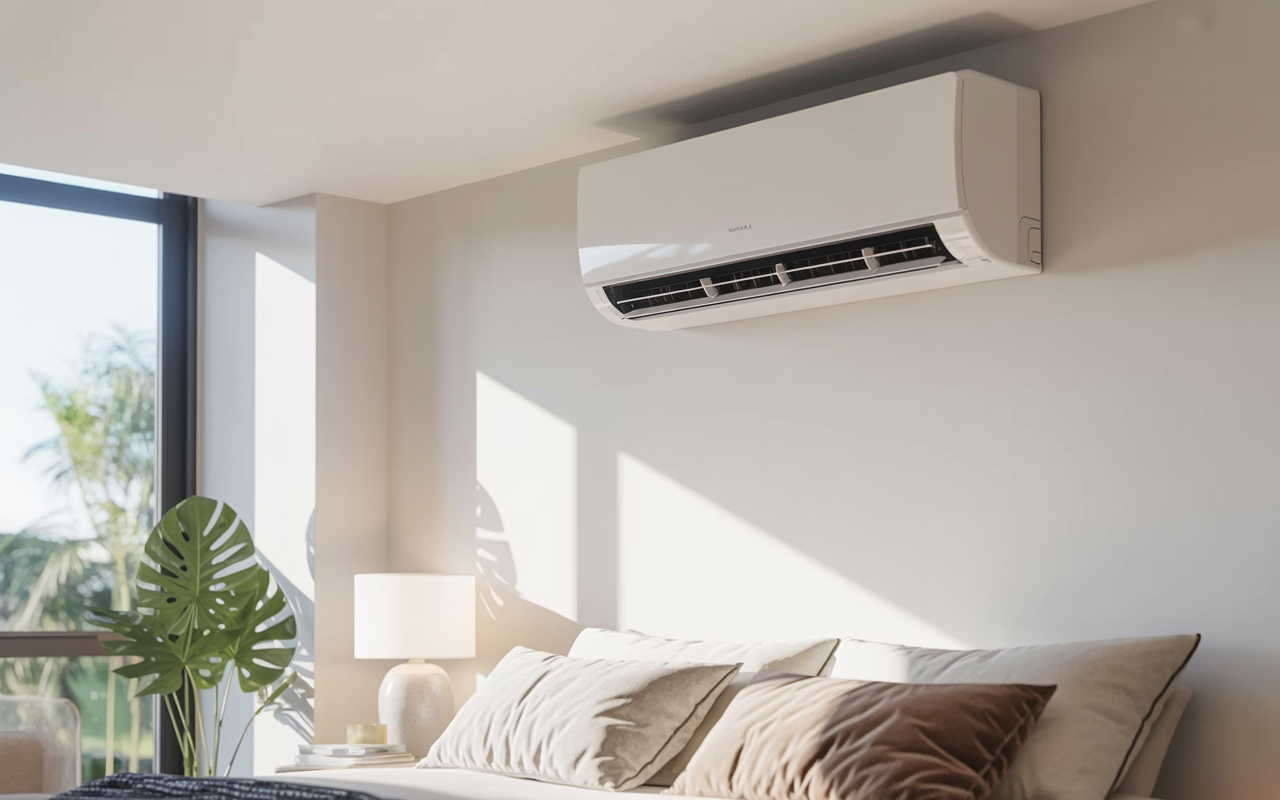
Bedrooms often need a filter that is easy to inspect without disturbing the room too much. If the unit is mounted high on a wall or above a bedhead, access can be awkward, so the filter should be straightforward to remove, clean or replace.
For bedrooms, think about:
- •low fuss maintenance access
- •minimal disruption during servicing
- •a filter that suits the quieter operation often expected in sleeping areas
- •the likelihood of fine dust from soft furnishings and clothing fibres
If the bedroom has minimal dust and the unit is well maintained, a standard filter that meets the equipment maker’s instructions may be enough. If the room has more dust movement, for example from frequent use, open windows or nearby renovation work, a more serviceable filter arrangement may be worth considering.
Mechanical contractors should also check that the filter frame is secure and that the owner can reach it safely. A filter that is difficult to access is often the one most likely to be neglected.
Living rooms: plan for heavier dust and easier servicing
Living rooms usually place more demand on a split system filter. Foot traffic, pets, soft furnishings and everyday use all contribute to dust build-up. In these rooms, filter selection should make servicing easier and help maintain consistent airflow through the unit.
A practical living room filter should:
- •have enough surface area to cope with the expected dust load
- •be easy to remove without damaging the frame
- •sit firmly in place to reduce bypass
- •be suitable for the fan coil and return grille arrangement
If a living room split system is near a kitchen, entryway or high-traffic zone, the dust load may be more noticeable. In that case, choosing a filter that is easier to inspect can matter more than choosing the most restrictive option available.
Some filters are designed to be washable - check the product instructions. If a washable product is used, it still needs proper drying and refitting. A damp or distorted filter can create problems of its own, so always follow the manufacturer’s directions.
Small homes: choose for access, fit and consistency
In a small home, a split system may be expected to manage a large share of the indoor comfort load across a compact area. That makes filter choice especially important because the system may be running often, and the indoor conditions can change quickly with cooking, cleaning, occupants and open-plan living.
The key is to choose a filter that balances filtration with easy routine attention. In small homes, the filter may be tucked into a tight alcove, mounted above a doorway or positioned where access is awkward. If that is the case, a product that is simple to remove and reinstall can save time and reduce the chance of poor refitting.
For contractors, it is worth checking:
- •the exact filter dimensions before ordering
- •whether the frame needs a seal or retaining clip
- •whether the unit allows front access or side access
- •whether there is enough room to remove the filter without bending it
If the existing filter is damaged, missing or no longer fits properly, a custom-made option may be the cleanest solution. Total Air Filtration makes and supplies custom air filters for a wide range of applications, which can help when standard sizes do not suit the cabinet or grille arrangement.
Matching the filter to the system
Split systems vary widely in layout, brand and installation detail, so compatibility should always come first. A filter should suit the physical opening, the airflow path and the equipment instructions. If a system has an unusual cabinet depth, a non-standard return opening or a modified frame, the wrong filter can lead to poor fit and hard-to-service conditions.
A good match means:
- •the filter sits flat and seals correctly
- •the airflow path remains as intended by the equipment design
- •servicing can be done without force or improvisation
- •replacement stock or custom supply is straightforward to organise
If you are unsure what size or style is needed, measuring carefully before ordering is essential. Our guide on how to measure an air filter is a useful starting point, especially when replacing a worn or missing filter.
If the unit needs regular attention or has difficult access, filter servicing may also be worth discussing for ongoing upkeep.
When to consider help from a filter supplier
Sometimes the best option is not an off-the-shelf product. That can be the case when a split system is installed in a tight bedroom recess, a busy family living room, or a small home with limited access around the unit. In those situations, the filter needs to be practical to handle, compatible with the equipment and suitable for the room’s dust load.
A supplier can help confirm whether you need a standard size, a custom-made filter, or a design that prioritises easy access and repeat servicing. For commercial or multi-residential settings, commercial filter servicing may also be relevant where multiple units need coordination.
Talk to Total Air Filtration
Total Air Filtration is a family-owned air filter manufacturer and supplier based in Hillcrest, Brisbane QLD, established 2009. We can help you choose or make the right filter for split systems in bedrooms, living rooms and small homes.
Call 07 3800 3448 or request a quote. You can also view our products or contact us if you need help with sizing, compatibility or a custom order.
Written by
The Total Air Filtration Team
General information only — always follow the instructions for your filter and system. Have questions about this article? We're here to help.