
Can Air Filters Stop Mould From Returning After a Leak?
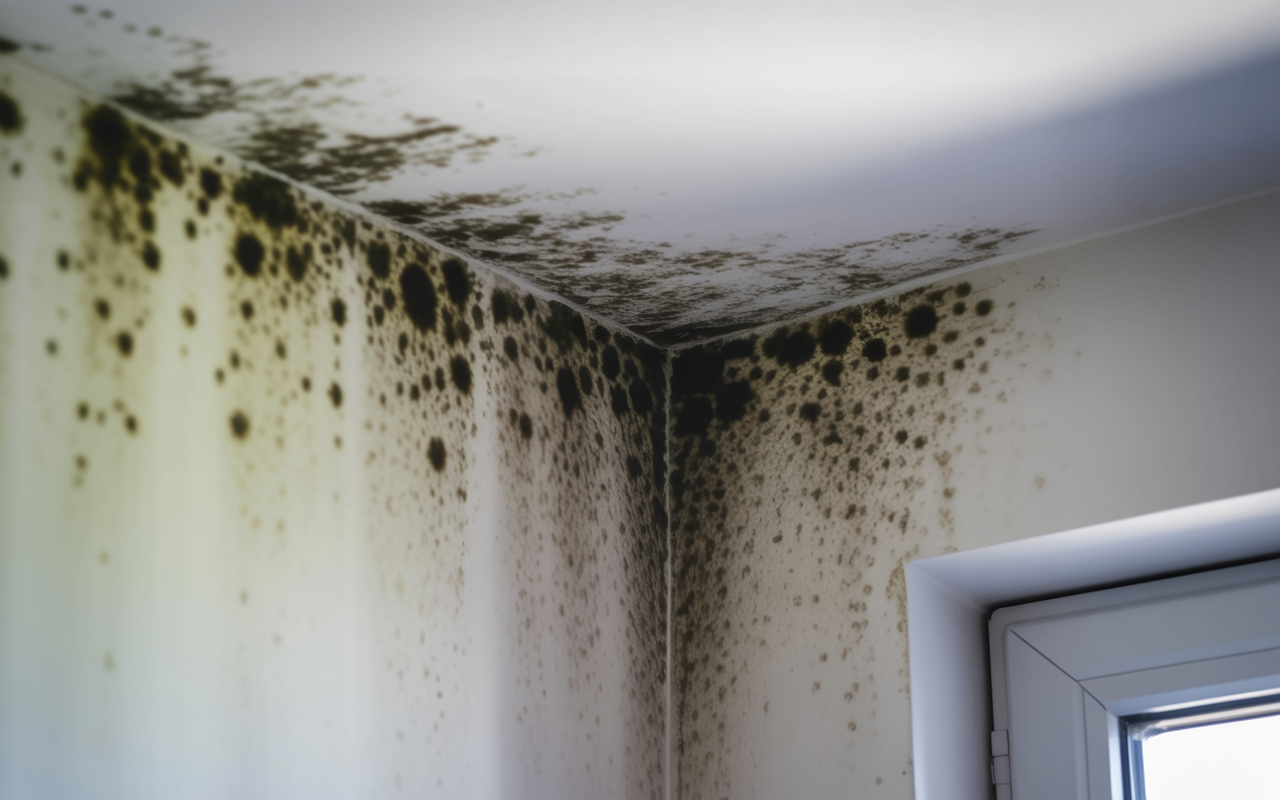
After a leak, it is tempting to focus on what can be seen in the air, but mould starts with moisture in building materials. Air filters can play a useful supporting role by capturing airborne particles during cleanup and occupancy, yet they cannot stop mould from returning if the underlying dampness is still there.
For homeowners and strata managers, the real fix is a combination of source control, drying, remediation and the right filtration setup for the space.
What air filters can do after water damage
Air filters are designed to trap particles moving through a system or portable unit. In a mould-prone space after a leak, that can help reduce the amount of airborne debris circulating while work is underway or while the area is being monitored.
That said, filtration only works on air passing through the filter. It does not dry out wall cavities, subfloors, insulation or plasterboard, and it does not remove moisture from materials that have already absorbed water.
In practical terms, filters can help with:
- •capturing dust released during demolition or drying
- •catching spores and other airborne particles carried through a ventilation system
- •protecting HVAC components from becoming clogged with debris during remediation
- •supporting cleaner recirculated air once the wet materials have been removed and the area is dry
If you are choosing replacement filters for an existing system, the right product depends on the equipment, the site and the type of contamination present. If you are unsure what fits, how to measure an air filter is a good place to start.
Why filtration alone cannot stop mould from coming back
Mould needs moisture. If a leak has left a hidden damp area behind a wall, under flooring or inside ceiling space, mould can return even if the air looks cleaner.
This is why filters are not a substitute for moisture control. They do not:
- •fix a plumbing leak or roof leak
- •remove water trapped inside porous materials
- •dry hidden voids
- •replace damaged materials that cannot be salvaged
- •address poor ventilation or condensation problems
If a space smells musty or keeps showing signs of mould after cleanup, the issue is usually not the filter. It is often that some part of the building envelope, drain path or ventilation setup still needs attention.
For strata properties, this is especially important because the source may sit between common property and private property. Clarifying responsibility early can save time and repeated repair work. Where the building’s ventilation system is involved, site requirements should be confirmed with the mechanical services engineer or building owner, particularly in relation to AS 1668.2:2024.
What needs to happen before filtration can help
Find and stop the source of water
Before any drying or reoccupation plan makes sense, the leak source must be located and repaired. That might mean plumbing repairs, roof work, waterproofing, flashing repairs or checking drainage paths.
If the source is still active, mould control becomes a cycle of cleaning and recurrence.
Dry the affected area properly
Drying is not just about making the surface feel dry. Moisture can remain in framing, carpet underlay, insulation and other concealed materials.
Good drying practice often includes:
- •removing standing water quickly
- •opening up affected areas where needed for inspection
- •using drying equipment suited to the space
- •monitoring moisture in materials, not just room humidity
- •avoiding the reinstallation of finishes until the area is actually dry
Remove and replace damaged materials where required
Some materials can be cleaned and dried. Others may need to be removed if mould growth has penetrated them or if they cannot be dried safely and thoroughly.
This is where remediation matters. Surface cleaning alone may not be enough if contaminated material is left behind. Once contaminated materials are removed, filtration can be used to help manage airborne particles during the remainder of the works and after reoccupation.
Choosing the right filter for a mould-prone space
The right filter depends on the system and the purpose.
For general HVAC systems, you may be looking for a balance between airflow and particle capture. For temporary air cleaning during remediation, portable units may require a different filter grade again.
Useful things to consider include:
- •the size and type of the system
- •whether the filter sits in supply air, return air or a portable unit
- •how much dust and debris is expected during remediation
- •the manufacturer’s recommended filter specification
- •whether pressure drop can be checked with gauges fitted to the system
Some filters are designed to be washable - check the product instructions. If a washable product is not designed for your application, washing it may damage performance or the frame.
Where fine particle capture is needed, the filter grade should be selected carefully. MERV, EN 779 and ISO 16890 ratings do not convert directly, so it is best not to rely on rough equivalents. EN 779 classes such as G3, G4 and F5 to F9 are still widely used in Australia, even though EN 779 has been superseded by ISO 16890.
If you are working in a regulated commercial or strata setting, it may be worth reviewing the building’s filtration approach as part of the wider maintenance plan. You can also explore our products or custom air filters if the existing setup needs a specific size or specification.
When a HEPA filter makes sense
HEPA filters are sometimes used in remediation settings, particularly where a higher level of fine particle capture is needed. If HEPA is specified, it should be selected for the job rather than assumed to be a universal solution.
Under EN 1822, H13 filters have an efficiency of at least 99.95% at the most penetrating particle size, and H14 filters have an efficiency of at least 99.995% at MPPS.
Even then, HEPA filtration still does not solve a damp building. It can support containment and cleanup, but it cannot dry the space or remove the need for repair work. It is one tool in the process, not the process itself.
If you are unsure whether HEPA is appropriate, the better question is usually: what is the actual air quality task here, and what system is it being used in?
Practical signs the space is not ready yet
If a room was cleaned but mould keeps appearing, the underlying problem may still be active. Watch for:
- •persistent odour after cleaning
- •soft or swollen building materials
- •visible staining that returns
- •condensation on cold surfaces
- •recurring damp patches near the leak path
- •filters loading up with dust or debris faster than expected
These signs usually point to unfinished drying, hidden moisture, poor ventilation or incomplete removal of affected materials.
For strata managers, it can help to document what was repaired, what was dried, what was removed and what remains under observation. That makes it easier to plan follow-up works and to decide whether the mechanical system needs attention from the building side as well.
Getting the whole system right
After a leak, the best outcome usually comes from treating the space as a moisture problem first and an air handling problem second. Filtration can help manage airborne particles during and after remediation, but it cannot replace drying, repairs and proper material removal.
If you need filters for a post-leak cleanup, a special-size replacement, or advice on matching the filter to the system, Total Air Filtration can help. We are a family-owned air filter manufacturer and supplier based in Hillcrest, Brisbane QLD.
Call 07 3800 3448 or request a quote. You can also contact us if you need help choosing the right filter for the job.
Written by
The Total Air Filtration Team
General information only — always follow the instructions for your filter and system. Have questions about this article? We're here to help.