
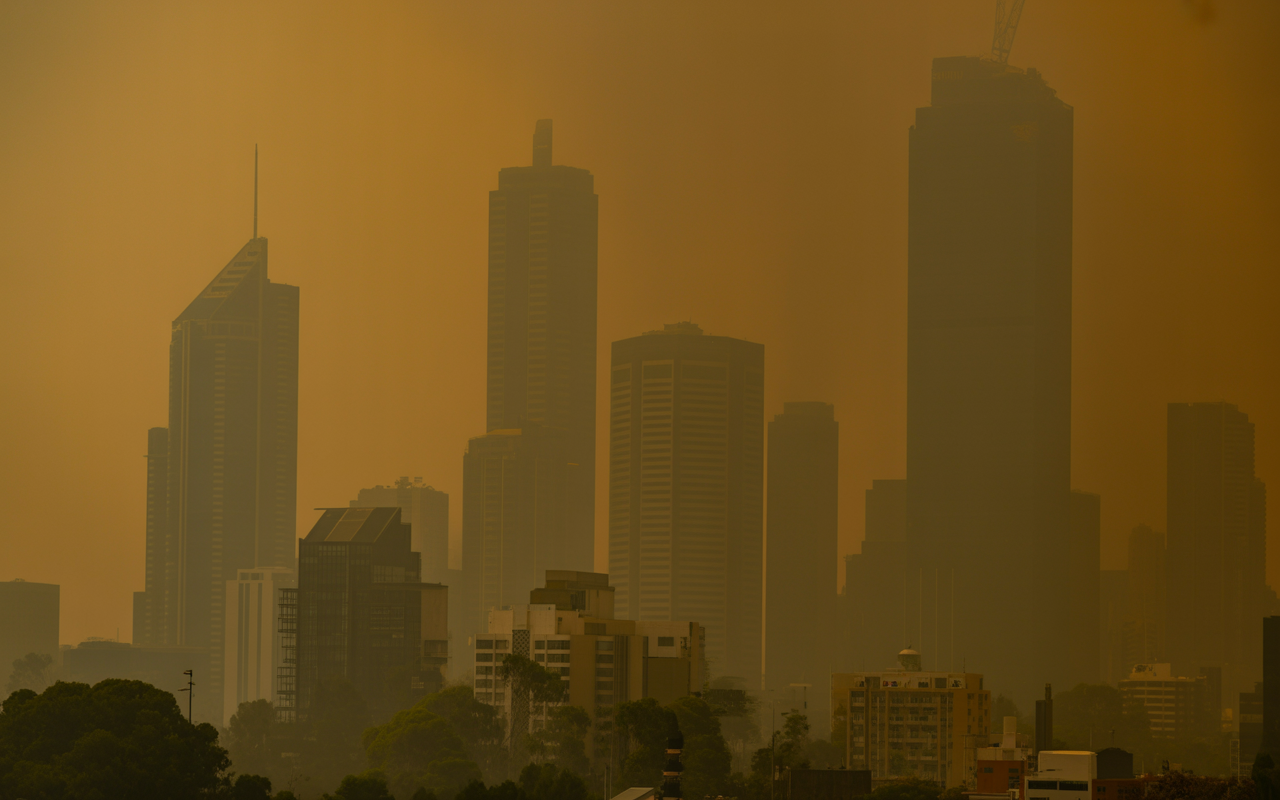
Bushfire Smoke Entry Through Commercial Building Intakes: What to Check First
When bushfire smoke is in the area, commercial buildings often bring in air from the outside before anyone notices a problem inside. The most common entry points are not always the obvious ones, and smoke can get past small gaps, poor seals or underspecified filter stages.
For facility managers, the fastest way to respond is to work from the intake backwards: outside air opening, dampers, housings, filter frames and the bypass paths around them. This article focuses on the places most likely to leak smoke into offices, schools and clinics, and what to inspect first.
Start at the outside air intake
The outside air intake is the first place to check because it is the first place smoke can enter.
Look at where the intake is located and how exposed it is to the plume path. An intake close to a car park, loading dock, roof edge or low wall opening may draw in more smoke-laden air than one placed higher or further away from direct exposure. If the system has multiple outdoor air points, do not assume they behave the same way.
Check for:
- •Damaged or missing intake grilles
- •Bird mesh, louvres or screens that have shifted out of position
- •Debris, leaves or dust build-up that may affect airflow
- •Signs that outdoor air is being drawn in through unintended openings near the intake
If the building has economiser controls or outdoor air dampers, confirm they are moving correctly and not stuck partly open. A smoke event is not the time to discover a damper that has been left in manual mode or has a failed actuator.
Inspect dampers, seals and access doors
Once smoke gets into the intake path, the next weak points are usually the seals around moving or removable components.
Outdoor air and relief dampers should close tightly when required. If the blade edges are worn, warped or obstructed, they may not seal properly. The same applies to access doors on air handling units, ductwork and filter banks. A small gap can become a noticeable smoke leak point when pressure changes in the system.
Pay close attention to:
- •Damper blades and frames
- •Gaskets around access panels
- •Latches that do not pull the panel down evenly
- •Cracked or flattened seal material
- •Gaps around service openings that were never fully sealed after maintenance
If you can see daylight around a panel, smoke can often pass through as well. Replacing the whole seal assembly may be better than trying to patch only one corner. For systems that are difficult to access, filter servicing or commercial filter servicing can help identify leakage paths before the next smoke event.
Check the filter stages, not just the final filter
In smoke conditions, the full filter train matters. If the upstream stages are weak, overloaded or poorly fitted, the final stage has to carry more of the burden than it was intended to handle.
Typical problems include:
- •A coarse pre-filter that is damaged, missing or installed the wrong way around
- •A medium filter stage that has loaded up with dust and is restricting airflow
- •Gaps between the filter edge and the frame
- •Filter clips, clamps or holding frames that no longer seat evenly
- •A higher-efficiency final filter that is correct on paper but bypassed by poor installation
Facilities sometimes focus on the final filter only, but smoke can slip through around the edge if the frame is distorted or the holding mechanism is loose. Check that each stage is the right size and seated correctly. If you are unsure how to confirm dimensions, how to measure an air filter is a useful place to start.
For buildings that need a different arrangement, custom air filters may be appropriate when standard sizes or sealing arrangements do not suit the housing.
What the filter rating can and cannot do
A better filter rating can help capture finer particles, but it does not fix leakage around the frame or bypass around the housing. Ratings such as MERV, EN 779 and ISO 16890 do not convert directly, so avoid guessing at equivalents.
If your project is being reviewed against ventilation requirements, AS 1668.2:2024 may be relevant, but site requirements should be confirmed with the mechanical services engineer or building owner. In some applications, HEPA filtration may be specified; if so, remember that H13 is at least 99.95% and H14 is at least 99.995% efficient at the most penetrating particle size under EN 1822.
Look for bypass paths in the duct and plant room
Smoke does not always enter through the intake itself. It can also arrive through sections of ductwork, plant room openings or unsealed penetrations in the building fabric.
Check the areas around:
- •Duct joints and flanges
- •Access hatches in the duct or casing
- •Cable and pipe penetrations near air handling equipment
- •Unused openings left from previous maintenance work
- •Return air paths that may draw contaminated air from adjacent areas
In schools and clinics, where occupancy patterns vary, doors and service panels are often opened for maintenance at the wrong time and left unlatched. In offices, the problem may be a plant room door with poor seals or a corridor transfer path that was never intended to carry outside air. Smoke can travel with the system pressure, not just with the obvious air route.
Watch the system behaviour when the building is under load
A smoke issue often becomes clearer when the system is running at normal occupancy, not when it is shut down.
Observe whether the system is:
- •Pulling air harder than usual because of blocked filters or restricted intakes
- •Running with doors open in the plant room or service corridor
- •Switching between modes in a way that changes intake pressure
- •Creating odour complaints in particular zones rather than the whole building
If pressure gauges are fitted, monitor pressure drop across the filter stages and note changes against the manufacturer’s guidance. A sudden rise can indicate loading or blockage, while a sudden drop may point to a failed seal or bypass path. Either way, it is a prompt for inspection rather than guesswork.
Some filters are designed to be washable - check the product instructions before cleaning or reusing anything. If the system has been exposed to heavy smoke or ash, inspect carefully before putting it back into service.
A practical response plan for facility managers
If nearby bushfire smoke is affecting your site, a simple inspection sequence can save time:
- •Confirm which outdoor air intakes are active
- •Check damper position and actuator operation
- •Inspect access doors, gaskets and panel seals
- •Verify each filter stage is installed correctly and undamaged
- •Look for bypass gaps, loose frames and unsealed penetrations
- •Review pressure drop readings where gauges are fitted
- •Record what was found so the next inspection is faster
If the issue is recurring, the problem may be design-related rather than maintenance-related. That is when it helps to involve the mechanical services engineer and review whether the intake position, filter arrangement or housing details need to change.
We can help with the right filter setup
Total Air Filtration is a family-owned air filter manufacturer and supplier in Hillcrest, Brisbane QLD, established 2009. If you need replacement filters, a custom size or help checking what fits your system, we can supply or make the right filters for your site.
Call 07 3800 3448 or request a quote. You can also view our products or explore industries we supply if you manage multiple sites.
Written by
The Total Air Filtration Team
General information only — always follow the instructions for your filter and system. Have questions about this article? We're here to help.