
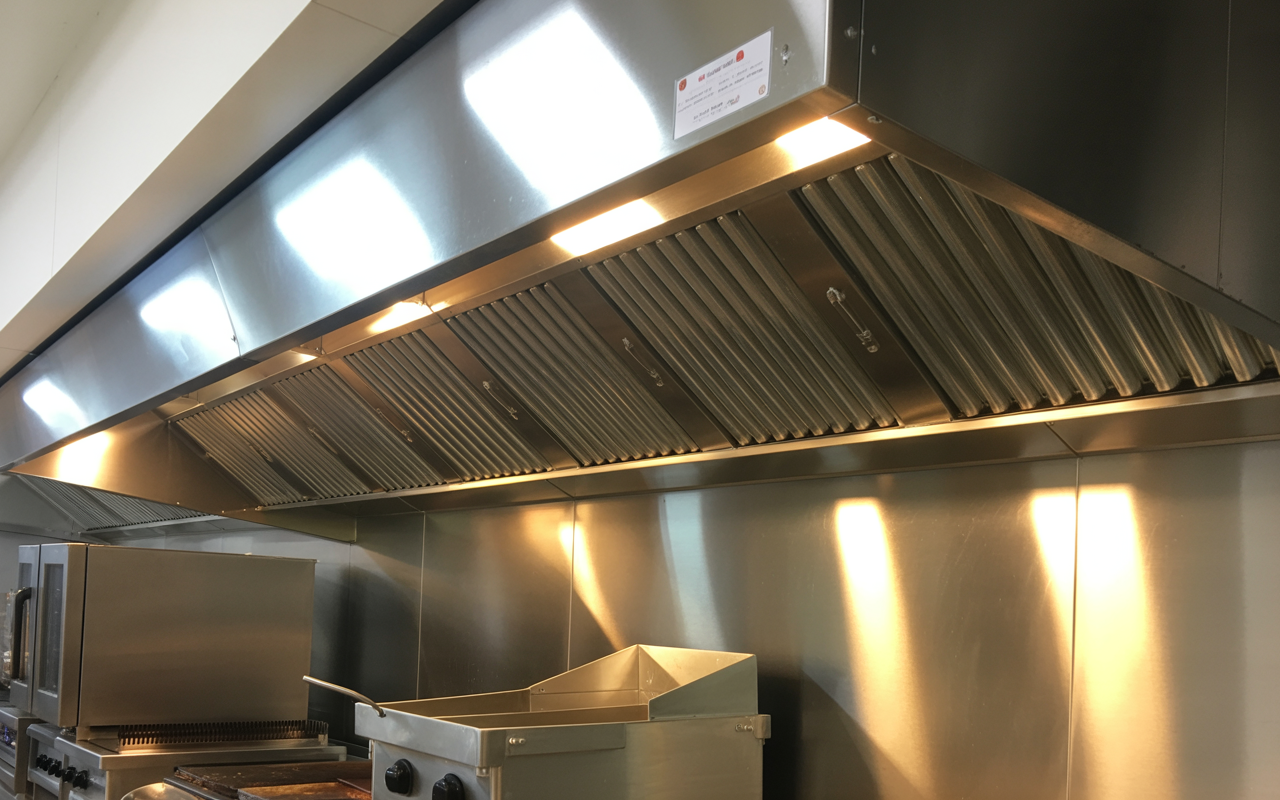
Air Filtration for High-Heat Food Production Areas
Food production areas that sit close to ovens, fryers and cook lines place a very different demand on air filtration than a typical warehouse or office. High ambient heat, grease carryover, moisture and cleaning chemicals can all affect how a filter bank performs, so the right choice is about more than particle capture alone.
For industrial buyers, facility managers and mechanical contractors, the key question is how to build a filtration setup that can handle the temperature and soiling conditions without creating unnecessary pressure drop, service headaches or airflow problems.
Why high-heat food areas need a different approach
Heat changes the way air moves through a plant. Warm air rises quickly, hood extract systems can pull in surrounding air, and supply air often has to work harder to keep adjacent spaces comfortable and stable.
In these areas, filtration often has to deal with:
- •Grease mist and sticky airborne residue
- •Flour, crumb and dry product dust
- •Smoke and odour from cooking processes
- •Elevated ambient temperatures near process equipment
- •Frequent cleaning and washdown in nearby zones
That mix means a standard light-duty filter arrangement may load too quickly or struggle to keep airflow steady. In practice, the best solution usually combines sensible airflow design with filter media and housings that suit the temperature and contamination profile of the space.
Filter types that can perform better in hot food environments
Pre-filters to catch the heavier load first
A staged arrangement often works well in food production areas. A coarser pre-filter can capture larger particles such as crumbs, lint and general airborne debris before they reach finer stages.
This helps protect downstream filters from premature loading, especially where air is recirculated or where adjacent process areas send more contaminant into the supply air path. Pre-filters also make servicing more manageable because the first stage can be changed before the finer filter begins to clog.
Depending on the system design, you may see older EN 779 class references such as G3, G4 or F5-F9 still being used in Australia, although ISO 16890 is now the current classification system. These ratings do not convert directly, so the safest approach is to match the product to the actual duty rather than trying to compare labels side by side.
Fine filters for cleaner supply air
Where supply air needs tighter particle control, a fine filter stage may be added after pre-filtration. This is often useful in food preparation or packing areas that need cleaner background air than the cooking zone itself.
The exact filter choice depends on the air handling unit, the contaminants present and the designer’s intent. In some systems, a final panel or bag filter can provide a useful balance between airflow and particle capture, provided the housing and seals are suited to the operating environment.
If you are comparing options, our our products page is a good place to start.
Activated carbon for odour control
Odour is often part of the challenge in hot food production, particularly where exhaust air can be recirculated or where neighbouring work zones are sensitive to cooking smells.
Activated carbon filters are commonly used where odour reduction is needed. They are not a substitute for proper exhaust design, grease capture or source control, but they can be a useful part of the filtration strategy in the right application.
Because carbon filters have specific contact-time and loading requirements, they need to be selected carefully. High heat, grease vapour and moisture can affect how well they perform, so it is important to discuss the process conditions before specifying a media type or housing layout.
System layouts that cope better with heat and grease
Put the right stages in the right place
A well-planned system usually keeps the dirtiest, hottest and greasiest air away from the most sensitive parts of the air handling system. That often means locating primary grease capture or exhaust treatment as close to the source as practical, then using staged filtration for make-up air or recirculated air downstream.
For example, supply air to a cook line may need a different layout than air serving a packaging room next door. Separating the zones can reduce the burden on each filter bank and make maintenance more predictable.
Protect the filter bank from unnecessary heat
Heat is hard on more than just the media. It can affect seals, frames, gaskets and housings too. Where possible, keep filter banks out of direct heat plumes from ovens and fryers. Duct routing, terminal placement and return air strategy all matter.
Practical layout points include:
- •Avoiding direct exposure of filters to radiant heat where possible
- •Using housings with good sealing and robust construction
- •Allowing space for inspection and safe access during servicing
- •Keeping gauges and access doors easy to reach for maintenance teams
- •Separating exhaust and supply paths so one does not contaminate the other
These details are especially important in compact plant rooms, roof spaces and retrofit jobs where equipment sits close to heat-generating processes.
Plan for pressure drop and access
Hot, greasy air can load filters faster than many owners expect. That makes pressure monitoring important. Where gauges or differential pressure sensors are fitted, they give a clearer picture of filter condition than appearance alone.
Inspection frequency depends on the system, site conditions and dust load. Follow the filter and equipment manufacturer instructions, and keep an eye on pressure drop where monitoring is available. This is particularly useful in plants that run long shifts or have variable production schedules.
If the site is changing equipment or reworking ductwork, it can also help to review how to measure an air filter before ordering replacements.
Material and construction details that matter
A filter used near hot food production areas needs to suit both the air stream and the maintenance routine. That means looking at more than the nominal size.
Consider:
- •Media stability at the expected operating temperature
- •Frame material and whether it can handle regular cleaning around the housing
- •Seal quality and resistance to leakage around the edges
- •Whether the filter is meant for disposable or reusable use
- •Whether some filters are designed to be washable - check the product instructions
In greasy applications, a filter that looks similar on paper may behave very differently in service if the media sheds, softens or loads unevenly. For that reason, it is worth matching the filter to the actual duty and not just the dimensions.
If the plant has unusual size constraints or non-standard housings, custom air filters may be the best path. Custom sizing is often a practical solution in older facilities, plant upgrades and compact ceiling voids.
Working with the ventilation design, not against it
Filtration in a hot food plant should support the broader ventilation strategy, not fight it. For that reason, site requirements should be confirmed with the mechanical services engineer or building owner, and ventilation design should be considered against AS 1668.2:2024 where relevant.
A few practical questions are worth asking early:
- •Is the filter handling supply air, return air or exhaust treatment?
- •Is the air stream mostly dry dust, greasy aerosol or mixed contamination?
- •Will the area operate continuously or in cycles?
- •Is there room for staged filtration and safe access?
- •Is odour control needed as well as particle capture?
The answers usually determine whether a simple panel stage is enough, or whether a multi-stage arrangement with pre-filtration, fine filtration and possibly carbon media is more suitable.
Choosing a supplier who can match the application
A good filtration setup in a food plant is one that fits the housing, the airflow, the temperature and the cleaning routine. It should be straightforward to inspect, practical to replace and suited to the contamination in that specific area.
Total Air Filtration is a family-owned air filter manufacturer and supplier in Hillcrest, Brisbane QLD, and we work with industrial sites that need filters for demanding conditions. We can help supply standard products or make the right filters for a particular plant layout, including unusual sizes and application-specific requirements.
For help with your next project, call 07 3800 3448 or request a quote. You can also contact us or explore commercial filter servicing if you need support with ongoing maintenance.
Written by
The Total Air Filtration Team
General information only — always follow the instructions for your filter and system. Have questions about this article? We're here to help.