
Air Filtration for Commercial Kitchens in Coastal Queensland
Commercial kitchens in coastal Queensland work in a tough environment. Grease, humid air and salt carried in from outside can build up quickly in kitchen exhaust systems and nearby plant rooms, putting extra strain on filters, fans and ductwork.
For hospitality operators and contractors, good air filtration is not just about keeping air moving. It is about choosing components that can handle greasy vapour, corrosion risk and changing weather conditions without creating avoidable maintenance issues.
Why coastal kitchens are harder on filtration systems
Kitchen exhaust systems are designed to capture and move contaminated air away from the cooking line, but coastal conditions make that job more demanding.
Grease from cooking can coat filters, baffles, housings and duct surfaces. In humid air, that greasy film can stay tacky for longer and attract more debris. Salt-laden air adds another layer of concern because it can settle on metal surfaces in and around the plant room, accelerating corrosion if the system is not well maintained.
This combination can affect:
- •exhaust hood performance
- •fan and motor loading
- •corrosion of housings, frames and fixings
- •odour control performance
- •access doors, seals and other service components
If the plant room is close to the kitchen or receives make-up air from the same coastal environment, it can be exposed to the same conditions. That means filter selection should consider not only what the kitchen is producing, but also what the site air is bringing in.
Grease capture starts at the hood
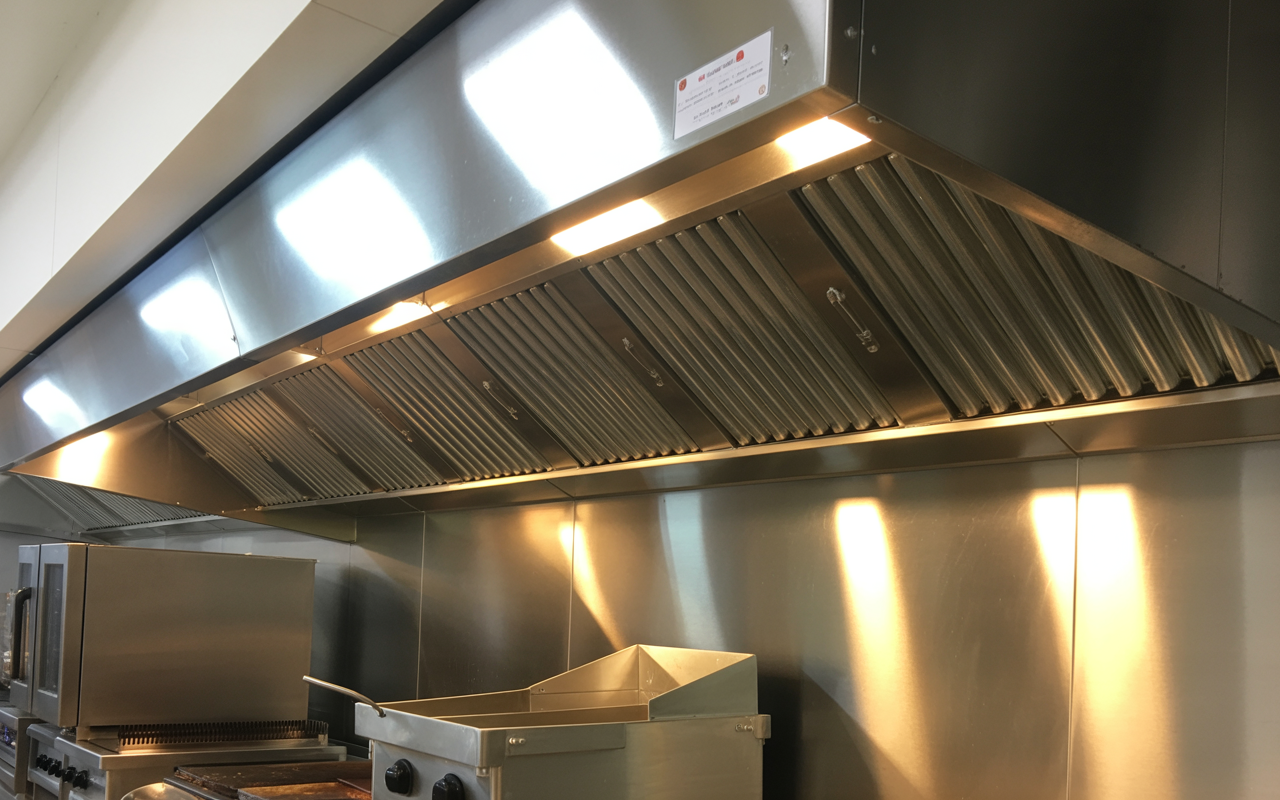
In commercial kitchens, the first line of defence is usually at the cooking hood and exhaust grease filtration stage. The aim is to capture grease before it travels deeper into the system.
The right arrangement depends on the cooking type, airflow design and equipment layout. Some systems use metal grease filters or baffle-style units, while others may include additional filtration stages for finer particles or odour control downstream.
When specifying or replacing filters, it helps to think about:
- •the style of cooking being done
- •how much grease is generated
- •whether the filter frame and housing are exposed to salt air
- •how easy the filter is to remove, inspect and clean
- •whether the system has space for staged filtration
Some filters are designed to be washable - check the product instructions. That can be useful in kitchen environments, but washability should always be verified for the specific product rather than assumed.
If you need non-standard dimensions or a replacement for a legacy setup, custom air filters can help keep the system matched to the equipment rather than forcing a poor fit.
Humidity and salt in the plant room
Plant rooms near coastal kitchens often face a mix of warm, moist air and salt exposure. Even where the kitchen exhaust itself is separate, the surrounding air can still affect the filters and equipment inside the room.
High humidity can encourage condensation on cooler surfaces, especially when air temperatures change through the day. Condensation on or around filters can lead to reduced airflow, dirt adhesion and premature wear of adjacent components. Salt can also settle on fan casings, coils, filter frames and access panels, creating corrosion risk over time.
Good practice in these spaces includes:
- •checking that the plant room is well sealed from uncontrolled air ingress
- •confirming the filtration stage is appropriate for the incoming air quality
- •using corrosion-resistant materials where the environment demands it
- •keeping access clear for inspection and cleaning
- •ensuring drains, seals and housings are maintained so moisture does not linger
Where the plant room is serving a kitchen ventilation system, it is worth reviewing the whole air path rather than treating the filter as an isolated item. A durable filter in the wrong housing, or a well-built housing with poor sealing, will still create problems.
Choosing the right filter type for the job
Different parts of a commercial kitchen ventilation setup may call for different filter types. The key is to match the product to the function.
For grease-heavy exhaust
Grease collection filters are the priority at the hood. These are generally selected for resistance to loading, ease of cleaning and fit within the hood design.
For make-up air and plant room intake
Where outside air is being brought in, pre-filtration can help capture larger particles before they reach more sensitive equipment. In coastal areas, this may also help reduce the amount of salt and wind-blown debris entering the system.
For finer filtration stages
Some sites use finer particulate filters downstream of the initial stage. These can help protect components or support a cleaner internal environment in the plant room, depending on the design.
If you are comparing product classes, remember that MERV, EN 779 and ISO 16890 are not direct conversions. EN 779 classes such as G3, G4 and F5 to F9 are still commonly referenced in Australia, although the standard has been superseded by ISO 16890. Selection should be based on the actual system needs and the manufacturer’s product data, not on rough cross-matching.
If higher-efficiency filtration is being considered, HEPA specifications should be checked carefully. H13 filters are at least 99.95% efficient and H14 filters are at least 99.995% efficient at the most penetrating particle size under EN 1822.
Maintenance, inspection and pressure drop
In coastal Queensland, a filter can load faster than expected because of grease, moisture and airborne salt. That makes inspection more important than relying on a fixed calendar.
Inspection frequency depends on the system, site conditions and dust load. Follow the filter and equipment manufacturer instructions, and monitor pressure drop where gauges are fitted.
A practical maintenance routine should include:
- •visual inspection of filter condition and frame integrity
- •checking for grease accumulation on adjacent surfaces
- •confirming seals are intact and seated correctly
- •watching for corrosion on clips, housings and fasteners
- •checking for changes in airflow or fan noise that may indicate loading
For sites with multiple systems, keep records by location rather than assuming all filters behave the same way. A kitchen close to the ocean, for example, may need more frequent attention than an inland site with similar cooking loads.
If you need support planning ongoing care, commercial filter servicing can help with practical maintenance requirements for business sites.
AS 1668.2:2024 and site-specific design
Commercial kitchen ventilation needs to be designed and maintained with the building and system requirements in mind. AS 1668.2:2024 is one of the key references for ventilation in Australian buildings, but the site requirements should always be confirmed with the mechanical services engineer or building owner.
That matters because kitchen exhaust, make-up air, odour control and plant room filtration all need to work together. A filter that performs well in one installation may not suit another if the airflow, room pressures, or environmental exposure are different.
This is especially true in coastal Queensland, where corrosion resistance, seal quality and access for servicing can be just as important as the filter media itself.
Working with a supplier who understands the site
A good filter solution for a coastal kitchen should do more than fit the frame. It should suit the grease load, stand up to humidity, handle salt exposure where needed and be practical to inspect and service.
Total Air Filtration is a family-owned air filter manufacturer and supplier based in Hillcrest, Brisbane, and we work with hospitality operators and contractors across commercial environments. We can help with standard products, our products, or tailored options when the site calls for something specific.
If you are planning a replacement, refreshing a plant room setup or redesigning a kitchen exhaust filtration stage, Total Air Filtration can supply or make the right filters for the job. Call 07 3800 3448 or request a quote.
Written by
The Total Air Filtration Team
General information only — always follow the instructions for your filter and system. Have questions about this article? We're here to help.