
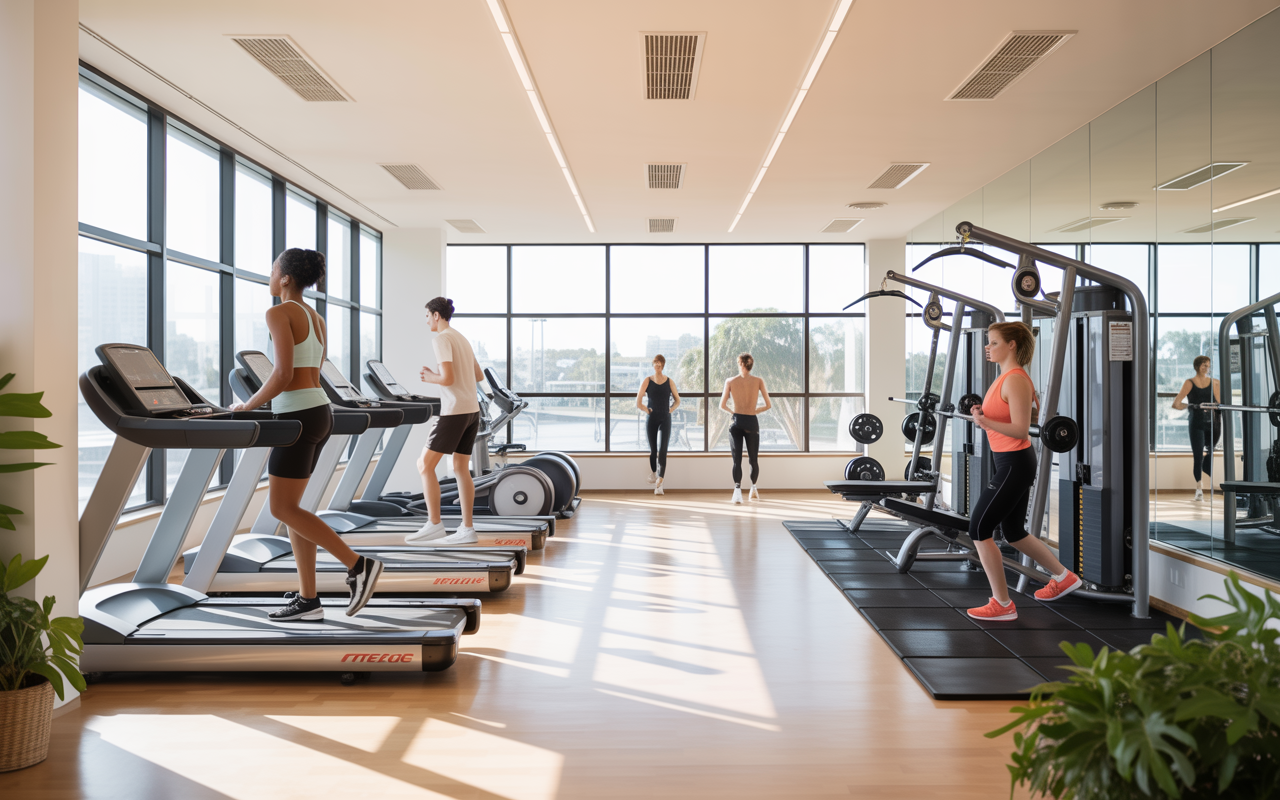
Air Filter Questions for Brisbane Gym Fit-Outs with Chalk, Sweat and Odour Control
Brisbane gyms, boxing studios, yoga rooms and functional training spaces all create their own air quality challenges. Chalk dust, sweat-related odours, cleaning chemical smells and constant foot traffic can build up quickly, so the filtration approach needs to suit the way the space is actually used.
For operators and fit-out contractors, the question is not just which filter fits the unit. It is also about how much airborne dust the space produces, how the ventilation system is designed, and whether odour control needs to be built into the filter stage from the start.
Why gym spaces are different
A gym is not a standard office or retail tenancy. The air handling system may need to cope with rapid changes in occupancy, bursts of dust from chalk or floor cleaning, and strong odours from equipment areas, change rooms and training rooms.
That means filter selection should consider:
- •airborne chalk and fine dust from lifting areas
- •lint and debris brought in on shoes and clothing
- •odours from sweat and cleaning products
- •the level of fresh air and recirculated air in the system
- •whether the space is open plan or divided into studios and enclosed rooms
If the fit-out includes new mechanical services, it is worth confirming site requirements with the mechanical services engineer or building owner early, especially where AS 1668.2:2024 applies to the ventilation design.
What filters do well in gyms
Filters are there to capture particles before they move through the supply air system or recirculate around the building. In a gym, that usually means dealing with dust rather than just general building air.
For many fit-outs, the starting point is a filter arrangement that balances airflow with dust capture. Depending on the system, that may include pre-filters for larger particles and finer filters for smaller dust loads.
Common filter questions during a fit-out
- •Will the unit handle the dust load from chalk-heavy training zones?
- •Is there enough space for deeper filter frames or a two-stage arrangement?
- •Does the system need stronger filtration in change rooms or odour-prone areas?
- •Can the existing fan and housing handle a higher resistance filter?
- •Are there access points that make inspection and replacement practical?
If you are measuring up an existing system for replacement filters, our guide on how to measure an air filter can help with the basics.
Dealing with chalk, dust and fine particles
Chalk is one of the most common reasons gym operators ask for better filtration. It can settle on ledges, circulate through supply air and make maintenance harder if the filter arrangement is too light for the application.
The best option depends on the equipment and the dust source. For example, a strength training area that uses chalk heavily may need a different approach to a stretching studio or a Pilates room.
Useful things to check include:
- •whether the filters are fitted in the return air path, supply air path or both
- •whether the system can take a staged approach with a coarser pre-filter ahead of a finer filter
- •whether the dust source is localised to one room or spread across the tenancy
- •whether the ceiling return points are placed where dust is likely to collect
If dust is a recurring issue, it is usually better to design around the source than to rely on a single high-resistance filter stage that may not suit the fan or the airflow pattern.
Odour control in gyms and studios
Odour control is often as important as dust control in a fitness space. Sweat, rubber flooring, mats, wet towels, change rooms and cleaning chemicals can all contribute to a space feeling stale or unpleasant if ventilation and filtration are not considered together.
A standard particle filter will not remove odour by itself. In some systems, an activated carbon stage or another odour-focused media may be suitable, but only where the system design allows for it and where the filter housing can support that type of media.
Questions to ask before choosing odour filters
- •Is the odour coming from the training floor, amenities, or both?
- •Is there enough outside air being supplied to dilute smells effectively?
- •Does the tenancy have a separate extraction system for change rooms or toilets?
- •Is the filter media suitable for the type of odour being managed?
- •Will the extra resistance affect air delivery to the room?
For fit-outs where odour control is a key concern, it can be useful to talk through the system layout before ordering filters. In some cases, custom air filters are the simplest way to get the right dimensions and media combination for the housing.
Choosing the right rating for the job
Filter ratings are useful, but they do not tell the whole story on their own. MERV, EN 779 and ISO 16890 are different rating systems and they do not convert directly, so it is better to look at the actual filter construction and the intended application rather than trying to force a simple conversion.
In Australia, you may still see G3/G4 or F5-F9 described on older documentation or in existing plant. Those EN 779 classes are still widely used in conversation, even though ISO 16890 has superseded the standard.
For higher efficiency needs, HEPA filters may be relevant in some specialist areas. Under EN 1822, H13 filters are at least 99.95% efficient at the most penetrating particle size, and H14 filters are at least 99.995% efficient at the most penetrating particle size. These filters are not needed for every gym, and they must suit the system and the application.
The key point for operators and contractors is to match the filter to the duty, not just the label.
Maintenance and replacement planning
Gym air filters tend to work hard because the dust load and occupancy pattern can change quickly throughout the day. Inspection frequency depends on the system, site conditions and dust load, so it is best to follow the filter and equipment manufacturer instructions and check pressure drop where gauges are fitted.
A practical maintenance plan should include:
- •checking filter condition during routine plant inspections
- •watching for visible dust loading, odour carryover or reduced airflow
- •recording pressure drop readings where monitoring is installed
- •confirming the replacement sequence before busy seasons or major events
- •making sure staff can access the filter housing safely
Some filters are designed to be washable - check the product instructions. If you are unsure whether the current setup is practical to maintain, filter servicing and commercial filter servicing can help keep the system on track.
What to discuss before the fit-out is finished
The best time to solve filtration issues is during the design stage, before walls are closed and access becomes difficult. That is especially true in gyms, where the air handling equipment may be tucked into tight service areas and the tenancy layout can change during the project.
Before finalising the fit-out, it helps to confirm:
- •the filter size and frame type required by the unit
- •whether the space needs standard dust control or added odour management
- •how the filter will be accessed for inspection and replacement
- •whether the proposed filter media suits the airflow and fan capacity
- •whether the site needs a standard item or a made-to-order solution
If you need a product range overview, see our products or browse the industries we supply for more context on where these filters are used.
Need the right filter for your Brisbane gym project?
Total Air Filtration is a family-owned air filter manufacturer and supplier in Hillcrest, Brisbane QLD, and we can help you choose or make filters that suit gym dust, chalk and odour control needs. Call 07 3800 3448 or request a quote when you are ready to talk through the fit-out.
Written by
The Total Air Filtration Team
General information only — always follow the instructions for your filter and system. Have questions about this article? We're here to help.