
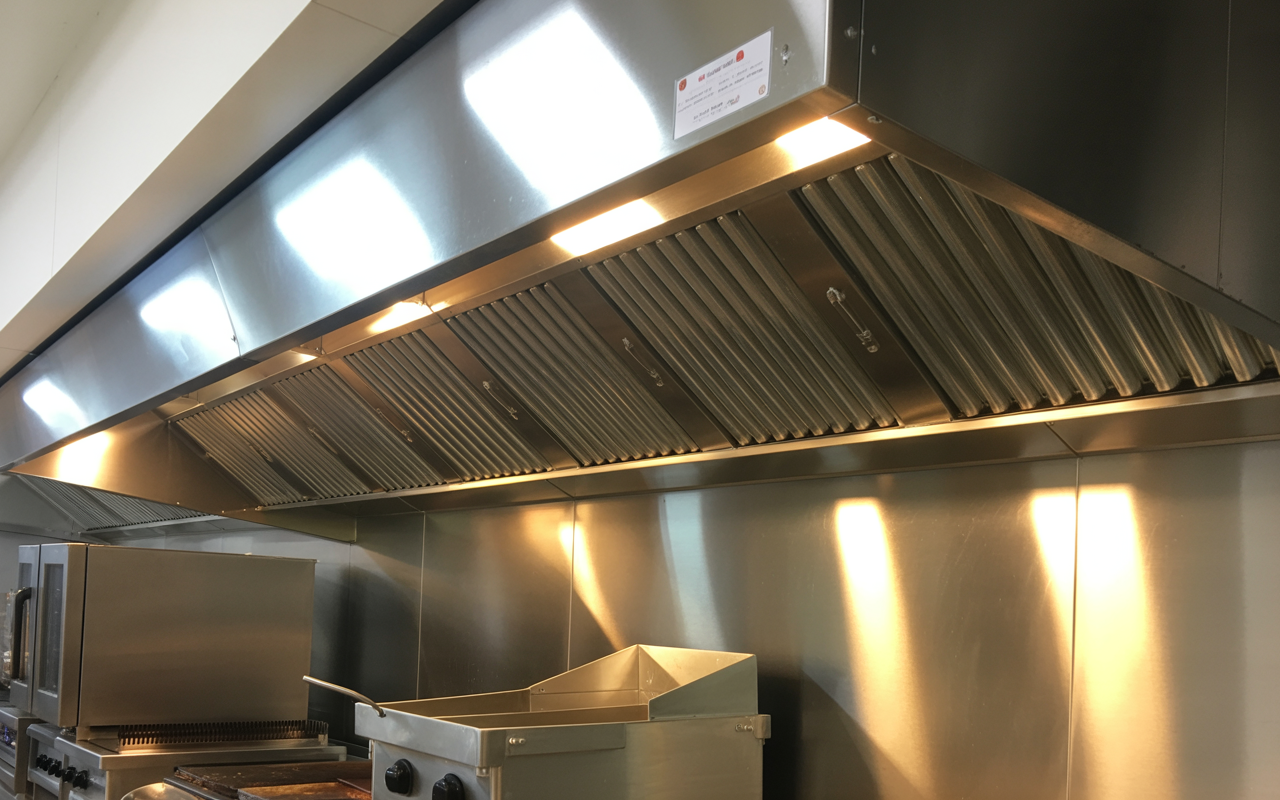
Air Filter Planning for New Kitchens With Gas Cooking and Recirculation Hoods
A kitchen renovation can change much more than the look of the room. If you are adding gas cooking and a recirculation hood, you are also changing how air moves through the space, how much grease reaches filters, and how hard the general HVAC system has to work. Planning the filtration early helps the kitchen installer, mechanical contractor and homeowner avoid surprises once the appliances are in place.
What changes when gas cooking is added
Gas cooking produces more combustion by-products than a kitchen with no gas appliances, and cooking itself creates grease particles, moisture and odours that can spread beyond the cooktop area. A recirculation hood does not discharge air outside, so it relies on filtration within the hood and the wider ventilation setup to manage what is captured and what returns to the room.
That means a renovation should not focus on the hood alone. The general room filtration and ventilation strategy matters too, especially where the kitchen is open to living areas or connected to a larger home air conditioning system.
In practical terms, the project may need attention to:
- •grease capture inside the hood
- •odour management in the recirculated air path
- •airflow balance so the hood and HVAC system do not fight each other
- •dust loading on the home’s general filter from the extra kitchen activity
Why recirculation hoods need the right filters
A recirculation hood pulls kitchen air through a filter pack, then returns the treated air to the room. The exact filter arrangement depends on the hood design, but the filter media must be able to deal with the sort of contamination a kitchen creates.
For many domestic installations, that means the first priority is grease collection. If grease is not captured effectively, it can build up in the hood, ducting inside the unit and nearby surfaces. Some systems also use carbon or other media for odour control. The key point is that each filter has a specific job, and not every filter is suited to every hood.
When choosing or replacing hood filters, check:
- •the hood make and model
- •the required filter dimensions and frame style
- •whether the filter is a grease filter, odour filter, or both
- •whether the product instructions allow cleaning or replacement
- •how access for removal and refitting will work in the finished kitchen
If you need to measure an existing filter accurately, our guide on how to measure an air filter is a useful starting point.
Planning the general HVAC filter at the same time
A renovated kitchen can increase the demand on the home’s general HVAC filtration because more airborne grease and fine particles may reach the return air path, especially in open-plan layouts. Even if the hood has its own filters, the rest of the house system still needs to handle everyday dust, cooking residue and normal indoor air loads.
This is where filter planning should include the whole system, not just the cooking zone. The right general HVAC filter needs to fit the fan capacity, the filter rack and the indoor air quality goals for the home. A filter that is too restrictive can reduce airflow if the system was not designed for it, while a filter that is too open may not capture enough of the particles circulating through the house.
Useful questions for the mechanical contractor or installer include:
- •What filter size and thickness does the return air cabinet accept?
- •Is there enough space for a deeper filter frame if the system needs it?
- •Does the homeowner want a filter that is easier to inspect and service?
- •Are there signs that the current filter frame leaks air around the edges?
- •Is the return air grille close to the kitchen or likely to draw in cooking residue?
If the filter rack is non-standard or the dimensions are awkward, custom air filters can often be made to suit the opening more closely.
Standards, system design and where the site details matter
For projects involving new or altered ventilation, AS 1668.2:2024 is often part of the conversation. That standard relates to ventilation, but the actual site requirements should be confirmed with the mechanical services engineer or building owner, especially where the kitchen is part of a larger renovation or a multi-zone air conditioning setup.
It is also worth noting that filtration ratings do not convert neatly from one system to another. MERV, EN 779 and ISO 16890 are different rating approaches, and EN 779 classes such as G3, G4 and F5-F9 are still commonly referenced in Australia even though ISO 16890 has superseded EN 779 in many contexts. If a supplier gives a rating, make sure it is being used in the right system context rather than assuming it is directly interchangeable.
For higher-efficiency applications, HEPA filters are a separate category again. H13 filters are at least 99.95% efficient at the most penetrating particle size under EN 1822, and H14 filters are at least 99.995% efficient at MPPS under the same standard. Those ratings are for specific applications and should only be used where the system is designed for them.
Maintenance, inspection and day-to-day use
Kitchen filters usually need closer attention after a renovation because the cooking load changes how quickly they collect residue. That does not mean every home needs the same service schedule. Inspection frequency depends on the system design, site conditions and dust load, and you should follow the filter or equipment manufacturer instructions. Where pressure drop gauges are fitted, monitor them so you can see when the filter is loading up.
A good maintenance routine usually includes:
- •checking hood filters for grease build-up and visible wear
- •looking for gaps, warped frames or poor sealing at the filter edges
- •monitoring whether airflow seems weaker than usual
- •confirming the general HVAC filter is seated correctly after servicing
- •replacing or cleaning filters only in line with the product instructions
Some filters are designed to be washable - check the product instructions before cleaning. Others are disposable and should be replaced rather than washed. For homes with frequent cooking, a filter that is easy to remove and inspect can save time and reduce guesswork.
If the kitchen is part of a larger property or strata setting, our filter servicing and commercial filter servicing pages explain the kinds of support we can provide for different systems.
Getting the specification right before the cabinets go in
The easiest time to plan filtration is before the kitchen is finished. Once cabinets, splashbacks and appliances are installed, access to filter housings can become awkward, and a small sizing mistake can turn into ongoing frustration.
Before sign-off, confirm:
- •the hood model and its filter type
- •the exact opening size for any replacement or custom filter
- •how the filter will be removed for inspection
- •whether the hood recirculates or vents outdoors
- •whether the general HVAC filter needs to be upgraded to suit the new layout
- •who will be responsible for routine inspection and servicing
This is especially important where the kitchen installer and mechanical contractor are working separately. A quick check now can prevent mismatched components later.
We can help with the right filter fit
Total Air Filtration is a family-owned air filter manufacturer and supplier in Hillcrest, Brisbane QLD, and we work with homeowners, kitchen installers and mechanical contractors on practical filter solutions. If you need a standard size, a replacement for an existing housing, or a made-to-measure option, we can help supply or make the right filters for the job.
To discuss your kitchen project, call 07 3800 3448 or request a quote. You can also view our products or contact us if you want to talk through the filter requirements before ordering.
Written by
The Total Air Filtration Team
General information only — always follow the instructions for your filter and system. Have questions about this article? We're here to help.