
Activated Carbon Filters for Odours, VOCs and Gas Control
Activated carbon filters are used when the problem is not dust alone, but smells, fumes and gaseous contaminants that standard particle filters will not address on their own. They are found in homes, commercial buildings and industrial sites where odour control or vapour capture is important, and the right choice depends on what is in the air, how the system is built and how the filter will be maintained.
What activated carbon filters do
Activated carbon works by adsorbing gases and vapours onto a highly porous surface. That makes it useful for odours, volatile organic compounds (VOCs) and some process gases, depending on the carbon type and filter construction.
It is important to understand that carbon filters are not a general solution for every air quality issue. They do not replace particulate filters where dust, lint, smoke particles or fine airborne material also need to be captured. In many systems, a particle filter is installed first to protect the carbon media from clogging too quickly.
Common uses include:
- •Kitchen exhaust and general odour control
- •Bathroom, laundry and amenity exhaust systems
- •Commercial tenancy spaces with lingering smells from cooking, cleaning products or refurbishments
- •Manufacturing areas where solvent vapours or process odours are present
- •Paint rooms, laboratories and workshops where specific gases or fumes need treatment
- •HVAC systems serving spaces where odour complaints are an issue
How carbon filters are built
Activated carbon filters come in several forms, but most are designed around the same idea: maximise contact between the airstream and the carbon media while keeping airflow manageable.
Carbon media
The carbon itself is usually supplied as granular carbon, pelletised carbon, impregnated carbon or carbon bonded into a filter matrix. Different media types are suited to different contaminants.
Granular carbon is widely used for odour and vapour control because of its large internal surface area. Impregnated carbon may be chosen for certain gases where a chemical reaction or enhanced adsorption is needed. The right media depends on the contaminant profile, temperature, humidity and duty cycle.
Filter construction
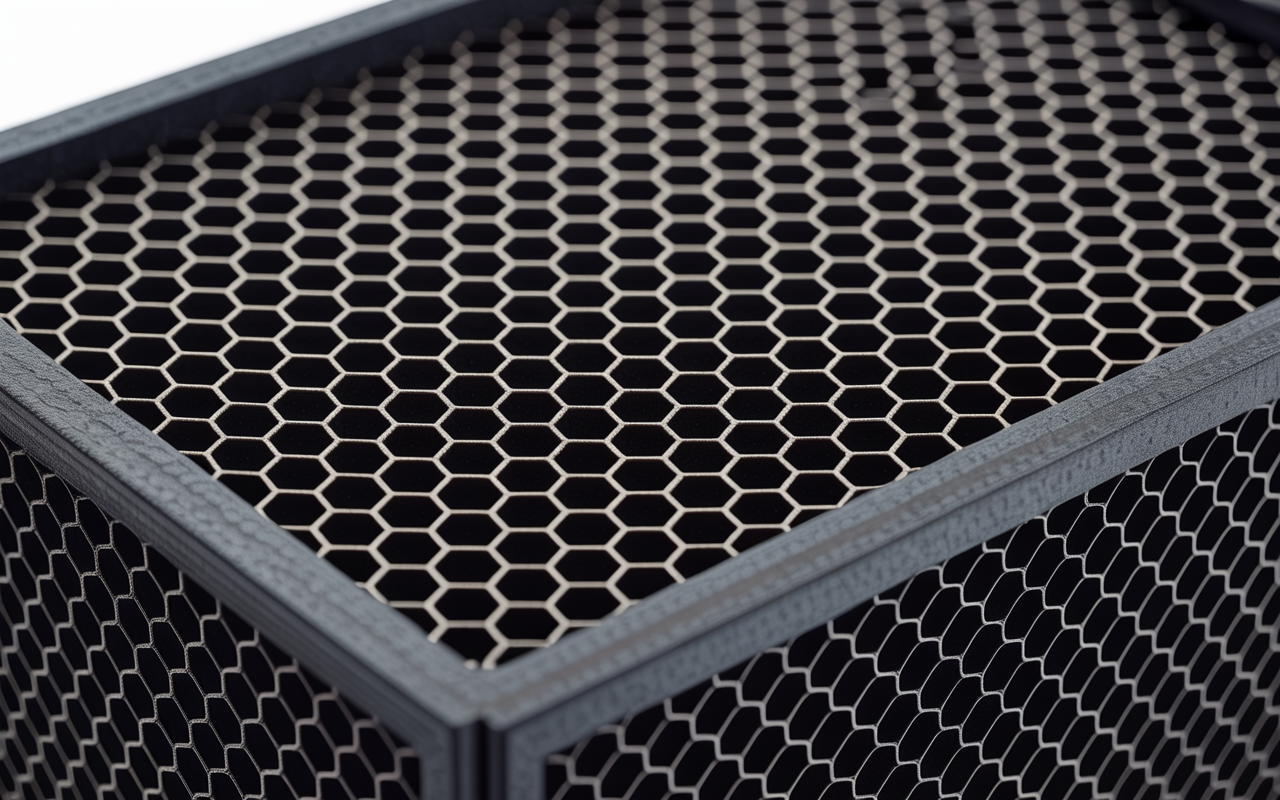
A carbon filter may be built as a panel, pleated cartridge, cylindrical canister, bag or housing insert. The frame and casing help keep the media in place and provide a path for air to move through the carbon bed.
Key construction features include:
- •Airflow path: Air must pass through enough carbon to allow adsorption to occur
- •Bed depth: Deeper beds generally provide longer contact time, although they also affect pressure drop
- •Sealing: Poor seals can let air bypass the carbon and reduce performance
- •Support layers: Many products include pre-filters or scrims to hold dust and protect the carbon bed
- •Housing compatibility: The filter must suit the fan, duct or cabinet it is installed in
For systems where the filter size or frame is unusual, custom air filters can often be made to suit the application.
Why pressure drop matters
Carbon filters add resistance to airflow. As dust loads build up, or as the carbon becomes less effective, pressure drop can increase and system performance can change. Where gauges are fitted, checking pressure drop is a practical way to tell when inspection or changeout is needed.
Inspection frequency depends on the system, site conditions and dust load, and you should follow the filter and equipment manufacturer instructions.
When carbon filters are the right choice
Activated carbon is best used when the issue is airborne gas, vapour or odour rather than visible dust.
Home and residential use
Homeowners often look at carbon filters for rangehoods, whole-home ventilation, bathrooms, pet odours or rooms affected by renovation smells. They can also be useful where outside air brings in smells from neighbouring properties, nearby traffic or industrial activity.
In a home setting, carbon is usually part of a broader filtration approach. If dust or mould spores are also a concern, the system may need a particle filter in addition to carbon. If you are measuring a replacement filter for an existing unit, how to measure an air filter is a useful starting point.
Commercial buildings
Facility managers often use carbon filters in office buildings, retail centres, hospitality venues and mixed-use properties where odour complaints can come from kitchens, amenities, cleaning chemicals or loading dock areas.
Carbon filters can also be installed in recirculating systems, dedicated exhaust treatment setups or air handling units that need help with nuisance odours. For building ventilation and outdoor air arrangements, site requirements should be confirmed with the mechanical services engineer or building owner, including any relevant considerations under AS 1668.2:2024.
Industrial and process environments
Industrial buyers usually need a filter solution matched to a specific contaminant load. Carbon filters may be used for solvent fumes, coating vapours, light process gases, printing odours, chemical storage areas or waste handling rooms.
In these settings, the design challenge is usually not just choosing carbon, but choosing the right bed depth, media type, housing arrangement and pre-filtration. Air velocity, humidity and contaminant concentration all affect how well the carbon performs.
Selecting the right carbon filter
There is no one carbon filter that suits every application. A good selection starts with the contaminant, then the air volume and system design.
Consider these points:
- •What needs to be controlled: odour, solvent vapour, cleaning chemical fumes or another gas
- •Whether particles are also present: dust and lint may require a pre-filter or separate particulate filter
- •Airflow and fan capacity: the system must handle the added resistance of the carbon filter
- •Space available: panel, box, cartridge or custom housing options may suit different installations
- •Environment: humidity, temperature and contaminant loading can affect service life
- •Access for servicing: the filter should be easy to inspect and replace safely
Some filters are designed to be washable - check the product instructions. For most carbon filters, however, replacement rather than washing is the usual approach once the media is spent or the housing is contaminated.
If the application is in a commercial or industrial setting, commercial filter servicing may help with ongoing maintenance planning.
Signs a carbon filter may be due for attention
Because carbon filters work by adsorbing gases rather than trapping visible dust, they may look acceptable long after performance has started to drop. That is why monitoring matters.
Signs that a filter may need inspection include:
- •Odours returning sooner than expected
- •Fumes or vapours becoming noticeable in occupied spaces
- •Increased pressure drop across the filter bank
- •Reduced airflow at outlets or extraction points
- •Dust accumulation on pre-filters or nearby components
- •Evidence that the filter housing is leaking or bypassing air
If the system serves a workplace, plant or public building, it is sensible to include carbon filter checks in the site’s maintenance routine. Our filter servicing page explains how we support ongoing upkeep.
Getting the filter arrangement right
The most effective carbon setup is usually the one that suits the specific problem rather than the most expensive one. In some systems that means a compact panel filter with carbon media. In others it may mean a deeper carbon bed, a purpose-built housing or a staged arrangement that combines particle filtration and gas-phase filtration.
At Total Air Filtration, we work with homeowners, facility managers and industrial buyers to match the filter to the application. We are a family-owned air filter manufacturer and supplier based in Hillcrest, Brisbane QLD, established 2009.
If you need help choosing the right carbon filter, or you want a replacement made to suit an existing unit, Total Air Filtration can supply or make the right filters for your system. Call 07 3800 3448 or request a quote.
You can also contact us or view our products for more filtration options.
Written by
The Total Air Filtration Team
General information only — always follow the instructions for your filter and system. Have questions about this article? We're here to help.